• HOME
  • NEWS
  • EXPLORE
    • CAREER
      • Companies
      • Jobs
    • EVENTS
    • iGEM
      • News
      • Team
    • PHOTOS
    • VIDEO
    • WIKI
  • BLOG
  • COMMUNITY
    • FACEBOOK
    • INSTAGRAM
    • TWITTER
Saturday, April 18, 2026
BIOENGINEER.ORG
No Result
View All Result
  • Login
  • HOME
  • NEWS
  • EXPLORE
    • CAREER
      • Companies
      • Jobs
        • Lecturer
        • PhD Studentship
        • Postdoc
        • Research Assistant
    • EVENTS
    • iGEM
      • News
      • Team
    • PHOTOS
    • VIDEO
    • WIKI
  • BLOG
  • COMMUNITY
    • FACEBOOK
    • INSTAGRAM
    • TWITTER
  • HOME
  • NEWS
  • EXPLORE
    • CAREER
      • Companies
      • Jobs
        • Lecturer
        • PhD Studentship
        • Postdoc
        • Research Assistant
    • EVENTS
    • iGEM
      • News
      • Team
    • PHOTOS
    • VIDEO
    • WIKI
  • BLOG
  • COMMUNITY
    • FACEBOOK
    • INSTAGRAM
    • TWITTER
No Result
View All Result
Bioengineer.org
No Result
View All Result
Home NEWS Science News Biology

Increased cyto-adhesion of malaria parasites during fever uncovered

Bioengineer by Bioengineer
October 9, 2018
in Biology
Reading Time: 2 mins read
0
Share on FacebookShare on TwitterShare on LinkedinShare on RedditShare on Telegram
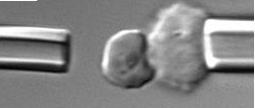
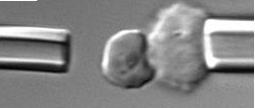
IMAGE

Credit: SUTD

Malaria is the most prevalent blood-borne infectious disease caused by parasites of the species Plasmodium. In 2016, more than 216 million malaria infections were reported resulting in 445,000 deaths across the developing world.

During the blood stage development, Plasmodium (P.) falciparum, the most common causative agent of malaria-associated pathology in humans, exports a number of parasitic proteins to the surface of infected red blood cells facilitating its cyto-adhesion to endothelial receptors. This adhesive behavior prevents splenic clearance and induces microvasculature obstruction, forming critical contributors towards the disease outcome.

In a recent study, a research team from Singapore demonstrated how the adhesion of plasmodium-infected blood cells is elevated at febrile temperatures. Through dual-micropipette step-pressure technique between P. falciparum-infected RBCs (iRBCs) and Chinese Hamster Ovary cells expressing Chondroitin sulfate A (CHO-CSA), they determined that adhesion is elevated at febrile temperatures. The team also noticed that exposures to febrile temperature significantly increased both the adhesion force and adhesion percentage between iRBCs and CSA-CHO cells.

Using flow cytometry analysis, the team documented an increase in phosphatidylserine expression on the iRBC surface following exposure to febrile temperature. They demonstrate that elevated levels of phosphatidylserine is linked to increased cyto-adhesion, since the trend was reversed by introducing soluble Annexin V. "These results suggest that elevated PS recruitment on iRBC under thermally stressed conditions contributes to the increased adhesive behavior of iRBCs, which might be relevant to clinical manifestations associated with malaria fever," said Dr Rajesh Chandramohanadas from the Singapore University of Technology & Design (SUTD).

###

First author of this study, published in the science journal Scientific Reports, is Dr Rou Zhang from the Infectious Disease IRG, Singapore-MIT Alliance for Research and Technology (SMART) Centre. Other investigators involved in this project are Professor Ming Dao (SMART and Massachusetts Institute of Technology), Professor Chwee Teck Lim (SMART & National University of Singapore) and Dr Rajesh Chandramohanadas (SMART and Singapore University of Technology & Design).

Media Contact

Melissa Koh
[email protected]
65-649-98742

http://www.sutd.edu.sg

Related Journal Article

http://dx.doi.org/10.1038/s41598-018-33358-2

Share12Tweet8Share2ShareShareShare2

Related Posts

On-Demand Growth of Liver Tissue Directly Within the Body

On-Demand Growth of Liver Tissue Directly Within the Body

April 17, 2026
Conserved DNA Architect Links Chloroplasts to Cell Cycle

Conserved DNA Architect Links Chloroplasts to Cell Cycle

April 17, 2026

UTS Study Reveals Toxic Metal Exposure from E-Cigarette Devices

April 17, 2026

Can Exercise Help You Beat Stress Hormones? New Insights from a Clinical Trial

April 17, 2026
Please login to join discussion

POPULAR NEWS

  • Scientists Investigate Possible Connection Between COVID-19 and Increased Lung Cancer Risk

    62 shares
    Share 25 Tweet 16
  • NSF funds machine-learning research at UNO and UNL to study energy requirements of walking in older adults

    101 shares
    Share 40 Tweet 25
  • Boosting Breast Cancer Risk Prediction with Genetics

    47 shares
    Share 19 Tweet 12
  • Popular Anti-Aging Compound Linked to Damage in Corpus Callosum, Study Finds

    46 shares
    Share 18 Tweet 12

About

We bring you the latest biotechnology news from best research centers and universities around the world. Check our website.

Follow us

Recent News

Swedish Study: Person-Centred Communication Training for Caregivers

Membrane Protein Amuc_1098 Eases Pancreatitis via TLR2

Cadmium Exposure Boosts Metallothionein, Oxidative Damage Markers

Subscribe to Blog via Email

Enter your email address to subscribe to this blog and receive notifications of new posts by email.

Join 79 other subscribers
  • Contact Us

Bioengineer.org © Copyright 2023 All Rights Reserved.

Welcome Back!

Login to your account below

Forgotten Password?

Retrieve your password

Please enter your username or email address to reset your password.

Log In
No Result
View All Result
  • Homepages
    • Home Page 1
    • Home Page 2
  • News
  • National
  • Business
  • Health
  • Lifestyle
  • Science

Bioengineer.org © Copyright 2023 All Rights Reserved.