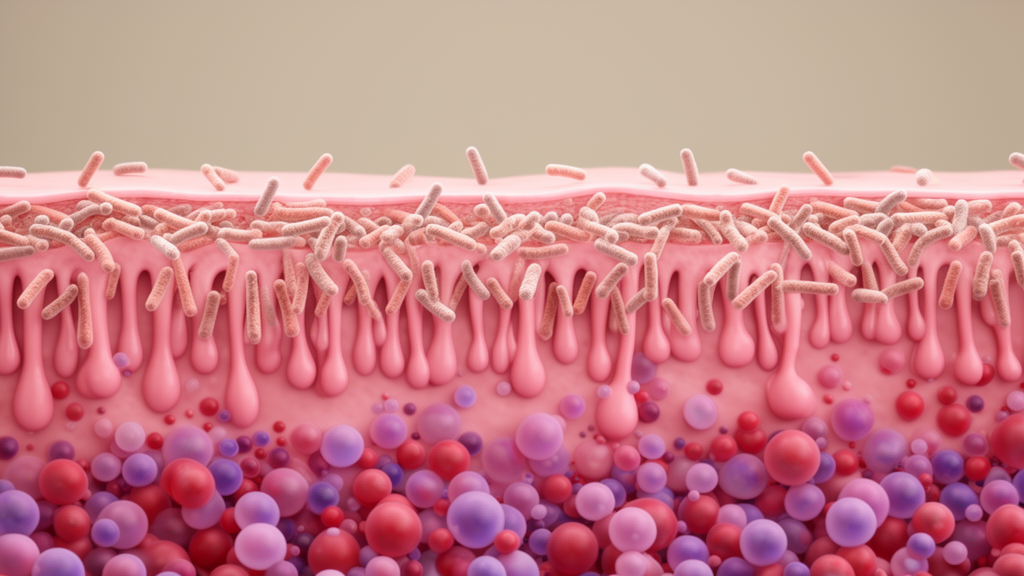
When a complicated urinary tract infection fails to clear up, clinicians often blame the bacterium: a resistant strain, an enzyme shredding the antibiotics, a slimy biofilm clinging to a catheter. A large new study from Libya suggests that this instinct may be pointing at the wrong suspect. Across nearly a thousand infection episodes treated in four Misurata hospitals, the factors that most reliably predicted treatment failure were not the bacteria’s resistance weapons at all, but the patient’s own condition — a blocked urinary tract, diabetes, or full-blown sepsis on arrival.
The research, published in Frontiers in Medicine, followed 963 episodes of complicated urinary tract infection caused by Enterobacterales, the family of gut bacteria that includes Escherichia coli and Klebsiella pneumoniae. Between March 2024 and March 2026, the team at Misurata University and four local hospitals collected 1,017 bacterial isolates in real time, identified them with biochemical panels and MALDI-TOF mass spectrometry, and subjected each to a battery of phenotypic tests for beta-lactamase enzymes and biofilm formation. It is one of the most detailed clinical-microbiological datasets yet assembled from a North African setting that is chronically underrepresented in the infection literature.
The resistance burden they documented is sobering in its own right. More than half of the isolates qualified as multidrug-resistant. Roughly 37 percent produced extended-spectrum beta-lactamases (ESBLs), enzymes that disable penicillins and most cephalosporins. About 18 percent carried AmpC-type enzymes, concentrated in species such as Enterobacter cloacae and Citrobacter freundii, and around one in ten produced carbapenemases, the enzymes that undermine the last-line carbapenem antibiotics. Biofilm formation — the ability to coat surfaces in a protective matrix — was detected in 72 percent of isolates. On paper, these bacteria look formidable.
Yet when the researchers ran the numbers, phenotype after phenotype fell away. In a multivariable logistic regression adjusted for age, sex, hospital, catheterization, prior antibiotics, comorbidities and more, isolates producing two or more beta-lactamase categories showed no significant independent association with treatment failure. Multidrug resistance itself was likewise not independently linked to failure. The adjusted odds ratios hovered near or below one, with confidence intervals that straddled the null in most sensitivity analyses.
What did matter were three clinical factors. Urinary obstruction raised the odds of failure by about 55 percent, diabetes by roughly 48 percent, and sepsis by nearly 60 percent. A separate model examining source control — the surgical or procedural correction of the underlying problem, such as draining an obstructed kidney or swapping an infected catheter — found that when source control was needed but inadequate, the odds of failure roughly doubled compared with cases needing no intervention. The message is physiologically coherent: antibiotics cannot sterilize a plumbing system that remains blocked, and a septic patient has far less reserve to tolerate any delay.
One result was genuinely unexpected. Biofilm-positive infections appeared to fare slightly better, with an adjusted odds ratio of 0.70 in the primary model — an inverse association that seems to contradict decades of laboratory work linking biofilms to persistence and antibiotic tolerance. The authors are emphatic that this should not be read as biofilm being protective. The finding flickered in and out of statistical significance across sensitivity analyses and vanished entirely when the outcome definition was changed, suggesting it is an artifact of confounding, species composition, or how outcomes were measured rather than a real biological effect.
That fragility connects to one of the study’s most instructive methodological episodes. Before modeling, the team cross-checked their locked outcome file against a prespecified rule and found that 36 episodes with documented persistence of the same organism on repeat culture had been coded as successes. Correcting these records lifted the failure count from 152 to 188, or 19.5 percent of episodes. But because repeat urine cultures were obtained only when clinicians felt they were warranted — and were far more common in patients who were doing badly — the opportunity to detect persistence was unevenly distributed across the cohort. This differential verification, the authors acknowledge, could have distorted the very microbiological associations they set out to test.
The study’s statistical honesty is also worth noting. The regression model, after bootstrap correction for optimism, achieved an area under the curve of just 0.575 — barely better than a coin flip for individual prediction. The authors explicitly state the model was built to estimate associations, not to serve as a bedside prognostic tool. In an era when machine-learning models are routinely oversold, this kind of transparent self-assessment is a quiet corrective.
The findings echo a multicenter European study from 2019, in which treatment failure among hospitalized patients with complicated urinary tract infection was likewise driven mainly by markers of host vulnerability — intensive care admission, septic shock, catheter-associated infection — rather than by inappropriate initial antibiotics. Two cohorts, two continents, same pattern: the terrain matters more than the invader’s armaments.
None of this lets antimicrobial resistance off the hook. Resistant bacteria constrain which drugs can be used, how quickly effective therapy can start, and how complex definitive treatment becomes — and in a setting like Misurata, where over half of urinary isolates are multidrug-resistant, those constraints are daily realities. But the study suggests that resistance phenotype is best understood as one input into a broader clinical pathway, not a standalone verdict. For clinicians, the practical takeaway is concrete: in complicated urinary infection, look first for the blocked kidney, the uncontrolled diabetes, the early sepsis, and the drainage that has not happened. Fixing the plumbing, the data imply, may save more treatments than any new antibiotic.
Subject of Research: Clinical and microbiological determinants of treatment failure in complicated urinary tract infection caused by Enterobacterales
Article Title: Clinical and microbiological determinants of treatment failure in complicated urinary tract infection: a four-hospital cohort of enterobacterales infections in Misurata, Libya
Article References: Alwashaish, M. M., Ashour, A. O., Elwash, M. E., & Elmeheishi, F. M. (2026). Clinical and microbiological determinants of treatment failure in complicated urinary tract infection: a four-hospital cohort of enterobacterales infections in Misurata, Libya. Frontiers in Medicine, 13, Article 2002811. https://doi.org/10.3389/fmed.2026.2002811
Image Credits: AI Generated
DOI: 10.3389/fmed.2026.2002811
Keywords: complicated urinary tract infection, Enterobacterales, antimicrobial resistance, beta-lactamase, ESBL, biofilm, treatment failure, sepsis, diabetes, urinary obstruction, Libya, MALDI-TOF
News Source: Kristina Jarvis. (October 19, 2026). In Urinary Infections, the Patient May Matter More Than the Bug. Scienmag.