• HOME
  • NEWS
  • EXPLORE
    • CAREER
      • Companies
      • Jobs
    • EVENTS
    • iGEM
      • News
      • Team
    • PHOTOS
    • VIDEO
    • WIKI
  • BLOG
  • COMMUNITY
    • FACEBOOK
    • INSTAGRAM
    • TWITTER
Monday, October 5, 2026
BIOENGINEER.ORG
No Result
View All Result
  • Login
  • HOME
  • NEWS
  • EXPLORE
    • CAREER
      • Companies
      • Jobs
        • Lecturer
        • PhD Studentship
        • Postdoc
        • Research Assistant
    • EVENTS
    • iGEM
      • News
      • Team
    • PHOTOS
    • VIDEO
    • WIKI
  • BLOG
  • COMMUNITY
    • FACEBOOK
    • INSTAGRAM
    • TWITTER
No Result
View All Result
Bioengineer.org
No Result
View All Result
Home NEWS Science News Health

In rats, perinatal exposure to phthalates impairs brain structure and function

Bioengineer by Bioengineer
July 18, 2018
in Health
Reading Time: 2 mins read
0
Share on FacebookShare on TwitterShare on LinkedinShare on RedditShare on Telegram
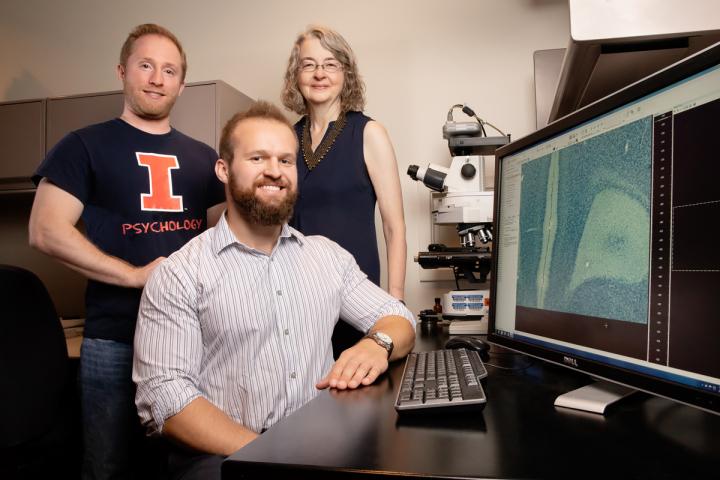
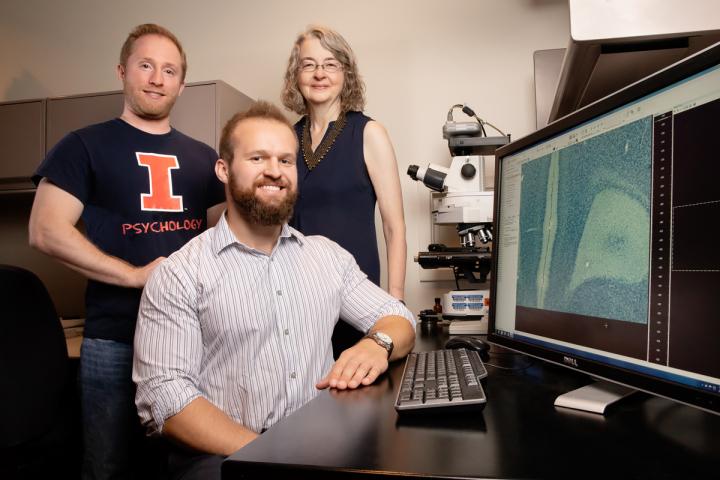
IMAGE

Credit: Photo by L. Brian Stauffer

CHAMPAIGN, Ill. — Male and female rats exposed in the womb and during lactation to plasticizing chemicals known as phthalates had significantly fewer neurons and synapses than those that were not exposed, researchers report in a new study. The phthalate-exposed rats had reductions in the size of their medial prefrontal cortex, a brain region that regulates behavior, and showed deficits in cognitive flexibility.

The variety of phthalates and quantities used in the study were environmentally relevant to human exposures, said University of Illinois psychology professor Janice Juraska, who led the research.

"Phthalates are used as plasticizers in a variety of consumer goods, including plastics, personal care products, fragrances, pharmaceuticals, clothing and building materials," she said. "Contact with these products can lead to exposure through the skin, digestion or lungs."

Research has shown that phthalates readily cross the placenta to expose a developing fetus, and that they can be delivered to offspring via lactation, Juraska said. Because these chemicals can disrupt normal hormone signaling, their presence in infants and children is of special concern. The developing brain, in particular, is susceptible to hormone disruptions. Several studies in humans suggest that prenatal phthalate exposure may negatively affect children's behavior, their ability to regulate their own actions and the incidence of neuropsychiatric disorders, she said.

The pregnant rats in the study were each assigned to one of three groups – two of which were exposed to differing concentrations of phthalates during pregnancy and lactation, and one, a control group, that was not exposed at all. The researchers tested how well the offspring learned to use visual and textural cues to navigate a maze, and examined the relative development of their brains once they reached adulthood.

"We found that there was an appreciable reduction in the number of neurons, the number of synapses and the size of the medial prefrontal cortex in the phthalate-exposed rats," Juraska said. "They also showed a deficit in what we call cognitive flexibility. They made significantly more errors when navigating the mazes than rats that had not been exposed."

The negative effects of perinatal exposure to phthalates were seen at both doses of the phthalate mixture, the researchers report, which were "presumably within the range of the estimated daily intakes of humans."

###

Juraska is an affiliate of the Beckman Institute for Advanced Science and Technology at Illinois. The National Institute of Environmental Health Sciences and the U.S. Environmental Protection Agency supported this research.

Media Contact

Diana Yates
[email protected]
217-333-5802
@NewsAtIllinois

http://www.illinois.edu

Related Journal Article

http://dx.doi.org/10.1523/JNEUROSCI.0607-18.2018

Share12Tweet7Share2ShareShareShare1

Related Posts

Barbed Sutures Cut Hernia Risk After Keyhole Abdominal Surgery, Study Finds

Barbed Sutures Cut Hernia Risk After Keyhole Abdominal Surgery, Study Finds

October 5, 2026
Cytokine-Rich Serum Outperforms Platelet-Rich Plasma in Shielding Rat Ovaries from Reperfusion Damage

Cytokine-Rich Serum Outperforms Platelet-Rich Plasma in Shielding Rat Ovaries from Reperfusion Damage

October 5, 2026

Inflating the Donor Site: Simple Fluid Injection Helps Skin Grafts Take Hold and Heals Wounds Faster

October 5, 2026

Authentic Leadership Makes Nurses Happier and More Helpful, Study Finds

October 5, 2026
Please login to join discussion

POPULAR NEWS

  • Alloys That Shrink Their Own Grains: New PIX Mechanism Refines Metals With Heat Alone

    Alloys That Shrink Their Own Grains: New PIX Mechanism Refines Metals With Heat Alone

    29 shares
    Share 12 Tweet 7
  • Endurance Exercise Reshapes the Liver in Males and Females Through Distinct Molecular Routes

    29 shares
    Share 12 Tweet 7
  • Single Transcription Factor PU.1 Rapidly Converts Fibroblasts into Macrophage-Lineage Cells

    29 shares
    Share 12 Tweet 7
  • New Scale Measures How Ready Nurse Educators Really Are for the AI Era

    29 shares
    Share 12 Tweet 7

About

We bring you the latest biotechnology news from best research centers and universities around the world. Check our website.

Follow us

Recent News

Alloys That Shrink Their Own Grains: New PIX Mechanism Refines Metals With Heat Alone

Endurance Exercise Reshapes the Liver in Males and Females Through Distinct Molecular Routes

Single Transcription Factor PU.1 Rapidly Converts Fibroblasts into Macrophage-Lineage Cells

Subscribe to Blog via Email

Success! An email was just sent to confirm your subscription. Please find the email now and click 'Confirm' to start subscribing.

Join 85 other subscribers
  • Contact Us

Bioengineer.org © Copyright 2023 All Rights Reserved.

Welcome Back!

Login to your account below

Forgotten Password?

Retrieve your password

Please enter your username or email address to reset your password.

Log In
No Result
View All Result
  • Homepages
    • Home Page 1
    • Home Page 2
  • News
  • National
  • Business
  • Health
  • Lifestyle
  • Science

Bioengineer.org © Copyright 2023 All Rights Reserved.