• HOME
  • NEWS
  • EXPLORE
    • CAREER
      • Companies
      • Jobs
    • EVENTS
    • iGEM
      • News
      • Team
    • PHOTOS
    • VIDEO
    • WIKI
  • BLOG
  • COMMUNITY
    • FACEBOOK
    • INSTAGRAM
    • TWITTER
Sunday, August 23, 2026
BIOENGINEER.ORG
No Result
View All Result
  • Login
  • HOME
  • NEWS
  • EXPLORE
    • CAREER
      • Companies
      • Jobs
        • Lecturer
        • PhD Studentship
        • Postdoc
        • Research Assistant
    • EVENTS
    • iGEM
      • News
      • Team
    • PHOTOS
    • VIDEO
    • WIKI
  • BLOG
  • COMMUNITY
    • FACEBOOK
    • INSTAGRAM
    • TWITTER
  • HOME
  • NEWS
  • EXPLORE
    • CAREER
      • Companies
      • Jobs
        • Lecturer
        • PhD Studentship
        • Postdoc
        • Research Assistant
    • EVENTS
    • iGEM
      • News
      • Team
    • PHOTOS
    • VIDEO
    • WIKI
  • BLOG
  • COMMUNITY
    • FACEBOOK
    • INSTAGRAM
    • TWITTER
No Result
View All Result
Bioengineer.org
No Result
View All Result
Home NEWS Science News Health

In-person contact linked with lower levels of loneliness in older adults

by
September 6, 2025
in Health
Reading Time: 3 mins read
0
Loneliness in Older Adults
Share on FacebookShare on TwitterShare on LinkedinShare on RedditShare on Telegram

EMBARGO UNTIL 6 A.M. EST, WEDNESDAY AUG. 28, 2024.

EMBARGO UNTIL 6 A.M. EST, WEDNESDAY AUG. 28, 2024.


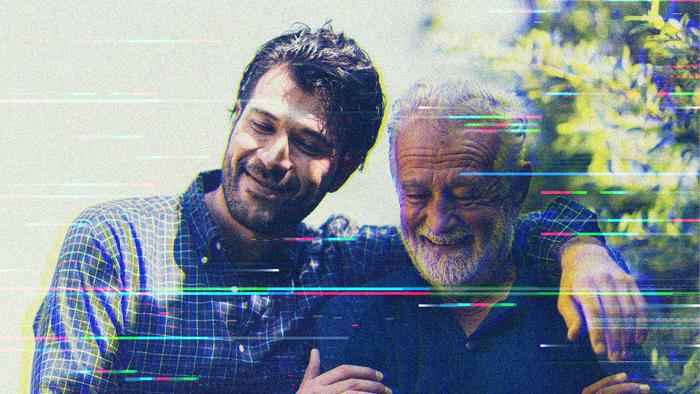
In-person contact helps lead to lower levels of loneliness in older people, but other ways of staying in touch, such as phoning, emailing or texting, are not as effective in lowering loneliness, a team of researchers at The University of Texas at Austin and the University of Michigan have found.

The findings, out today in the The Journals of Gerontology: Series B Psychological Science, have implications for the health and well-being of many older people.

“We were interested to see how older adults react when they are lonely and the effects that different types of social contact had on that loneliness,” said Shiyang Zhang, the paper’s co-author and a UT postdoctoral fellow in human development and family sciences. “We found that when older adults feel lonely, they are more likely to pick up the phone and call someone. But in-person visits were the only type of contact that actually decreased levels of reported loneliness.”

Scientists have long known that regular social contact is important for mental and physical health and contributes to longevity in older age, while loneliness has been linked with heart disease, cognitive decline and even premature death. Although many older adults face chronic health conditions and mobility issues that may make in-person contact more difficult, the new study suggests that in-person contact is an important component of any widespread effort to address loneliness in older adults. 

The study also examined whether the social contact was between people with close or weak social ties. Researchers found that when older adults felt lonely, they were likely to reach out to their close friends and family. It turns out that in-person contact — even with someone with whom they had only weak ties, such as an acquaintance — was predictive of lower levels of loneliness better than, say, a phone call with a family member or friend with whom ties were stronger.

“Although phone contact is available at most times and provides older adults with opportunities for social connections when they feel lonely, it appears that phone contact may not be as effective in reducing loneliness as in-person contact,” Zhang said. “Phone and digital contact do not provide older adults with the same emotional closeness and comfort as in-person contact. It’s just not a substitute.”

Karen Fingerman, who holds the Sonia Wolf Wilson Regents Administrative Professorship in Human Ecology in UT’s Department of Human Development and Family Sciences, UT graduate student Zexi Zhou and University of Michigan’s Kira S. Birditt were also authors of the paper. Funding for the research was provided by the National Institute on Aging, the Center on Aging and Population Sciences at UT, and the Eunice Kennedy Shriver National Institute of Child Health and Human Development.


Journal

The Journals of Gerontology Series B

DOI

10.1093/geronb/gbae115

Method of Research

Observational study

Subject of Research

People

Article Title

Loneliness and Mode of Social Contact in Late Life

Article Publication Date

28-Aug-2024

COI Statement

Authors declare no conflicts of interest.
Share12Tweet8Share2ShareShareShare2

Related Posts

Tirzepatide Versus GLP-1 Agonists for Stroke Risk in Atrial Fibrillation and Diabetes

August 22, 2026
Real-world study examines psychotic complications of subcutaneous foslevodopa/foscarbidopa infusions in 198 patients

Real-world study examines psychotic complications of subcutaneous foslevodopa/foscarbidopa infusions in 198 patients

August 22, 2026

Blood-flow signals from liver vessels direct region-specific liver function through Wnt pathways

August 22, 2026

Proteomics Links Environmental and Genetic Parkinson’s Models to Purine Metabolism

August 22, 2026

POPULAR NEWS

  • KAIST Surface Defects Boost Droplet Formation, Removal, and Heat Transfer by 5.5-Fold

    29 shares
    Share 12 Tweet 7
  • Dual-oxygen pancreatic cancer organoids mirror basal-classical diversity, spatial transcriptomics confirms

    29 shares
    Share 12 Tweet 7
  • Tirzepatide Versus GLP-1 Agonists for Stroke Risk in Atrial Fibrillation and Diabetes

    29 shares
    Share 12 Tweet 7
  • Real-world study examines psychotic complications of subcutaneous foslevodopa/foscarbidopa infusions in 198 patients

    29 shares
    Share 12 Tweet 7

About

We bring you the latest biotechnology news from best research centers and universities around the world. Check our website.

Follow us

Recent News

KAIST Surface Defects Boost Droplet Formation, Removal, and Heat Transfer by 5.5-Fold

Dual-oxygen pancreatic cancer organoids mirror basal-classical diversity, spatial transcriptomics confirms

Tirzepatide Versus GLP-1 Agonists for Stroke Risk in Atrial Fibrillation and Diabetes

Subscribe to Blog via Email

Enter your email address to subscribe to this blog and receive notifications of new posts by email.

Join 85 other subscribers
  • Contact Us

Bioengineer.org © Copyright 2023 All Rights Reserved.

Welcome Back!

Login to your account below

Forgotten Password?

Retrieve your password

Please enter your username or email address to reset your password.

Log In
No Result
View All Result
  • Homepages
    • Home Page 1
    • Home Page 2
  • News
  • National
  • Business
  • Health
  • Lifestyle
  • Science

Bioengineer.org © Copyright 2023 All Rights Reserved.