


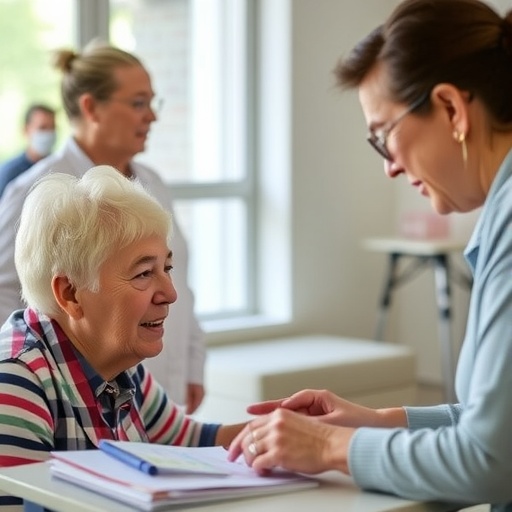
In an era where the quality of care in long-term healthcare facilities is paramount, a groundbreaking study protocol has emerged from Germany, designed to enhance the educational practices in nursing homes. The research focuses on the establishment of the Transfer Cluster of Academic Teaching Nursing Homes, known as TCALL. This initiative, characterized by its quasi-experimental longitudinal study design, aims not only to implement effective teaching strategies but also to serve as a comprehensive framework for evaluating and disseminating best practices in the realm of nursing home care.
The TCALL project is built upon the principles of strategic steering and systematic evaluation, ensuring that it aligns with the evolving needs of the long-term care sector. The study is spearheaded by an esteemed group of researchers, including J. Frense, B. Preuß, and M. Zündel, who have meticulously crafted the study protocol to address critical areas of nursing education and practice. This innovative approach promises to bridge the gap between academic knowledge and practical application, ensuring that nursing home residents receive the highest standard of care.
One of the pivotal aspects of the TCALL project is its focus on collaboration among various stakeholders in the healthcare ecosystem. The study protocol outlines a framework for the strategic integration of academic institutions, nursing homes, and healthcare professionals. By fostering teamwork and shared goals, the project endeavors to create a sustainable model that enhances the educational infrastructure within long-term care settings. This not only benefits the caregivers but also enriches the experiences of the residents who depend on their expertise.
Throughout the course of the study, researchers will employ a variety of quantitative and qualitative methods to evaluate the effectiveness of the implemented teaching strategies. This comprehensive evaluation process will involve direct observations, surveys, and interviews with both staff and residents, allowing for a holistic assessment of the educational initiatives. By analyzing these diverse data sets, the researchers aim to identify best practices that can be replicated within other nursing homes across Germany and beyond.
The TCALL project’s quasi-experimental design represents a significant advancement in the field of nursing research. Unlike traditional studies that may rely solely on theoretical models, this approach emphasizes real-world application and practical outcomes. The researchers are committed to ensuring that their findings translate into actionable strategies that can be utilized by nursing educators and administrators alike. This pragmatic perspective is essential for addressing the ongoing challenges faced by the long-term care sector, particularly in light of the increasing demands placed on healthcare systems.
At the heart of the TCALL initiative is the commitment to continuous improvement in nursing education. The study protocol emphasizes the importance of ongoing training and professional development for nursing staff. By prioritizing education, the project aims to cultivate a more skilled and knowledgeable workforce, ultimately leading to improved care outcomes for residents. This proactive approach is particularly relevant in the context of an aging population, where the need for specialized care is more pronounced than ever.
The dissemination of findings from the TCALL project is another critical component of the study’s protocol. Researchers plan to share their results through various channels, including academic journals, conferences, and community workshops. By fostering an open dialogue about the educational strategies tested in nursing homes, the project seeks to inspire a broader movement towards enhancing nursing education on a national and even global scale. This commitment to sharing knowledge is indicative of the researchers’ dedication to improving the standards of care in long-term facilities.
Furthermore, the TCALL study recognizes the importance of technology in modern healthcare education. The researchers are exploring innovative methods for integrating digital resources into their teaching strategies. This includes the use of virtual simulations, online training modules, and telehealth tools that can enhance both the learning experience for nursing staff and the quality of care provided to residents. Embracing technology not only modernizes the educational process but also prepares nursing professionals to navigate the complexities of contemporary healthcare environments.
As the study progresses, the researchers will monitor key performance indicators to gauge the impact of their interventions on both staff development and resident outcomes. This rigorous monitoring will enable them to make data-driven adjustments to their educational programs, ensuring that they remain relevant and effective in addressing the evolving needs of the long-term care sector. The commitment to evidence-based practice is a hallmark of the TCALL initiative, reinforcing the idea that continuous improvement is essential for achieving excellence in nursing care.
Engagement with residents and their families also plays a vital role in the TCALL project. The researchers recognize that care in nursing homes extends beyond professional staff; the involvement of family members and the wider community is crucial for fostering a supportive and enriching environment. The study protocol includes strategies for encouraging family participation and feedback, thereby creating a more inclusive atmosphere that values the perspectives and preferences of residents.
The TCALL initiative also has the potential to serve as a model for other countries grappling with similar challenges in long-term care. As global demographics shift and the demand for healthcare services intensifies, innovative solutions are needed to ensure that nursing homes can deliver high-quality care. The findings and frameworks developed through the TCALL project may provide valuable insights for policymakers and healthcare leaders around the world, prompting a reevaluation of nursing education and practice standards.
In conclusion, the Transfer Cluster of Academic Teaching Nursing Homes project represents a significant step forward in the field of nursing education and long-term care. Through its robust study protocol, TCALL aims to transform the landscape of nursing home care in Germany by promoting effective teaching strategies, fostering collaboration among stakeholders, and prioritizing continuous improvement. As the study unfolds, it holds the promise of not only enhancing the experience of nursing staff but also significantly improving the quality of life for residents. By sharing their findings widely, the researchers hope to inspire a transformative movement in nursing education that prioritizes excellence in care, ultimately benefiting a vulnerable population in need of compassionate and competent professionals.
Subject of Research: Enhancing nursing education in long-term care settings in Germany.
Article Title: Study protocol for the strategic steering, implementation, evaluation, and dissemination of the Transfer Cluster of Academic Teaching Nursing Homes in long-term care in Germany (TCALL) – a quasi-experimental longitudinal study.
Article References:
Frense, J., Preuß, B., Zündel, M. et al. Study protocol for the strategic steering, implementation, evaluation, and dissemination of the Transfer Cluster of Academic Teaching Nursing Homes in long-term care in Germany (TCALL) – a quasi-experimental longitudinal study.
BMC Nurs (2026). https://doi.org/10.1186/s12912-026-04325-4
Image Credits: AI Generated
DOI:
Keywords: Nursing education, long-term care, Germany, TCALL, quality of care, healthcare collaboration.
Tags: academic teaching nursing homes initiativebest practices in nursing home careenhancing quality of care in nursing homesGermany long-term care researchlong-term care improvementnursing education and practicenursing home education practicesquasi-experimental longitudinal studystakeholder collaboration in healthcarestrategic steering in healthcaresystematic evaluation in nursingTCALL study protocol



