


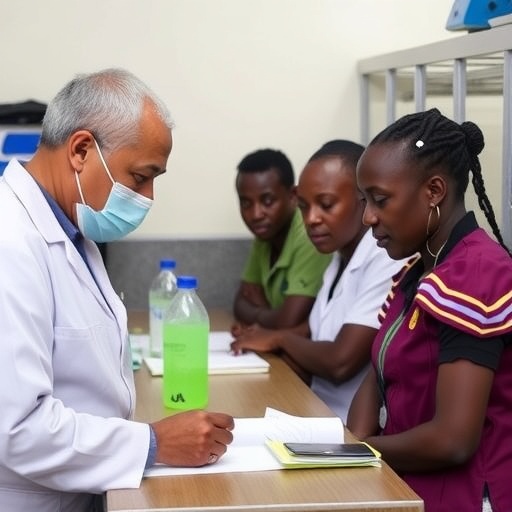
In recent years, the landscape of healthcare, particularly in developing nations, has witnessed a transformative shift. This change has been propelled by a growing recognition of the importance of clinical laboratory quality. The need for reliable and efficient laboratory services has never been more pressing, as healthcare systems across the globe work diligently to meet the increasing expectations of patients and healthcare professionals alike. Rwanda, a nation striving to enhance the quality of its healthcare services, is at the forefront of these efforts, as evidenced by innovative research addressing the challenges faced by clinical laboratories.
A recent study conducted by Nzabahimana, Namatovu, Uwineza, and their team sheds light on the critical role that clinical laboratory quality plays in the broader healthcare continuum. By gathering insights from physicians and laboratory professionals, the researchers have offered a comprehensive overview of the current state of laboratory services in Rwanda. This examination is not merely an academic pursuit; it reflects the realities of a nation striving to improve its healthcare delivery mechanisms to align with global standards.
The challenges faced by clinical laboratories in Rwanda are multi-faceted. Issues such as inadequate infrastructure, limited access to modern technology, and a shortage of trained personnel create significant barriers to delivering high-quality laboratory services. These obstacles are particularly concerning in a context where accurate diagnostic testing is vital for patient care. The implications of these challenges extend beyond individual patients; they affect the overall efficiency and effectiveness of the healthcare system in Rwanda as a whole.
Central to enhancing clinical laboratory quality is the recognition of patient expectations. As patients become more informed and engaged in their healthcare decisions, their expectations regarding the quality of services have risen. They demand not only accurate diagnoses but also timely and accessible testing services that can help facilitate better health outcomes. This evolving patient landscape poses both challenges and opportunities for healthcare providers in Rwanda, emphasizing the need for continuous improvement in laboratory services.
The research also highlights the importance of collaboration among healthcare professionals. The insights derived from physicians and laboratory professionals suggest that communication and partnership are vital in navigating the complexities of laboratory quality. By fostering a culture of collaboration, clinical laboratories can better understand the needs of physicians, ensuring that testing protocols and turnaround times meet the demands of patient care. This collaborative approach not only enhances laboratory efficiency but also strengthens the overall healthcare system.
In addition to collaboration, ongoing training and education for laboratory personnel emerge as critical components of quality enhancement. The study emphasizes the necessity for institutions to invest in the professional development of their laboratory staff. By ensuring that personnel are well-trained in modern laboratory techniques and technologies, healthcare organizations can significantly improve the reliability of test results. Educational initiatives can empower laboratory professionals to take ownership of quality assurance processes, driving changes that directly benefit patient care.
Furthermore, the integration of technology into laboratory operations presents a significant opportunity for improvement. Advances in laboratory automation, data management systems, and diagnostic technologies can streamline processes, reduce human error, and enhance the accuracy of testing outcomes. The researchers underscore the importance of adopting such technologies within Rwandan clinical laboratories as a means of elevating service quality and efficiency. By harnessing the power of technology, Rwandan laboratories can position themselves as leaders in the region, improving not only local healthcare but also contributing to global health initiatives.
As the researchers delve deeper into the perspectives of healthcare professionals, the theme of accountability emerges as a recurring factor in laboratory quality. The study calls attention to the necessity for systems of accountability to ensure that clinical laboratories meet established quality standards. By implementing benchmarks and performance indicators, healthcare organizations can monitor improvement over time and address issues proactively. This accountability not only enhances trust in laboratory services but also drives a culture of excellence.
Moreover, the experiences of Rwandan healthcare practitioners provide valuable lessons for other nations striving to enhance their clinical laboratory services. The challenges faced in Rwanda are not unique; many developing countries share similar hurdles. The insights drawn from this research can serve as a blueprint for interventions that can be adapted to various contexts. By sharing experiences and practices, nations can collectively work towards elevating the standard of healthcare delivery on a global scale.
The study conducted by Nzabahimana and colleagues ultimately reflects a forward-thinking vision for the future of clinical laboratories in Rwanda. It emphasizes the alignment of laboratory services with broader healthcare objectives, particularly in terms of enhancing patient outcomes and satisfaction. The recommendations put forth by the researchers echo the need for a strategic and comprehensive approach to laboratory quality improvement, ensuring that Rwandan healthcare is prepared to meet future challenges head-on.
In conclusion, enhancing clinical laboratory quality in Rwanda is not merely a healthcare objective; it symbolizes a commitment to improving the overall health and well-being of the population. By addressing the existing challenges and capitalizing on opportunities for improvement, Rwanda can establish itself as a model for quality healthcare in the region. The insights gained from this research are invaluable, providing actionable strategies for healthcare stakeholders to optimize clinical laboratory services within their systems.
As Rwanda navigates this transformative journey, the importance of collaborative efforts, training, technological advancements, and accountability will undoubtedly play significant roles in shaping the future of healthcare in the country. The ongoing commitment to quality improvement will be key in addressing both current expectations and future healthcare challenges. The visions outlined by the researchers serve as a reminder that improving laboratory quality is essential for ensuring that patients receive the accurate diagnoses and care they deserve.
With an eye towards the future, the research conducted by Nzabahimana et al. provides a hopeful narrative for clinical laboratories in Rwanda. It highlights the potential for growth and development within the healthcare sector, emphasizing that quality is not just a goal but a continual journey. As the nation moves forward, the insights shared will help to shape the course of healthcare delivery, paving the way for improved health outcomes and enhanced patient satisfaction.
In an era marked by rapid advancements, the commitment to enhancing clinical laboratory quality stands as a testament to Rwanda’s dedication to providing high-quality healthcare services. It is a journey that reflects the aspirations of a nation aiming for excellence, transformation, and, ultimately, a healthier tomorrow for all Rwandans.
Subject of Research: Enhancing clinical laboratory quality in Rwanda
Article Title: Enhancing clinical laboratory quality in Rwanda: addressing healthcare expectations and future fitness – insights from observations and perspectives of physicians and laboratory professionals.
Article References:
Nzabahimana, I., Namatovu, F., Uwineza, A. et al. Enhancing clinical laboratory quality in Rwanda: addressing healthcare expectations and future fitness – insights from observations and perspectives of physicians and laboratory professionals.
BMC Health Serv Res (2026). https://doi.org/10.1186/s12913-026-14062-8
Image Credits: AI Generated
DOI:
Keywords: Clinical laboratory quality, Healthcare expectations, Rwanda, Physicians, Laboratory professionals, Healthcare improvement, Diagnostic testing, Quality assurance, Collaboration in healthcare.



