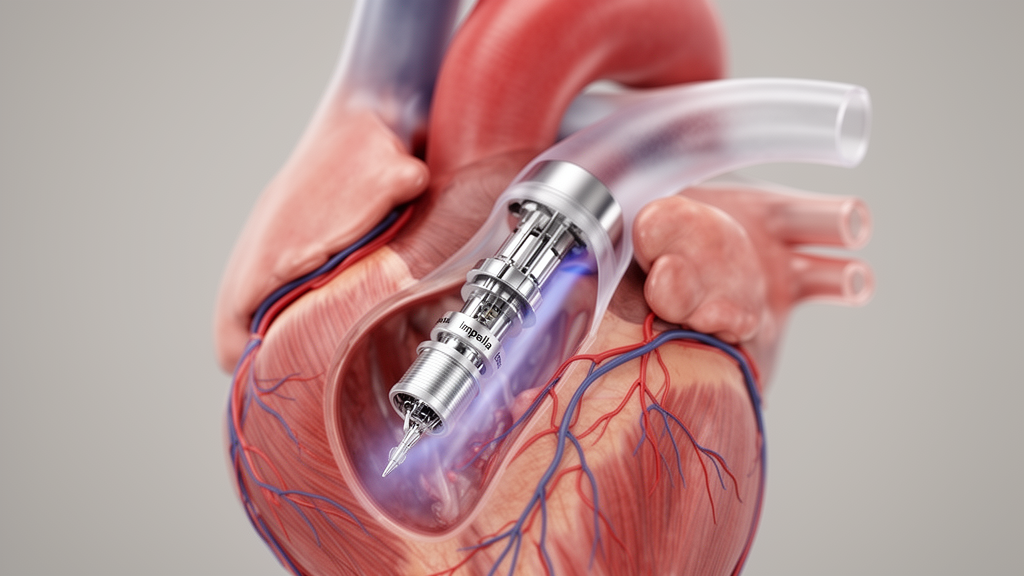
A meta-analysis comparing left ventricular unloading devices during veno-arterial extracorporeal membrane oxygenation found that Impella was linked to lower 30-day mortality but higher rates of central nervous system and access-site bleeding compared to an intra-aortic balloon pump.
Veno-arterial extracorporeal membrane oxygenation is used for refractory cardiogenic shock, but retrograde aortic flow increases left ventricular afterload, impairing myocardial recovery. Adjunctive unloading strategies, including the intra-aortic balloon pump and Impella, are commonly employed to alleviate this burden, though comparative clinical outcomes have remained unclear.
To evaluate comparative efficacy, researchers performed a systematic review and meta-analysis of studies comparing Impella against intra-aortic balloon pumps for left ventricular unloading during veno-arterial extracorporeal membrane oxygenation in adults. Medical databases were searched through January 15, 2026. Clinically significant bleeding served as the primary outcome, while secondary endpoints included central nervous system hemorrhage, access-site bleeding, gastrointestinal bleeding, renal replacement therapy, in-hospital mortality, and 30-day mortality. Random-effects models were utilized to calculate pooled risk ratios and 95 percent confidence intervals.
Seven retrospective studies encompassing 592 adult patients were included, with 250 receiving Impella and 342 receiving an intra-aortic balloon pump. Six studies contributed data to the primary bleeding analysis, covering 221 Impella patients and 314 balloon pump recipients. Clinically significant or author-reported bleeding occurred in 58.8 percent of Impella-treated patients compared with 37.6 percent of balloon pump patients. This yielded a pooled risk ratio of 1.44 with a 95 percent confidence interval of 0.93 to 2.24 and an I-squared heterogeneity of 90 percent, indicating no statistically significant difference in primary bleeding.
Analysis of specific bleeding complications demonstrated significant differences between the two mechanical devices. Impella use was associated with an increased incidence of central nervous system hemorrhage, showing a pooled risk ratio of 3.64 with a 95 percent confidence interval of 1.32 to 10.07. Access-site bleeding was also significantly higher in Impella cohorts, yielding a risk ratio of 1.94 with a 95 percent confidence interval of 1.11 to 3.41. In contrast, gastrointestinal bleeding did not differ significantly between cohorts, exhibiting a pooled risk ratio of 1.58 with a 95 percent confidence interval of 0.65 to 3.84.
Secondary non-bleeding complications and mortality metrics revealed distinct patterns across the studied populations. The need for renal replacement therapy did not differ significantly, showing a pooled risk ratio of 1.27 with a 95 percent confidence interval of 0.89 to 1.80. In-hospital mortality was similarly comparable between groups, with a risk ratio of 0.98 and a 95 percent confidence interval of 0.71 to 1.37. However, pooled 30-day mortality was significantly lower in the Impella cohorts, presenting a pooled risk ratio of 0.79 with a 95 percent confidence interval of 0.64 to 0.99.
The authors noted that available evidence indicates Impella is associated with higher rates of selected bleeding complications, particularly central nervous system and access-site hemorrhage, alongside a favorable 30-day mortality rate. Because all included investigations were retrospective with nonrandomized treatment allocation, the authors cautioned that these findings should be interpreted as hypothesis-generating rather than establishing causal relationships. Consequently, prospective clinical trials with standardized bleeding and anticoagulation reporting remain necessary to define the optimal left ventricular unloading strategy during veno-arterial extracorporeal membrane oxygenation.
Subject of Research: Comparative bleeding and mortality outcomes of Impella versus IABP for left ventricular unloading during VA-ECMO
Article Title: Bleeding and survival outcomes with Impella versus IABP for left ventricular unloading during VA-ECMO: a systematic review and meta-analysis
Article References: Bartlett, A., Gachineiro, A., & Smith, C. (2026). Bleeding and survival outcomes with Impella versus IABP for left ventricular unloading during VA-ECMO: a systematic review and meta-analysis. Journal of Cardiothoracic Surgery. https://doi.org/10.1186/s13019-026-04798-z
Image Credits: AI Generated
DOI: 10.1186/s13019-026-04798-z
Keywords: veno-arterial extracorporeal membrane oxygenation, VA-ECMO, Impella, intra-aortic balloon pump, IABP, left ventricular unloading, cardiogenic shock, central nervous system hemorrhage, access-site bleeding, gastrointestinal bleeding, renal replacement therapy, in-hospital mortality, 30-day mortality, systematic review, meta-analysis, retrograde aortic flow, myocardial recovery, anticoagulation reporting
News Source: Ophelia Keating. (November 17, 2026). Impella Shows Lower 30-Day Mortality but Higher Bleeding Risks Than IABP. Scienmag.