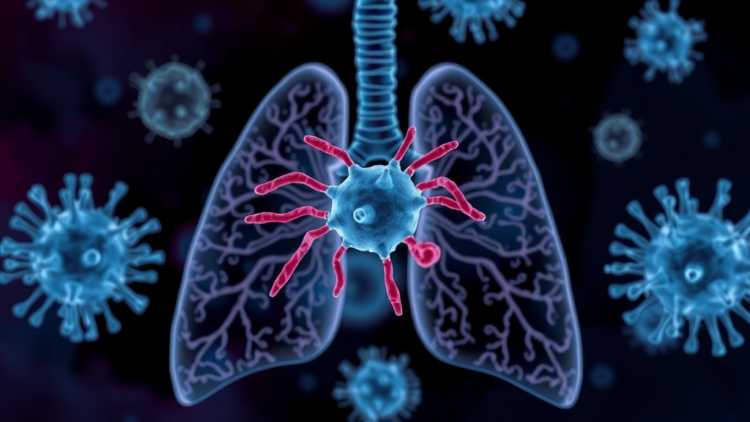
A surprising member of the immune system has emerged as a critical defender against one of the most stubborn bacterial threats to human lungs. Researchers studying infection with Mycobacterium abscessus, a notoriously drug-resistant relative of the tuberculosis bacterium, have discovered that a specialized population of immune cells known as IL-17A-producing γδ T cells is essential for clearing this pathogen from the lung. The findings, published in Nature Microbiology, come from a team led by Xiaoqian Hu, Siran Lin, and Wenchang Meng, working under the direction of Lingyun Shao and Yuli Lin at Fudan University in Shanghai. Their work not only redefines how scientists think about immunity to non-tuberculous mycobacteria but also points toward a fundamentally new therapeutic strategy for patients whose immune defenses have been otherwise compromised.
Non-tuberculous mycobacteria, often abbreviated NTM, are environmental organisms that increasingly cause chronic and debilitating lung disease worldwide. Among them, Mycobacterium abscessus stands out as particularly menacing. It is naturally resistant to many standard antibiotics, it can form ropelike cords that shield it from engulfment by immune cells, and it thrives in patients with pre-existing lung damage such as bronchiectasis, cystic fibrosis, or pulmonary fibrosis. Treatment regimens typically stretch for many months, involve multiple toxic drugs, and frequently fail to eradicate the infection. Against this grim clinical backdrop, the question of how the immune system naturally fights M. abscessus has remained surprisingly underexplored, particularly with respect to γδ T cells, an unconventional lymphocyte population whose role in NTM infection had never been systematically characterized.
γδ T cells differ from the conventional αβ T cells that dominate textbook immunology. Rather than recognizing peptide fragments presented by major histocompatibility molecules, they respond rapidly to a wide range of stress signals and microbial products, earning them a reputation as a bridge between innate and adaptive immunity. A major subset of these cells produces interleukin-17A, a powerful inflammatory cytokine best known for recruiting neutrophils and shaping defenses at body surfaces. To determine whether these cells matter in M. abscessus infection, the researchers built a mouse model of pulmonary infection and mapped the immune landscape of lung tissue over the early days of disease using single-cell RNA sequencing, a technique that captures the gene expression profile of thousands of individual cells simultaneously.
The single-cell atlas revealed a striking pattern. As infection took hold, γδ T cells accumulated in the lung and expanded a population that expressed high levels of IL-17A. When the team removed γδ T cells entirely, using mice genetically engineered to lack them, the consequences were dramatic: bacteria persisted at far higher levels in the lungs and spleens, and lung inflammation worsened. Conversely, when γδ T cells were depleted in animals that had already cleared a first infection and were then re-challenged, the protective advantage of prior exposure evaporated. These experiments established γδ T cells as indispensable players in the early defense against M. abscessus, a finding that had not been demonstrated before for any non-tuberculous mycobacterial pathogen.
Delving deeper, the investigators identified IL-17A itself as the linchpin of this protective response. Mice unable to produce IL-17A lost much of their capacity to control the infection, and importantly, the defect traced back to the γδ T cells themselves. Without IL-17A signaling, the cells became less adept at recognizing the bacterium and lost much of their cytotoxic firepower. In an elegant series of transfer experiments, IL-17A-deficient γδ T cells failed to protect infected animals, whereas their normal counterparts succeeded. This revealed something unusual: IL-17A was not merely acting as a broadcast signal to other immune players but was required within the γδ T cells themselves, a cell-intrinsic requirement that underscores how tightly the cytokine and its producer are wired together during this infection.
The mechanism by which these cells actually kill the bacterium proved to be equally instructive. M. abscessus is an extracellular pathogen during key phases of infection, residing outside host cells in the airways and tissue spaces. The researchers found that IL-17A-positive γδ T cells eliminated extracellular bacteria through a granzyme B-dependent cytotoxic pathway. Granzyme B is a serine protease classically associated with the destruction of virus-infected or malignant cells, delivered through pore-forming perforin or other release mechanisms. Its deployment against free-living bacteria adds a new dimension to the antimicrobial portfolio of γδ T cells and explains how a lymphocyte population usually discussed in the context of autoimmunity and inflammation can act as a direct bactericidal weapon.
How, then, does the immune system know to mobilize these cells in the first place? The answer lies in a cascade that begins with Toll-like receptor 2, a pattern-recognition receptor on macrophages that detects components of the bacterial cell wall. When M. abscessus engaged TLR2 on lung macrophages, the macrophages responded by secreting two cytokines, interleukin-1β and interleukin-23. This cytokine pair is a well-known stimulus for IL-17 production in T cells, and in this context it drove both the expansion and the activation of the IL-17A-positive γδ T cell population. Blocking either IL-1β or IL-23 in infected mice diminished the γδ T cell response and impaired bacterial control, mapping out a complete signaling axis that runs from bacterial recognition through macrophage activation to lymphocyte mobilization and, ultimately, bacterial killing.
Perhaps the most clinically resonant aspect of the study concerns patients whose immunity depends on interferon-gamma, the canonical cytokine for defense against mycobacteria. A subset of individuals, particularly in Southeast Asia, develops autoantibodies that neutralize their own interferon-gamma, leaving them exquisitely vulnerable to disseminated NTM infections. Using single-cell RNA sequencing of peripheral blood cells from NTM patients, the researchers found evidence that anti-interferon-gamma autoantibodies compromise γδ T cell function in humans, mirroring what they observed in mice lacking the interferon-gamma receptor. Crucially, in mice engineered without functional interferon-gamma signaling, IL-17A-positive γδ T cells still conferred protection, and the same held true in a model combining M. abscessus infection with bleomycin-induced pulmonary fibrosis. In other words, this arm of immunity operates independently of the interferon-gamma axis and remains effective even in scarred, damaged lungs.
The implications for therapy are considerable. Current treatment of NTM disease relies almost entirely on antibiotics that the pathogen is adept at resisting, and there are no licensed immunotherapies that bolster host defenses. If the pathways defined in this study can be harnessed in patients, whether by stimulating IL-1β and IL-23 signaling, expanding protective γδ T cell populations, or delivering IL-17A-driven cytotoxic activity directly, clinicians could gain a means of strengthening the lung’s own antimicrobial machinery. Such approaches would be especially valuable for the growing population of patients with anti-interferon-gamma autoantibodies or structural lung disease, for whom conventional regimens offer diminishing returns. The researchers caution that translating mouse findings to the clinic will require careful work, particularly because IL-17A is also implicated in inflammatory conditions such as psoriasis and could carry safety risks if induced systemically. Nevertheless, the identification of a concrete, mechanistically defined cell type that can clear M. abscessus marks a genuine advance. It transforms γδ T cells from immunological bystanders into a promising therapeutic target, and it reframes the fight against antibiotic-resistant mycobacteria as a battle that the immune system, with the right encouragement, may be able to win on its own terms.
Subject of Research: The role of IL-17A-producing γδ T cells in controlling pulmonary Mycobacterium abscessus infection in mice.
Article Title: IL-17A-producing γδ T cells control pulmonary Mycobacterium abscessus infection in mice
Article References: Hu, X., Lin, S., Meng, W., Liu, H., Qin, Z., Wu, Z., Wan, Y., Ma, S., Yang, X., Yin, Z., Chu, Y., Zhang, W., Shao, L., & Lin, Y. (2026). IL-17A-producing γδ T cells control pulmonary Mycobacterium abscessus infection in mice. Nature Microbiology. https://doi.org/10.1038/s41564-026-02466-5
Image Credits: AI Generated
DOI: 10.1038/s41564-026-02466-5
Keywords: Mycobacterium abscessus, non-tuberculous mycobacteria, γδ T cells, IL-17A, interferon-gamma, granzyme B, TLR2, IL-1β, IL-23, pulmonary infection, immunology, antibiotic resistance
Cite Scienmag News
APA MLA Chicago
Kristina Jarvis. (September 12, 2026). Immune Cells That Kill Superbug Bacteria Directly Offer New Hope for Hard-to-Treat Lung Infections. Scienmag. https://scienmag.com/immune-cells-that-kill-superbug-bacteria-directly-offer-new-hope-for-hard-to-treat-lung-infections/
Kristina Jarvis. “Immune Cells That Kill Superbug Bacteria Directly Offer New Hope for Hard-to-Treat Lung Infections.” Scienmag, 12 September 2026, https://scienmag.com/immune-cells-that-kill-superbug-bacteria-directly-offer-new-hope-for-hard-to-treat-lung-infections/. Accessed 12 September 2026.
Kristina Jarvis. “Immune Cells That Kill Superbug Bacteria Directly Offer New Hope for Hard-to-Treat Lung Infections.” Scienmag. September 12, 2026. https://scienmag.com/immune-cells-that-kill-superbug-bacteria-directly-offer-new-hope-for-hard-to-treat-lung-infections/
Copy citation Download RIS
Tags: Antibiotic resistanceAntimicrobial Resistancedrug-resistant lung bacteriagranzyme Bhost defense against superbugsIL-17AIL-17A cytokineIL-1βIL-23immune cell mechanismsImmune responseimmunologyinnovative immunotherapyinterferon-gammalung disease researchlung infection treatmentMycobacterium abscessusMycobacterium abscessus infectionnon-tuberculous mycobacteriapulmonary infectionTLR2γδ T cells