• HOME
  • NEWS
  • EXPLORE
    • CAREER
      • Companies
      • Jobs
    • EVENTS
    • iGEM
      • News
      • Team
    • PHOTOS
    • VIDEO
    • WIKI
  • BLOG
  • COMMUNITY
    • FACEBOOK
    • INSTAGRAM
    • TWITTER
Tuesday, July 7, 2026
BIOENGINEER.ORG
No Result
View All Result
  • Login
  • HOME
  • NEWS
  • EXPLORE
    • CAREER
      • Companies
      • Jobs
        • Lecturer
        • PhD Studentship
        • Postdoc
        • Research Assistant
    • EVENTS
    • iGEM
      • News
      • Team
    • PHOTOS
    • VIDEO
    • WIKI
  • BLOG
  • COMMUNITY
    • FACEBOOK
    • INSTAGRAM
    • TWITTER
  • HOME
  • NEWS
  • EXPLORE
    • CAREER
      • Companies
      • Jobs
        • Lecturer
        • PhD Studentship
        • Postdoc
        • Research Assistant
    • EVENTS
    • iGEM
      • News
      • Team
    • PHOTOS
    • VIDEO
    • WIKI
  • BLOG
  • COMMUNITY
    • FACEBOOK
    • INSTAGRAM
    • TWITTER
No Result
View All Result
Bioengineer.org
No Result
View All Result
Home NEWS Science News Biology

Imaging technology reveals copper is key to meeting future food and energy needs

Bioengineer by Bioengineer
July 24, 2017
in Biology
Reading Time: 2 mins read
0
Share on FacebookShare on TwitterShare on LinkedinShare on RedditShare on Telegram
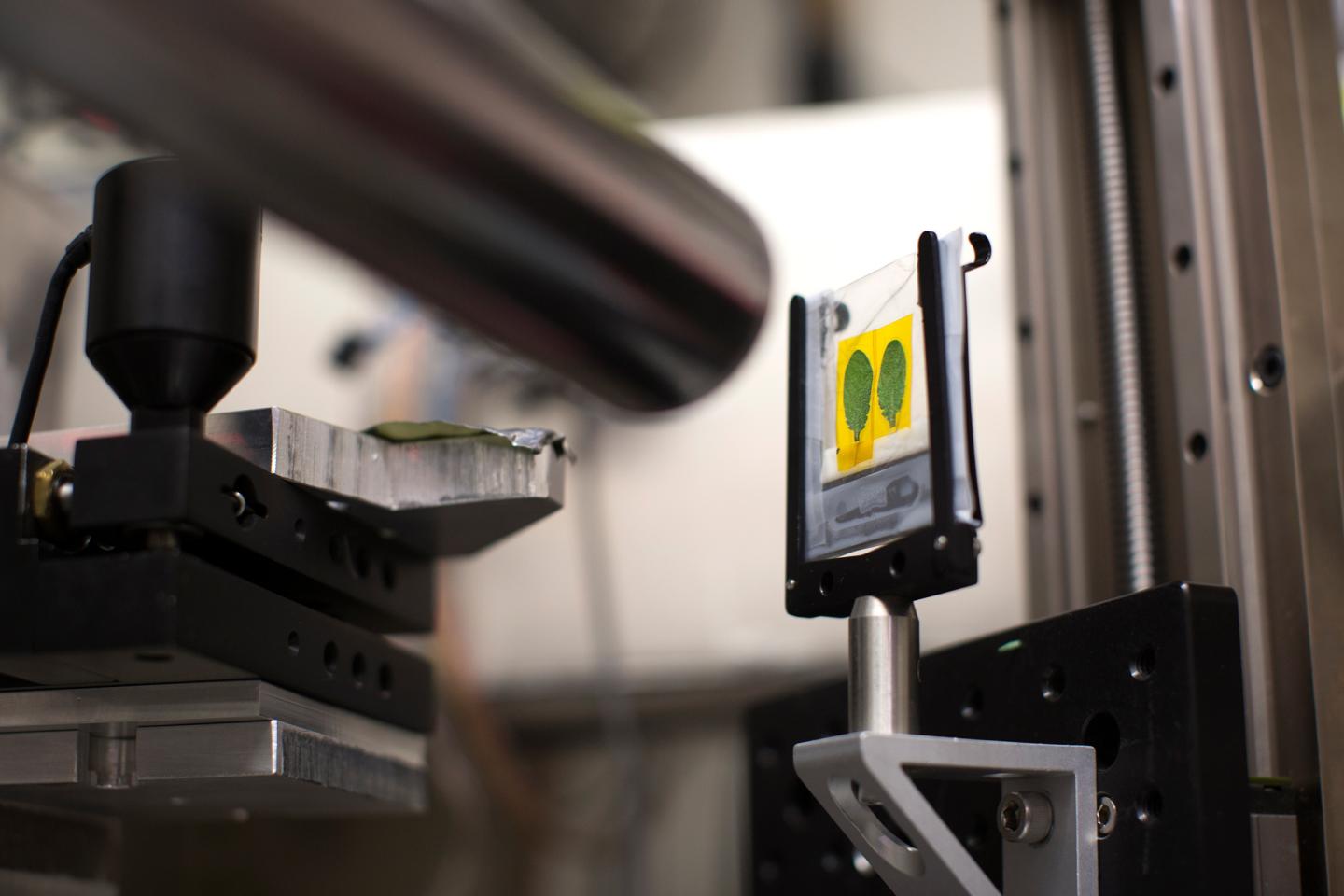
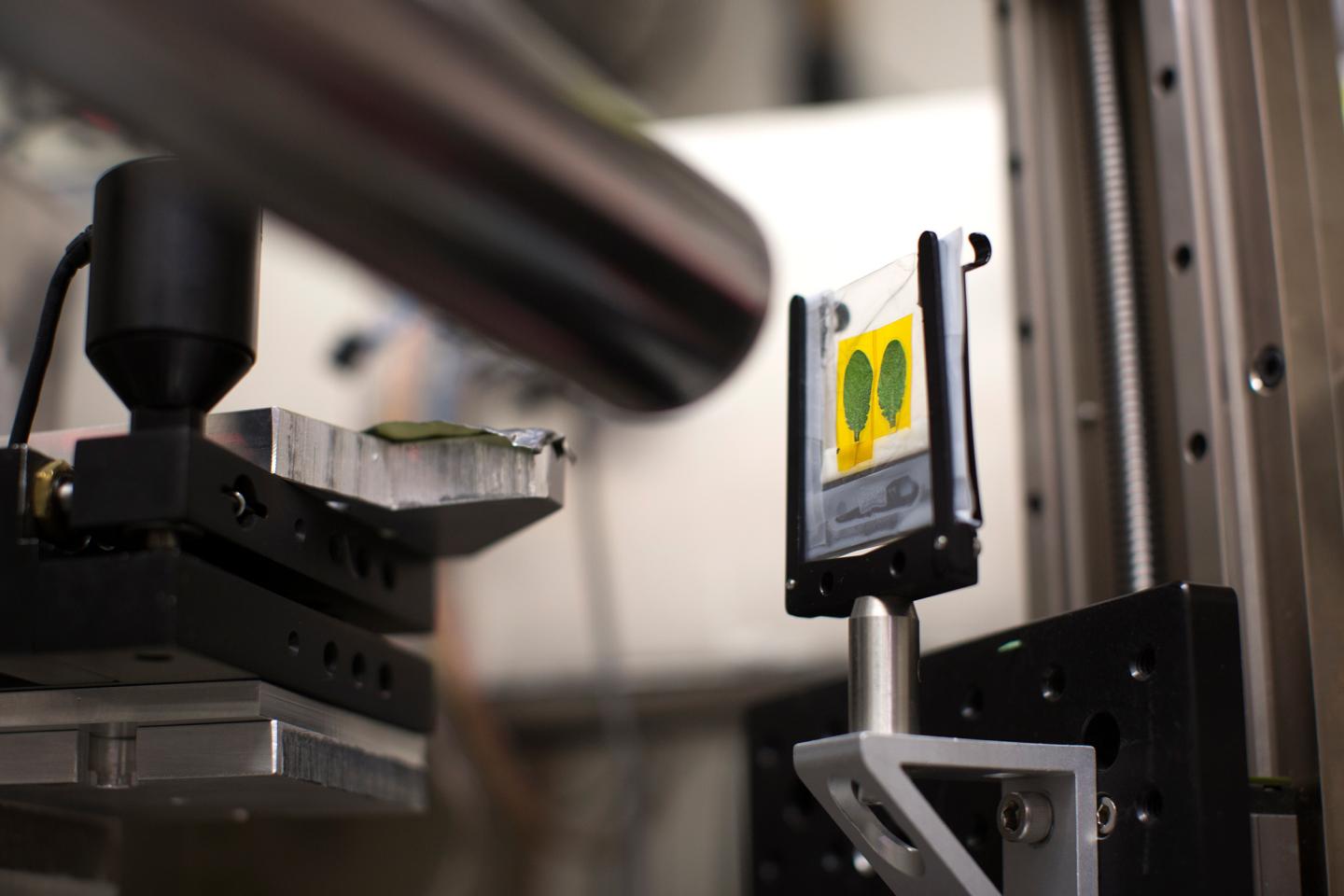
IMAGE

Credit: Cornell University

ITHACA, N.Y. – For the first time, Cornell University researchers are using imaging capabilities at the Cornell High Energy Synchrotron Source (CHESS) to explore how copper affects plant fertility. The work could provide key insights into how plants can be bred for better performance in marginal soils.

The human population is expected to surpass 9 billion by 2050, and meeting future food and energy needs requires increases in agricultural production by enhancing productivity on existing land or by increasing the amount of land used for production. Achieving these gains depends on adequate levels of soil micronutrients like copper, low levels of which can impact yield by reducing fertility and, in extreme cases, lead to total crop failure.

In the U.S., 206 million hectares of soil are classified as being potentially low in copper, with particular impact on major cereal crops. Copper deficiency can be remedied by the application of copper-based fertilizers, but this strategy has significant environmental costs.

Olena Vatamaniuk is an associate professor in the Section of Soil and Crop Sciences in the School of Integrative Plant Science at Cornell. Her investigation into copper uptake and distribution in plants, with a focus on how copper impacts pollen development and fertility, is funded by an $800,000 grant from the National Science Foundation. Characterizing the plant proteins that control these processes and identifying the genes responsible will guide development of plant cultivars that are better adapted to marginal, low-copper soils, according to Vatamaniuk.

Her research program in the College of Agriculture of Life Sciences has previously identified two proteins, SPL7 and CIT1, that are vital to this process. Visualizing subtle differences in copper uptake and distribution in response to genetic changes depends on imaging technologies, in which CHESS is a world leader.

"CHESS provides us an excellent opportunity to use high-precision, analytical tools to visualize and quantify the spatial distribution of copper in plants," Vatamaniuk said of CHESS's 2-D synchrotron-based X-ray fluorescence microscopy (2D-XRF). Because the procedure involves imaging of living tissue, the presence of the facility on the Ithaca campus minimizes plant transportation and maintenance.

"We hope that these studies will not only provide an answer for the long-standing question of how copper affects fertility of plants, but will also provide a paradigm for using X-ray fluorescence microscopy for addressing the role of mineral nutrients in plant reproduction," she said.

Biological imaging of this type is possible through advances in X-ray technology, said CHESS scientist Arthur Woll, a collaborator on the project. With the completion of CHESS-U, an upgrade to CHESS that advances the facility's X-ray microscopy, these tools will be available for a broad range of research questions. For the past two years, CHESS has been hosting biological imaging workshops focused on questions of interest to the plant science community.

Qi Sun, co-director of the bioinformatics facility at Cornell's Institute of Biotechnology, is co-principal investigator on the project. Along with Woll, other collaborators include Rong Huang, staff scientist at CHESS, and Lena F. Kourkoutis, assistant professor and the Rebecca Q. and James C. Morgan Sesquicentennial Faculty Fellow in the School of Applied and Engineering Physics.

###

Media Contact

Daryl Lovell
[email protected]
607-592-3925
@cornell

http://pressoffice.cornell.edu

Original Source

http://news.cornell.edu/stories/2017/07/chess-imaging-reveals-how-copper-affects-plant-fertility

Share12Tweet8Share2ShareShareShare2

Related Posts

Here are a few rewritten headlines for a science magazine post, each with a slightly different tone: Intriguing & poetic: How do organs sculpt themselves? Sea stars hold the secret Direct & research-focused: Sea stars reveal the hidden rules of organ formation Metaphorical & inviting: Tiny architects beneath the waves: What sea stars teach us about building organs Short & punchy: Star-shaped clues to how our organs take shape Question-led: Could a sea star show us how organs form? Elegant & feature-style: The body’s blueprint, glimpsed in a sea star’s arm

July 6, 2026
Bacteria evolve faster with unconventional gene copies — Biology

Bacteria evolve faster with unconventional gene copies

July 6, 2026

Neighbours rewire soil feedback via root microbiome shifts

July 6, 2026

Evolution-Inspired Biosensors Revolutionize Lipid Tracking in Real Time

July 2, 2026
Please login to join discussion

POPULAR NEWS

  • Detection of EDCs in Breast Milk and Infant Urine Up to Six Months Highlights Early Exposure Risks

    77 shares
    Share 31 Tweet 19
  • New Drug Candidate Developed at McMaster Shows Potential for Treating Brain Cancer

    58 shares
    Share 23 Tweet 15
  • Saying Goodbye to PGY-6: Pediatric Fellowship Realities

    103 shares
    Share 41 Tweet 26
  • KTU Researchers Explore Ultrasound’s Role in Enhancing Blood Flow Beyond Diagnostics

    53 shares
    Share 21 Tweet 13

About

We bring you the latest biotechnology news from best research centers and universities around the world. Check our website.

Follow us

Recent News

Flame retardant BDE-209 targets molecularly linked to ulcerative colitis

Ultra-high frequency particle impacts mimic rockbursts to shatter hard rock

Kidney transplant outcomes in older adults studied by German researchers

Subscribe to Blog via Email

Enter your email address to subscribe to this blog and receive notifications of new posts by email.

Join 83 other subscribers
  • Contact Us

Bioengineer.org © Copyright 2023 All Rights Reserved.

Welcome Back!

Login to your account below

Forgotten Password?

Retrieve your password

Please enter your username or email address to reset your password.

Log In
No Result
View All Result
  • Homepages
    • Home Page 1
    • Home Page 2
  • News
  • National
  • Business
  • Health
  • Lifestyle
  • Science

Bioengineer.org © Copyright 2023 All Rights Reserved.