• HOME
  • NEWS
  • EXPLORE
    • CAREER
      • Companies
      • Jobs
    • EVENTS
    • iGEM
      • News
      • Team
    • PHOTOS
    • VIDEO
    • WIKI
  • BLOG
  • COMMUNITY
    • FACEBOOK
    • INSTAGRAM
    • TWITTER
Friday, May 15, 2026
BIOENGINEER.ORG
No Result
View All Result
  • Login
  • HOME
  • NEWS
  • EXPLORE
    • CAREER
      • Companies
      • Jobs
        • Lecturer
        • PhD Studentship
        • Postdoc
        • Research Assistant
    • EVENTS
    • iGEM
      • News
      • Team
    • PHOTOS
    • VIDEO
    • WIKI
  • BLOG
  • COMMUNITY
    • FACEBOOK
    • INSTAGRAM
    • TWITTER
  • HOME
  • NEWS
  • EXPLORE
    • CAREER
      • Companies
      • Jobs
        • Lecturer
        • PhD Studentship
        • Postdoc
        • Research Assistant
    • EVENTS
    • iGEM
      • News
      • Team
    • PHOTOS
    • VIDEO
    • WIKI
  • BLOG
  • COMMUNITY
    • FACEBOOK
    • INSTAGRAM
    • TWITTER
No Result
View All Result
Bioengineer.org
No Result
View All Result
Home NEWS Science News Biology

Image methods tested on a SARS-CoV-2 protein improve the 3D reconstructions of macromolec

Bioengineer by Bioengineer
March 18, 2021
in Biology
Reading Time: 2 mins read
0
IMAGE
Share on FacebookShare on TwitterShare on LinkedinShare on RedditShare on Telegram

IMAGE

Credit: Javier Vargas

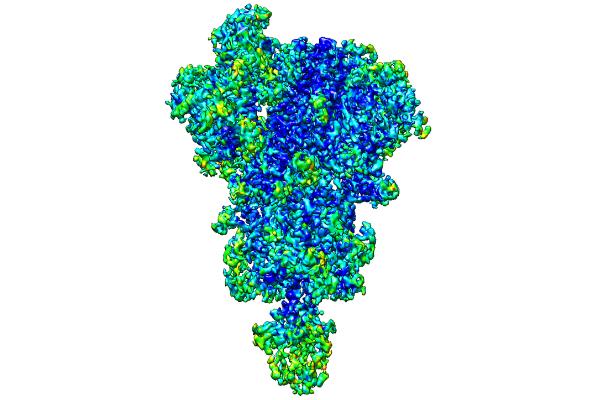
An international study led by the University Complutense of Madrid (UCM) proposed new computational image processing methods that improve the analysis and three-dimensional reconstruction of biological macromolecules.

Currently, determining the composition (i.e., the sequence of amino acids) of macromolecules such as proteins is relatively simple; however, determining the shape in which they are ordered in a three-dimensional structure is not. The new methodology, published in Nature Communications, improves the visualization of the 3D reconstructions obtained through cryogenic electron microscopy, as well as their quality.

“This study helps us broaden our understanding of proteins and other macromolecules that support essential life processes, providing new tools for structural biologists to interpret more with greater reliability”, explained Javier Vargas, Ramón y Cajal researcher at the Department of Optics of the UCM.

These methods are applied to diverse biological macromolecules with biomedical relevance, including 3D reconstructions of the SARS-CoV-2 spike S protein.

“This protein is essential for the entry of the virus into human cells. The processing of this protein with these new methods helped analyze regions that previously could not be interpreted”, says the physicist.

Utility in designing drugs

The study began when Vargas was working as a professor in McGill University (Canada) and was conducted and concluded when he returned to the UCM in mid-2020. In addition to these institutions, the study also counted on the participation of the National Biotechnology Centre of the Superior Council of Scientific Investigations (Spain) and the University of Texas in Austin (US).

The researchers predict that this study will be used to improve the construction of atomic models without previous information of macromolecules based on 3D reconstructions obtained using cryogenic electron microscopy.

“This information is essential for understanding and characterizing macromolecules from the biochemical standpoint and useful for designing new drugs such as those for blocking SARS-CoV-2 from accessing the interior of cells”, highlights Vargas.

###

Media Contact
María Milán García
[email protected]

Original Source

https://www.nature.com/articles/s41467-021-21509-5

Related Journal Article

http://dx.doi.org/10.1038/s41467-021-21509-5

Tags: BiologyMolecular Biology
Share12Tweet8Share2ShareShareShare2

Related Posts

Supercomputer Simulations Uncover How Bacterial Enzyme Pumps Sodium Ions, Opening Doors to Novel Antibiotics — Biology

Supercomputer Simulations Uncover How Bacterial Enzyme Pumps Sodium Ions, Opening Doors to Novel Antibiotics

May 15, 2026
New Astrobiology Special Collection Highlights Emerging Evidence Supporting Land-Based Origins of Life — Biology

New Astrobiology Special Collection Highlights Emerging Evidence Supporting Land-Based Origins of Life

May 14, 2026

Revolutionizing Textiles: Engineered Protein Fibers Pave the Way for Sustainable, Recyclable Fabrics

May 14, 2026

URI Master’s Student Emilio Pedroza Lopez Awarded Prestigious NSF Graduate Research Fellowship

May 14, 2026
Please login to join discussion

POPULAR NEWS

  • Research Indicates Potential Connection Between Prenatal Medication Exposure and Elevated Autism Risk

    843 shares
    Share 337 Tweet 211
  • New Study Reveals Plants Can Detect the Sound of Rain

    729 shares
    Share 291 Tweet 182
  • Salmonella Haem Blocks Macrophages, Boosts Infection

    62 shares
    Share 25 Tweet 16
  • Breastmilk Balances E. coli and Beneficial Bacteria in Infant Gut Microbiomes

    58 shares
    Share 23 Tweet 15

About

We bring you the latest biotechnology news from best research centers and universities around the world. Check our website.

Follow us

Recent News

Paraprobiotics Mitigate BPA-Induced Damage to Male Fertility Linked to Plastic Exposure

Digital Health Fear Patterns in Older Cancer Patients

A*STAR Scientists Unveil Novel Technique to Decipher RNA Structure’s Impact on Health and Disease

Subscribe to Blog via Email

Enter your email address to subscribe to this blog and receive notifications of new posts by email.

Join 82 other subscribers
  • Contact Us

Bioengineer.org © Copyright 2023 All Rights Reserved.

Welcome Back!

Login to your account below

Forgotten Password?

Retrieve your password

Please enter your username or email address to reset your password.

Log In
No Result
View All Result
  • Homepages
    • Home Page 1
    • Home Page 2
  • News
  • National
  • Business
  • Health
  • Lifestyle
  • Science

Bioengineer.org © Copyright 2023 All Rights Reserved.