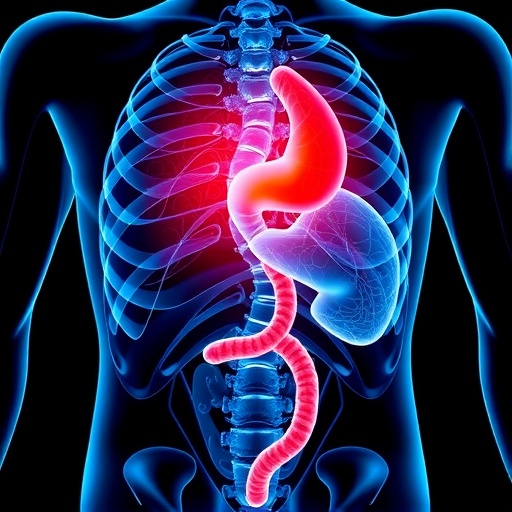

Credit: Lauren D. Quinn, University of Illinois
URBANA, Ill. – Somatic stem cells are microscopic workhorses, constantly regenerating cells throughout the body: skin and the lining of the intestine, for example. And to University of Illinois neuroscientists, they represent untapped potential.
"If we could find a way to target and control stem cell proliferation in the body, there could be potential medical benefits, including turning off the proliferation of cancer stem cells or inducing proliferation of somatic stem cells where we want to grow tissue," says Elizabeth Davis, doctoral researcher in the Neuroscience Program at U of I and lead author of a study that demonstrates, for the first time, that stem cell proliferation is directly controlled by the autonomic nervous system (ANS).
The ANS controls all of our unconscious functions: breathing, blood flow, digestion, and so forth. Its two major networks of nerve fibers run from the brain through the entire body, with neurons reaching into nearly every organ. These neurons release chemicals called neurotransmitters, which can affect target cells directly or indirectly.
When neurotransmitters bind to receptors in the membranes of certain cells, they elicit a direct response within the cell. But changes in cells can also occur when neurotransmitters induce a general state of inflammation or alter blood flow, an indirect route of action for the ANS.
Prior to Davis's study, which is published in Physiological Reports, scientists had suspected the ANS was involved in stem cell proliferation, but they didn't know if the relationship was direct or indirect. A direct relationship could have greater implications for drug interventions to treat medical conditions.
"If you wanted to change the regeneration potential of an organ, for example, you wouldn't have to stimulate or suppress the activity of those neurons. Instead, you could just figure out what neurotransmitters are controlling proliferation and then get that chemical to those stem cells with targeted drug delivery," says Megan Dailey, assistant professor in the Department of Animal Sciences at U of I and co-author on the paper.
To characterize the relationship, the researchers focused on stem cells in the intestinal lining, or epithelium, in mice. They found not only that the stem cells did have receptors for ANS neurotransmitters, but also the neurotransmitters changed the behavior of the cells – just what they would expect to see for a direct relationship.
"We knew that nerves of the ANS came into close contact with cells of the intestinal epithelium, including stem cells, but we didn't know if the neurotransmitters were able to bind to the stem cells. When we isolated the stem cells and found there were actually ANS neurotransmitter receptors, we found that missing piece," Davis says.
To demonstrate that stem cell behavior was changing as a result of ANS stimulation, the researchers grew intestinal epithelial cells in the lab and exposed them to high levels of two neurotransmitters, norepinephrine and acetylcholine. Norepinephrine is a major neurotransmitter of the sympathetic nervous system, or "fight or flight" branch of the ANS, while acetylcholine is produced by the parasympathetic nervous system, or "rest and digest" branch.
"When we simulated activation of either of those systems, we saw a decrease in stem cell proliferation," Dailey says.
She suggests the body may avoid putting energy into making new cells when the fight or flight system is active. Instead, she reasons, that energy is needed to make a quick getaway. Peak moments of rest and digest may not be the best for making new cells, either, because when food is coming in, cellular processes related to digestion can create free radicals that can damage new cells.
Although the research focused on the intestinal epithelium, Davis and Dailey suspect the ANS is directly controlling stem cell proliferation in other parts of the body, as well. In fact, they recently published another paper, published in the American Journal of Physiology, making the case for the broader phenomenon using multiple clues from other studies.
"In neuroscience, people don't see the ANS as flashy or exciting, but these nerves are reaching so many cells in the body, including stem cells," Davis says. "Why would those nerves communicate with stem cells if they weren't doing anything? What if there's this big, exciting idea that we could use the nervous system to control stem cells?"
Dailey adds, "The ANS isn't controlled by itself – it's controlled by the brain and the central nervous system. We think the brain is controlling the regeneration of all these tissues through the ANS. But that brings up a bigger picture. For individuals under severe depression or PTSD, for example, you see degeneration of some of their organs. It could be some sort of stress-related effect through the ANS decreasing the regenerative potential of the organs. Based on our findings, it looks like there could be a direct effect."
###
The experimental study, "Evidence for a direct effect of the autonomic nervous system on intestinal epithelial stem cell proliferation," is published in Physiological Reports [DOI: 10.14814/phy2.13745]. Authors include Elizabeth Davis, Weinan Zhou, and Megan Dailey. The work was supported by USDA National Institute of Food and Agriculture (ILLU-538-926).
The review article, "A direct effect of the autonomic nervous system on somatic stem cell proliferation?" is published in the American Journal of Physiology [DOI: 10.1152/ajpregu.00266.2018]. Authors include Elizabeth Davis and Megan Dailey. The work was supported by USDA National Institute of Food and Agriculture (ILLU-538-926).
Media Contact
Lauren Quinn
[email protected]
217-300-2435
@ACESIllinois
http://aces.illinois.edu/
Related Journal Article
http://dx.doi.org/10.1152/ajpregu.00266.2018