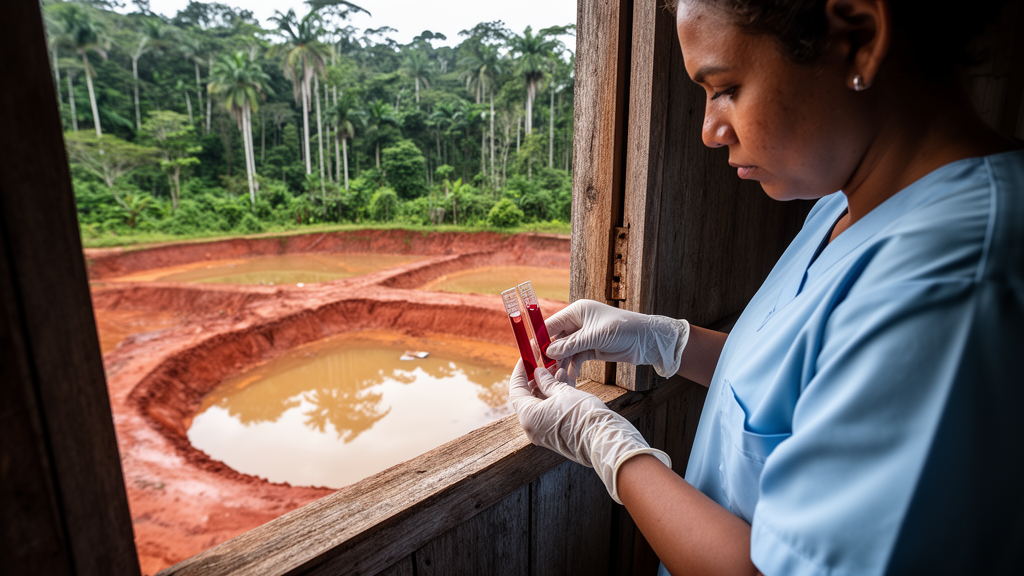
A recent retrospective study examining malaria epidemiology in Brazil’s Roraima state has documented a significant surge in autochthonous malaria cases over the last decade. Analyzing secondary surveillance data from the SIVEP-Malaria database between 2015 and 2024, researchers identified a substantial increase in annual notifications, which rose from 6,176 cases to over 30,000. This spike reflects a complex shift in regional disease transmission dynamics, particularly in connection with illegal gold-mining operations that have expanded within the Yanomami Indigenous Land.
The study highlights a marked fluctuation in the proportion of malaria cases directly associated with illegal mining activities. Before 2019, mining-linked malaria accounted for less than 3% of cases in Roraima. However, this figure rose sharply during subsequent years, reaching a peak of 46% of all autochthonous cases by 2022. By 2024, the proportion of reported cases linked to these activities had declined to 4.3%, a change the study notes as statistically significant with a p-value of less than 0.0001.
Demographic analysis of the affected populations revealed specific patterns among those with recent gold-mining exposure. The majority of these patients were male, representing between 70.4% and 80.0% of the recorded cases. Brown individuals constituted the largest ethnic group identified, accounting for 64.5% to 88.5% of the mining-associated malaria population. Most individuals affected were adults between the ages of 20 and 59 who possessed low educational attainment. While pregnant women were impacted, they represented a smaller fraction of the demographic profile, ranging from 0.8% to 4.9%.
Clinical findings indicated that Plasmodium vivax was the primary species responsible for the infections, identified in 60.2% to 91.9% of the cases investigated. The clinical presentation of these infections was largely uniform, with nearly all individuals—between 95.9% and 100.0%—displaying symptoms associated with the disease.
Geographically, while Roraima reported the majority of these cases between 2015 and 2024, the study identified an expansion of notifications in other Brazilian states, including Maranhão, Pará, and Amazonas, starting from 2019. Within Roraima, although all municipalities reported mining-associated malaria, Boa Vista emerged as the focal point for notifications throughout the study period.
The researchers conclude that the intensification of illegal mining within the Yanomami Indigenous Land has served as a primary driver for the increased transmission of malaria in the region. The findings emphasize that while the current impact is heavily centered on young male populations, the disease also affects a broader set of vulnerable groups across multiple states. To work toward malaria elimination, the authors argue that public health strategies must prioritize the dual goals of curbing illegal mining activities and integrating innovative clinical interventions designed to interrupt local transmission chains.
Subject of Research: Epidemiological analysis of mining-associated malaria trends in Brazil (2015-2024).
Article Title: Malaria among the population associated with illegal mining in the Yanomami Indigenous Land in Roraima, Brazil: challenges and perspectives
Article References: Barros, J. D. A., Siqueira, T. C. D. S., Citó, A. C., Granja, F., Coelho, R. R., Vargas, A., & Ferreira-da-Cruz, M. D. F. (2026). Malaria Among the Population Associated with Illegal Mining in the Yanomami Indigenous Land in Roraima, Brazil: Challenges and Perspectives. Frontiers in Malaria, 4, 1852795. https://doi.org/10.3389/fmala.2026.1852795
Image Credits: AI Generated
DOI: 10.3389/fmala.2026.1852795
Keywords: malaria, epidemiology, Roraima, Brazil, illegal mining, Yanomami, public health, Plasmodium vivax, disease surveillance, SIVEP-Malaria, Amazon, vector-borne disease, mobile populations, infectious disease, extractive industry, clinical outcomes
News Source: Phoebe Ingram. (November 18, 2026). Illegal Mining Linked to Significant Malaria Surge in Roraima, Brazil. Scienmag.