• HOME
  • NEWS
  • EXPLORE
    • CAREER
      • Companies
      • Jobs
    • EVENTS
    • iGEM
      • News
      • Team
    • PHOTOS
    • VIDEO
    • WIKI
  • BLOG
  • COMMUNITY
    • FACEBOOK
    • INSTAGRAM
    • TWITTER
Friday, May 15, 2026
BIOENGINEER.ORG
No Result
View All Result
  • Login
  • HOME
  • NEWS
  • EXPLORE
    • CAREER
      • Companies
      • Jobs
        • Lecturer
        • PhD Studentship
        • Postdoc
        • Research Assistant
    • EVENTS
    • iGEM
      • News
      • Team
    • PHOTOS
    • VIDEO
    • WIKI
  • BLOG
  • COMMUNITY
    • FACEBOOK
    • INSTAGRAM
    • TWITTER
  • HOME
  • NEWS
  • EXPLORE
    • CAREER
      • Companies
      • Jobs
        • Lecturer
        • PhD Studentship
        • Postdoc
        • Research Assistant
    • EVENTS
    • iGEM
      • News
      • Team
    • PHOTOS
    • VIDEO
    • WIKI
  • BLOG
  • COMMUNITY
    • FACEBOOK
    • INSTAGRAM
    • TWITTER
No Result
View All Result
Bioengineer.org
No Result
View All Result
Home NEWS Science News Biology

I, the obstacle — dogs show body-awareness, a new component of mental self-representation

Bioengineer by Bioengineer
February 18, 2021
in Biology
Reading Time: 2 mins read
0
IMAGE
Share on FacebookShare on TwitterShare on LinkedinShare on RedditShare on Telegram

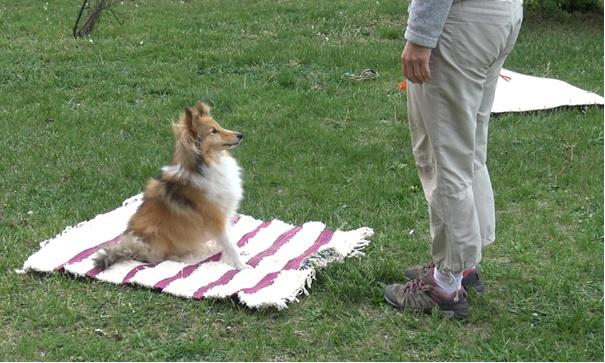
Dogs understand the relationship between their body and the environment in a problem solving task
IMAGE

Credit: Photo: Rita Lenkei / ELTE

A new study published in Scientific Reports revealed that dogs understand the relationship between their body and the environment in a problem solving task. The researchers of the Department of Ethology at Eötvös Loránd University (Budapest, Hungary) found that dogs can recognise their body as an obstacle, which ability is one of the basic manifestations of self-representation in humans.

Self-representation is the ability of holding information in one’s own mental model about themselves. In humans this capacity reached an extremely complex form, called self-consciousness. However, some of its elements might appeared during the evolution of non-human animals, too, according to the given species’ ecological needs.

“Dogs are perfect subjects for the investigation of the self-representation related abilities as we share our anthropogenic physical and social environment with them. Thus, it is reasonable to assume that at least some of its forms might appeared in them, too. From these, body-awareness might be one of the most basic ones” – explains Rita Lenkei, PhD student, first author of the study.

The researchers adapted a paradigm that was previously used only in elephants and humans. During the original test the toddlers are requested to hand over a blanket or mat they are sitting on. However, this task can only be executed if the subjects understand the connection between their own body and the mat, consequently firstly they have to leave the mat before passing it to the experimenter. In case of dogs, the method had to be modified to the four-legged subjects, and a ball was attached to the mat so dogs immediately understood the request of the owner to pass the object (together with the mat).

“We developed a more complex method than the original one to make sure that dogs only leave the mat when it was truly necessary. Based on our results even during their first attempt they left the mat significantly sooner and more likely when it was needed to solve the task, compared to when, for instance, the ball was anchored to the ground” – says Dr. Péter Pongrácz, principal investigator.

The results are particularly interesting in the light of that this experiment is thought to be linked to the well-known mirror mark experiment, in which humans and also elephants perform well. Moreover, in toddlers the onset of succeeding in this test appears at the same time – regardless of the age of the subject – when the recognition of the self-reflection in the mirror.

“Based on our knowledge the dog is the first species that did not passed the mirror mark test but successfully passed the ‘body as an obstacle’ paradigm. Our results support the theory about self-representation as being an array of more or less connected cognitive skills, where the presence or lack of a particular building block may depend on the ecological needs and cognitive complexity of the given species” – points out Lenkei.

###

Media Contact
Sara Bohm
[email protected]

Tags: BiologyEvolutionPets/Ethology
Share13Tweet8Share2ShareShareShare2

Related Posts

61 Newly Discovered Beetle Species Highlight How Much We Still Have to Learn About Biodiversity — Biology

61 Newly Discovered Beetle Species Highlight How Much We Still Have to Learn About Biodiversity

May 15, 2026
Supercomputer Simulations Uncover How Bacterial Enzyme Pumps Sodium Ions, Opening Doors to Novel Antibiotics — Biology

Supercomputer Simulations Uncover How Bacterial Enzyme Pumps Sodium Ions, Opening Doors to Novel Antibiotics

May 15, 2026

New Astrobiology Special Collection Highlights Emerging Evidence Supporting Land-Based Origins of Life

May 14, 2026

Revolutionizing Textiles: Engineered Protein Fibers Pave the Way for Sustainable, Recyclable Fabrics

May 14, 2026
Please login to join discussion

POPULAR NEWS

  • Research Indicates Potential Connection Between Prenatal Medication Exposure and Elevated Autism Risk

    843 shares
    Share 337 Tweet 211
  • New Study Reveals Plants Can Detect the Sound of Rain

    729 shares
    Share 291 Tweet 182
  • Salmonella Haem Blocks Macrophages, Boosts Infection

    62 shares
    Share 25 Tweet 16
  • Breastmilk Balances E. coli and Beneficial Bacteria in Infant Gut Microbiomes

    58 shares
    Share 23 Tweet 15

About

We bring you the latest biotechnology news from best research centers and universities around the world. Check our website.

Follow us

Recent News

Hanyang University Researchers Pinpoint 2.5 Nanometers as Minimum Coating Thickness for Durable Solid-State EV Batteries

Axonic Spine Synapses Trigger Action Potentials, Direct Signals

New Study Uncovers Why Breast Cancer Becomes More Lethal with Age

Subscribe to Blog via Email

Enter your email address to subscribe to this blog and receive notifications of new posts by email.

Join 82 other subscribers
  • Contact Us

Bioengineer.org © Copyright 2023 All Rights Reserved.

Welcome Back!

Login to your account below

Forgotten Password?

Retrieve your password

Please enter your username or email address to reset your password.

Log In
No Result
View All Result
  • Homepages
    • Home Page 1
    • Home Page 2
  • News
  • National
  • Business
  • Health
  • Lifestyle
  • Science

Bioengineer.org © Copyright 2023 All Rights Reserved.