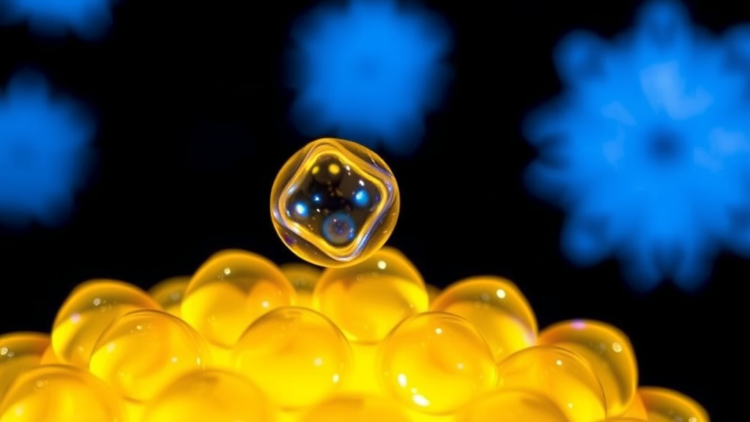
Cancer remains one of the most formidable challenges in modern medicine, with nearly two million new diagnoses and roughly six hundred thousand deaths reported in the United States alone in 2024. For decades, researchers have relied on flat, two-dimensional cell cultures to study the disease, but these systems strip tumor cells of the complex, three-dimensional surroundings that define how cancers actually grow, spread, and resist treatment. A comprehensive review published in Discover Biotechnology by Melike Karakaya, Rumeysa Berra Karataş, Furkan Ayaz, and Esra Aydemir now maps out how hydrogel-based platforms are closing that gap, offering a versatile class of biomaterials capable of recreating the tumor microenvironment in the laboratory with unprecedented fidelity.
The tumor microenvironment, or TME, is far more than a passive backdrop for malignant cells. It is a dense, dynamic ecosystem of endothelial cells, immune cells, neurons, stromal cells, and secreted signaling molecules, all woven into an extracellular matrix composed of structural proteins such as collagen and elastin, adhesive glycoproteins like fibronectin and laminin, and charged polysaccharide chains. This matrix does not merely hold cells in place; it actively determines how fast tumors progress, how readily they metastasize, and how they respond to therapy. Proteoglycans within the matrix, for example, can remodel the biochemical landscape to open pathways through which cancer cells invade the bloodstream, a metastatic step known as intravasation. Once malignant cells reach distant tissues, they may even enter a quiescent, dormant state in the G0 phase of the cell cycle, evading both immune surveillance and chemotherapy until conditions favor renewed growth.
Hydrogels, the focus of the new review, are three-dimensional polymer networks formed by chemically or physically crosslinking hydrophilic building blocks such as hydroxyl, carboxyl, sulfonic acid, and amine groups. Their capacity to absorb large quantities of water gives them a softness and fluidity remarkably similar to soft biological tissue, which is precisely why tissue engineers have embraced them as extracellular matrix mimics. The choice of polymer backbone and crosslinking strategy directly dictates the mechanical strength, porosity, and degradation rate of the resulting material, allowing researchers to tune stiffness and biochemistry with a precision that animal models and plastic dishes cannot match. Hydrogels enable cells to interact with their surroundings on all sides, preserving the dynamic cell-matrix conversations that drive proliferation, migration, and intercellular communication.
The review classifies hydrogels into natural, synthetic, smart, and hybrid categories, each with distinct trade-offs. Natural polymers, including collagen, fibrin, alginate, hyaluronic acid, and chitosan, offer inherent bioactivity and enzymatic biodegradability because they resemble the extracellular matrix the body already knows how to process. Collagen, the most abundant structural protein in skin, cartilage, and bone, remains the workhorse of natural hydrogel matrices. Synthetic polymers such as polyethylene glycol, polyvinyl alcohol, and polyacrylic acid, by contrast, provide adjustable stiffness, reproducible composition, and regulatory pedigree, but they lack natural cell-binding sites and must be decorated with adhesive proteins. Concerns also persist about cytotoxic degradation products; PLGA, for instance, breaks down into acidic by-products that can lower local pH and provoke inflammation, while PEG can yield reactive species under long-term oxidative stress.
Hybrid systems attempt to capture the best of both worlds. PEG-heparin hydrogels, which combine a synthetic backbone with an anionic glycosaminoglycan, have emerged as strong alternatives to Matrigel, the widely used but compositionally ill-defined protein mixture derived from tumor cells. Compared with Matrigel, PEG-heparin platforms offer defined composition, greater reproducibility, and easier modification, and several have already advanced into preclinical and early clinical studies for drug delivery and tissue regeneration. Crosslinking chemistry adds another layer of control: physical crosslinking produces reversible, stimuli-responsive, and cytocompatible networks with modest mechanical strength, whereas covalent strategies such as photopolymerization, Michael addition, click chemistry, and enzymatic crosslinking deliver superior structural integrity and more predictable degradation kinetics.
The practical payoff of these materials is already visible across the five major cancer types examined in the review. In lung cancer, which claimed roughly one hundred twenty thousand American lives in 2024, a temperature-sensitive hydrogel integrating realgar arsenic sulfide with Fe3O4 magnetic nanoparticles created a combined imaging and thermotherapy platform, the first hydrogel formulation of its kind for that compound. Separately, an injectable hydrogel delivering the anti-angiogenic drug anlotinib through a hyaluronic acid-tyramine matrix inhibited endothelial cell proliferation and produced tumor suppression rates ten to twenty percent higher than the free drug across all tested doses, while reducing systemic toxicity. Matrigel-based cultures have even been used to test combined MEK inhibition and anti-PD-L1 immunotherapy in patient-derived three-dimensional spheroids, probing the tumor immune landscape outside the body.
Liver cancer models show a similar leap in physiological relevance. A three-dimensional culture system built from decellularized liver extracellular matrix hydrogel enhanced the self-renewal, migration, and drug resistance of HepG2 cells, unmasking cancer stem cell properties that flat cultures conceal and opening a route to stem cell-targeted drug discovery. A thermosensitive Pluronic F127 hydrogel co-delivering resveratrol microspheres and cisplatin enabled localized intraperitoneal chemotherapy, with resveratrol counteracting cisplatin’s side effects and prolonging drug retention in the abdominal cavity. Synthetic PEG-cysteine hydrogels and organic-inorganic PDMS-TEOS scaffolds, meanwhile, boosted albumin synthesis and urea production in hepatocyte-like cultures, markers of genuine liver function that monolayer systems routinely fail to sustain.
In breast cancer, a chitosan-based thermosensitive hydrogel seeded with 4T1 mouse mammary carcinoma cells produced tumors in mice that grew approximately 2.5-fold larger and weighed twice as much as those from conventional two-dimensional injections, while markedly elevating the cancer stem cell markers CD44 and CD24, demonstrating that the hydrogel platform genuinely replicates the in vivo niche. pH-sensitive chitosan nanocarriers extended the bioactivity of curcumin, a polyphenol crippled by poor solubility, and an L-alanine-derived hydrogel released doxorubicin specifically at acidic pH values characteristic of tumor tissue. An injectable, temperature-sensitive hydrogel loaded with titanium carbide nanoparticles even enabled laser-triggered photothermal therapy, heating tumors locally to kill cancer cells while sparing surrounding tissue.
Prostate and colon cancer applications extend the technology from disease modeling to clinical devices and microbiome engineering. Injectable hydrogel spacers such as SpaceOAR, placed between the prostate and rectum during radiotherapy, physically shield the bowel from radiation for three to six months before dissolving harmlessly, reducing rectal pain, bleeding, and other treatment toxicities. Matching hydrogel stiffness to the bone-like mechanical environment of prostate metastases, around 25 to 40 kilopascals, has proven essential for studying invasion and drug resistance. In colorectal cancer, pH-sensitive alginate beads reinforced with hydroxyapatite and magnetic nanoparticles protected the chemotherapy drug 5-fluorouracil from stomach acid and released it in the intestine, while hyaluronan-based organoid co-cultures combining patient-derived tumor cells with cancer-associated fibroblasts delivered personalized drug-testing platforms. Perhaps most strikingly, a living hydrogel embedded with the bacterium Thiobacillus denitrificans metabolizes immunosuppressive hydrogen sulfide in the colon tumor microenvironment into harmless sulfate, normalizing tumor vasculature and amplifying the efficacy of co-delivered camptothecin.
The review’s authors are candid about the obstacles that stand between these laboratory triumphs and routine clinical use. Natural hydrogels suffer from batch-to-batch variability, weak mechanical strength, and rapid, uneven degradation; synthetic ones raise questions about long-term biodegradation and residual monomer toxicity. Smart, stimuli-responsive hydrogels depend on environmental triggers whose values shift between individuals, disease states, and tissue locations, making therapeutic outcomes difficult to predict. Reproducibility, standardization, and clinical validation remain stubborn hurdles, and manufacturing dual-responsive systems under Good Manufacturing Practice conditions is still rare. Yet the trajectory is unmistakable: 3D bioprinting and photopolymerization are giving researchers precise spatial control over tumor architecture, artificial intelligence is accelerating polymer design, and injectable hydrogels are proving they can localize chemotherapy, immunotherapy, and even engineered bacteria directly at tumor sites. As the authors conclude, hydrogels have evolved from simple extracellular matrix mimics into powerful platforms for decoding tumor biology, and the models they enable may well define the next generation of precision oncology.
Subject of Research: Hydrogel-based three-dimensional models of the tumor microenvironment in cancer research
Article Title: Hydrogel applications in tumor microenvironment modeling
Article References: Karakaya, M., Karataş, R. B., Ayaz, F., & Aydemir, E. (2025). Hydrogel applications in tumor microenvironment modeling. Discover Biotechnology, 2(1), Article 21. https://doi.org/10.1007/s44340-025-00029-8
Image Credits: AI Generated
DOI: 10.1007/s44340-025-00029-8
Keywords: hydrogels, tumor microenvironment, 3D cell culture, extracellular matrix, drug delivery, cancer models, organoids, bioprinting, immunotherapy, biomaterials, precision oncology, spheroids
Cite Scienmag News
APA
MLA
Chicago
Nathaniel Bowman. (September 27, 2026). Hydrogels Bring Tumors to Life in the Lab, Reshaping Cancer Research. Scienmag. https://scienmag.com/hydrogels-bring-tumors-to-life-in-the-lab-reshaping-cancer-research/
Nathaniel Bowman. “Hydrogels Bring Tumors to Life in the Lab, Reshaping Cancer Research.” Scienmag, 27 September 2026, https://scienmag.com/hydrogels-bring-tumors-to-life-in-the-lab-reshaping-cancer-research/. Accessed 27 September 2026.
Nathaniel Bowman. “Hydrogels Bring Tumors to Life in the Lab, Reshaping Cancer Research.” Scienmag. September 27, 2026. https://scienmag.com/hydrogels-bring-tumors-to-life-in-the-lab-reshaping-cancer-research/
Copy citation
Download RIS
Tags: 3D cancer cell culture3D cell cultureadvances in cancer modelingbiomaterialsbiomaterials for cancer researchbioprintingcancer microenvironmentcancer modelscancer treatment resistanceDrug deliveryextracellular matrixextracellular matrix in cancerhydrogel-based tumor modelshydrogelsImmunotherapyin vitro tumor microenvironment simulationorganoidsprecision oncologyspheroidstissue engineering for oncologytumor growth and metastasistumor immune microenvironmenttumor microenvironmenttumor-stroma interactions