


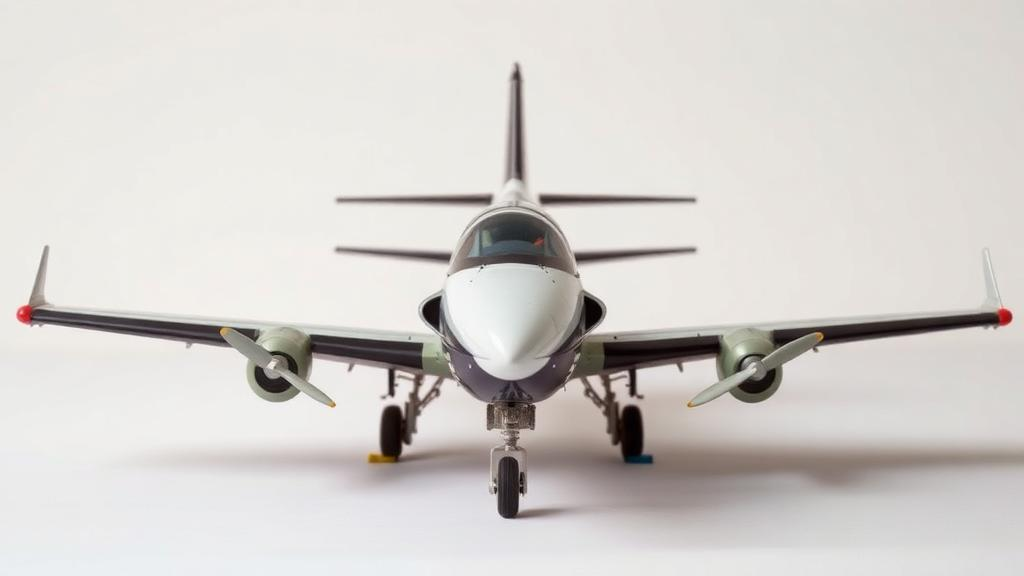
A modeling study of a classic four-seat trainer suggests that a hybrid-electric retrofit, rather than a fully electric conversion, is the realistic near-term path to greener flight training. Researchers systematically assessed converting a SOCATA TB-10 GT, a single-engine aircraft widely used by flight schools, into both an all-electric and a hybrid-electric platform, using a power-balance model built on data from the aircraft’s pilot operating manual and engine specifications. The work, published in Discover Vehicles, addresses a gap the authors identify in prior research: while new electric trainers and conceptual hybrid airliners have been studied extensively, there had been no systematic assessment of hybrid-electric retrofitting for the repetitive missions typical of general aviation pilot training.
The reference aircraft is constrained throughout the analysis to its maximum takeoff weight of 1150 kg, with the original Lycoming O-360-A1AD engine, which delivers 134 kW, removed and its mass budget reallocated. The baseline configuration, burning AVGAS 100LL, requires 134 kW for takeoff, about 80 kW in cruise at the most efficient operating point, and roughly 5 kW while taxiing. The model puts the conventional aircraft’s endurance at about 4.6 hours and its mission range at roughly 917 km, figures the authors say are consistent with the pilot operating manual. During training operations the aircraft consumes between 32 and 38 liters of aviation gasoline per hour, corresponding to approximately 74 to 87 kg of carbon dioxide emissions per hour.
The fully electric scenario tells a sobering story about the state of battery technology. Removing the engine and both fuel tanks frees about 444.63 kg for the powertrain and energy storage, of which roughly 427 kg remains for batteries after installing a 16.6 kg H3X HPDM-250 electric motor with integrated drive and gearbox. Even with Amprius silicon-nanowire cells rated at 410 Wh/kg, among the highest specific energies available, the usable energy after an 80 percent depth of discharge and a 30-minute cruise reserve comes to about 99.83 kWh. The result: electric flight duration of 1 hour and 32 minutes at 80 kW cruise power, compared with 5 hours and 12 minutes for the original design, and a fully electric endurance of roughly 60 to 70 minutes with a range of 80 to 100 km. The authors conclude that a full-electric conversion remains impractical for typical training missions.
The hybrid configuration changes the calculus substantially. The design pairs the H3X motor with a Rotax 915iS combustion engine, which is about 37 percent lighter than the original Lycoming and delivers 99 kW of continuous power. The aircraft operates in three modes: electric-only taxiing, hybrid takeoff with the combustion engine at rated power supplemented by an electric boost, and a cruise phase split into segments where both systems, the engine alone, or the electric motor provide propulsion. A 30-minute reserve, including a 20 percent battery margin and sufficient fuel, guarantees redundancy throughout.
The researchers evaluated three hybrid scenarios varying the electric motor’s cruise power. At 17 kW, about 21 percent of cruise power, the aircraft achieves its longest modeled range of 696 km, or 75.9 percent of the original configuration, while using only half the fuel. At 22 kW the range is 687 km, and at 52 kW it drops slightly to 679 km. The maximum range occurs when battery and fuel consumption are balanced, which in this analysis happens with the 17 kW electric output. Once the battery is depleted, the aircraft depends entirely on the combustion engine. With the high-energy Amprius battery, the electric contribution alone covers around 120 km of hybrid flight, while total mission range including fuel surpasses 600 km.
The study also quantifies a critical trade-off between fuel savings and battery longevity. Simulating two one-hour training classes per day, every day, the model finds that a 17 kW electric demand gives the Amprius battery a lifespan of about 3.5 years. Raising the demand to 29 kW shortens that to roughly 2 years, while a 67 kW demand, which maximizes fuel savings, degrades the battery to its end-of-life threshold in around 4 days. Higher electric power use improves fuel economy but accelerates battery wear, so operators must tailor power sharing to their mission profile.
Commercial lithium-ion cells behave differently. The Samsung INR18650-33G and Panasonic NCR18650BF batteries store far less energy per kilogram, so aircraft using them can devote only about 40 percent of the Amprius option’s storable energy, sharply restricting hybrid operation. Yet their degradation rates are roughly half as fast, at about 0.05 and 0.06 percent per cycle versus about 0.13 percent for Amprius. In matched scenarios requiring reduced motor power, the Samsung and Panasonic packs last 10.5 and 8.74 years respectively at 3 kW, compared with 3.49 years for Amprius. On cost, the analysis estimates savings of 6 to 20 percent for Amprius, 10 to 12 percent for Samsung, and 7 to 11 percent for Panasonic relative to the original fuel-only setup, with Samsung emerging as the most practical commercial option given its lower price and slower degradation. The Amprius price had to be estimated at 0.65 euros per watt-hour because the cells are not yet commercially available, introducing uncertainty the authors acknowledge.
The environmental accounting suggests meaningful gains if the modeled performance holds. Using an emission factor of 2.31 kg of carbon dioxide per liter of AVGAS, the study estimates that halving fuel consumption per flight avoids about 59.6 kg of carbon dioxide, or nearly 30 tonnes per aircraft per year at 500 operating hours, and roughly 300 tonnes annually for a ten-aircraft training fleet. The authors also note that electric motors typically reduce noise by 6 to 10 dB during taxi and initial climb, and that extending battery pack life lowers the embedded emissions from battery manufacturing, since a typical 300 kg lithium-ion pack carries an embodied footprint of 3 to 5 tonnes of carbon dioxide. These are model-derived projections, not measured results from a flying aircraft.
The authors are explicit about the limitations. The power-balance model covers only taxi, takeoff, and cruise, excluding landing, go-around, and emergency procedures; it assumes ideal thermal management, which real systems would complicate with added weight; it treats aircraft mass as constant during cruise, which slightly understates real endurance; and it assumes perfect integration between the Rotax engine and the electric motor, whereas center-of-gravity shifts, vibrations, and mounting challenges could arise in practice. Structural and certification considerations were not assessed and are flagged as future work, alongside ground and flight testing to validate the model. Within those bounds, the study offers flight schools a data-driven framework for weighing energy storage options and power-sharing strategies, and supports the authors’ conclusion that hybrid-electric retrofitting of existing airframes is the most viable short-term route to cutting emissions in pilot training while preserving the mission flexibility that all-electric trainers cannot yet deliver.
Subject of Research: Hybrid-electric retrofitting of a light training aircraft assessed through power-balance modeling of fully electric and hybrid configurations
Article Title: Hybrid electric retrofitting of a light aircraft for sustainable pilot training
Article References: Serra, A., & Branco, P. (2026). Hybrid electric retrofitting of a light aircraft for sustainable pilot training. Discover Vehicles, 2(1), Article 32. https://doi.org/10.1007/s44465-026-00035-y
Image Credits: AI Generated
DOI: 10.1007/s44465-026-00035-y
Keywords: hybrid-electric aircraft, SOCATA TB-10 GT, pilot training, aircraft retrofit, battery energy density, Amprius silicon-nanowire cells, fuel consumption, aviation emissions, Rotax 915iS, electric propulsion, flight schools, battery degradation
News Source: Denise Maddox. (October 29, 2026). Hybrid retrofit could halve fuel burn of light training aircraft, model shows. Scienmag.



