• HOME
  • NEWS
  • EXPLORE
    • CAREER
      • Companies
      • Jobs
    • EVENTS
    • iGEM
      • News
      • Team
    • PHOTOS
    • VIDEO
    • WIKI
  • BLOG
  • COMMUNITY
    • FACEBOOK
    • INSTAGRAM
    • TWITTER
Thursday, November 19, 2026
BIOENGINEER.ORG
No Result
View All Result
  • Login
  • HOME
  • NEWS
  • EXPLORE
    • CAREER
      • Companies
      • Jobs
        • Lecturer
        • PhD Studentship
        • Postdoc
        • Research Assistant
    • EVENTS
    • iGEM
      • News
      • Team
    • PHOTOS
    • VIDEO
    • WIKI
  • BLOG
  • COMMUNITY
    • FACEBOOK
    • INSTAGRAM
    • TWITTER
No Result
View All Result
Bioengineer.org
No Result
View All Result
Home NEWS Science News Technology

Hybrid Neural Network Framework Improves Precision in Brain Image Registration

by
November 19, 2026
in Technology
Reading Time: 2 mins read
0
Hybrid Neural Network Framework Improves Precision in Brain Image Registration

Hybrid Neural Network Framework Improves Precision in Brain Image Registration

Share on FacebookShare on TwitterShare on LinkedinShare on RedditShare on Telegram

Neurosurgeons and medical practitioners often face significant challenges when identifying brain tumors in preoperative and intraoperative medical imagery.

Researchers led by Paluck Arora have proposed a new multi-stage registration framework designed to address these technical limitations. By integrating a convolutional neural network (CNN) with Speeded-Up Robust Features (SURF), the study introduces a more robust approach to multimodal brain image registration. This framework leverages the strength of both hierarchical deep learning representations and local feature detection algorithms to ensure greater alignment accuracy.

The methodological workflow begins with essential image preprocessing to normalize quality across input datasets. Once prepared, the framework utilizes a pre-trained VGG19 network to extract multi-level feature representations.

Refinement of these features occurs through dynamic inlier selection combined with expectation maximization (EM). These optimized point correspondences function as control points for thin-plate spline (TPS)-based nonrigid warping.

In the subsequent phase, the framework extracts SURF features from both the fixed and the intermediate registered images. Candidate feature correspondences are generated using a brute-force matcher and are further polished using the alpha-trimmed spatial relation correspondence (ATSRC) algorithm.

A final homography transformation is then estimated using these refined correspondences to correct remaining global and projective geometric misalignments. The study evaluated the framework using multimodal and monomodal medical image pairs derived from both clinical and publicly available datasets.

Performance results across 10 evaluated image-pair cases were quantified using several statistical measures. The framework achieved a root-mean-square error (RMSE) of 10.1353 ± 3.1634 and a mean squared error (MSE) of 111.7300 ± 65.7614.

The framework reported a structural similarity index measure (SSIM) of 0.8850 ± 0.0275 and a peak signal-to-noise ratio (PSNR) of 35.5629 ± 1.8137 dB.

Subject of Research: Hybrid computational framework for improving precision in multimodal brain medical image registration.

Article Title: A Robust Hybrid CNN–SURF Based Framework for Multimodal Brain Image Registration

Article References: Arora, P., Mehta, R., Ahuja, R., & Soni, P. K. (2026). A Robust Hybrid CNN–SURF Based Framework for Multimodal Brain Image Registration. International Journal of Computational Intelligence Systems. https://doi.org/10.1007/s44196-026-01618-z

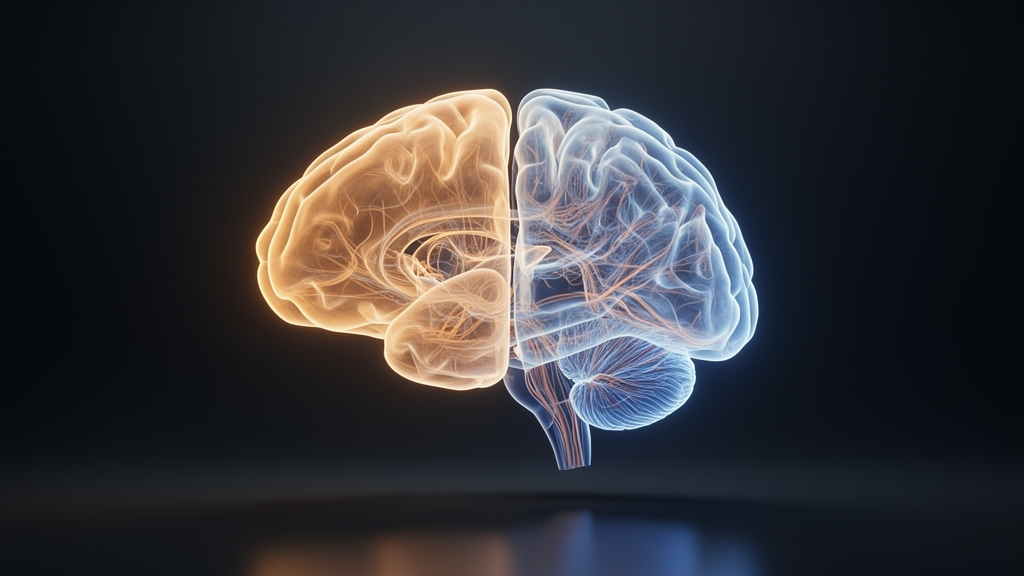
Image Credits: AI Generated

DOI: 10.1007/s44196-026-01618-z

Keywords: Brain imaging, CNN, SURF, image registration, VGG19, feature extraction, medical diagnostics, neurosurgery, image processing, nonrigid warping, homography, multimodal imaging, spatial correspondence, neural networks, medical informatics, image alignment, preoperative imaging

News Source: Cassandra Pierce. (November 19, 2026). Hybrid Neural Network Framework Improves Precision in Brain Image Registration. Scienmag.


Tags: brain imagingCNNfeature extractionhomographyimage alignmentimage processingimage registrationMedical diagnosticsMedical Informaticsmultimodal imagingNeural Networksneurosurgerynonrigid warpingpreoperative imagingspatial correspondenceSURFVGG19
Share12Tweet7Share2ShareShareShare1

Related Posts

Co-Distillation Federated Learning Framework Mitigates Class Imbalance in Medical Image Analysis

Co-Distillation Federated Learning Framework Mitigates Class Imbalance in Medical Image Analysis

November 19, 2026
Semi-Dense Image Matching Model Accurately Tracks Dynamic Citrus 6D Poses

Semi-Dense Image Matching Model Accurately Tracks Dynamic Citrus 6D Poses

November 19, 2026

UV-Cured Gel Polymer Electrolyte Achieves 89.4 Percent Retention in Lithium Cells

November 19, 2026

Algorithm Selects Three Acoustic Features to Detect Chatter in Thin-Walled Milling

November 19, 2026

POPULAR NEWS

  • Tryptophan Can Contribute to Seawater Iron Reduction at Lower pH

    Tryptophan Can Contribute to Seawater Iron Reduction at Lower pH

    29 shares
    Share 12 Tweet 7
  • Preserving Cervical Carotid Segments During Autopsy May Facilitate Subsequent Facial Embalming

    29 shares
    Share 12 Tweet 7
  • Adaptive Adversarial Network Boosts Seismic Fault Identification Accuracy Across Surveys

    29 shares
    Share 12 Tweet 7
  • Prenatal Testing Identifies Rare Mosaic Trisomy 14 in Early Severe Fetal Malformations

    29 shares
    Share 12 Tweet 7

About

We bring you the latest biotechnology news from best research centers and universities around the world. Check our website.

Follow us

Recent News

Co-Distillation Federated Learning Framework Mitigates Class Imbalance in Medical Image Analysis

Semi-Dense Image Matching Model Accurately Tracks Dynamic Citrus 6D Poses

UV-Cured Gel Polymer Electrolyte Achieves 89.4 Percent Retention in Lithium Cells

Subscribe to Blog via Email

Enter your email address to subscribe to this blog and receive notifications of new posts by email.

Join 88 other subscribers
  • Contact Us

Bioengineer.org © Copyright 2023 All Rights Reserved.

Welcome Back!

Login to your account below

Forgotten Password?

Retrieve your password

Please enter your username or email address to reset your password.

Log In
No Result
View All Result
  • Homepages
    • Home Page 1
    • Home Page 2
  • News
  • National
  • Business
  • Health
  • Lifestyle
  • Science

Bioengineer.org © Copyright 2023 All Rights Reserved.