Every social platform, collaboration database, and biological interaction map shares the same fundamental question: which pairs of nodes will connect next? The task of answering it, known as link prediction, sits at the heart of recommender systems, friend suggestions, drug discovery, and the mapping of criminal networks. Yet the algorithms that perform this task have long struggled with a stubborn limitation. They capture broad structural patterns well enough, but they fail to model the fine-grained, hierarchical relationships between nodes — the part–whole interactions that determine whether two researchers will co-author a paper or two proteins will bind. A new hybrid architecture called the Graph-Lite Capsule Network, or GLCN, developed by researchers at Delhi Technological University and Maharaja Surajmal Institute of Technology, claims to close that gap, delivering an average improvement of roughly 9.1 percent in the area under the curve metric across six diverse datasets.
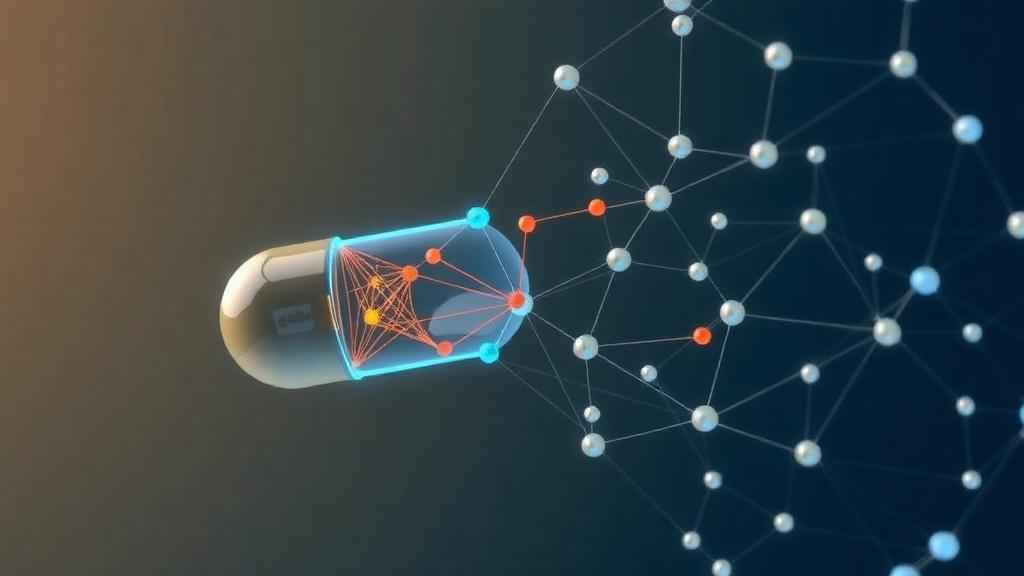
The work, published in Knowledge and Information Systems, merges two ideas that until now have lived mostly in separate corners of machine learning. The first is the graph convolutional network, or GCN, a neural architecture that builds node embeddings by aggregating information from a node’s neighbors, allowing the model to encode the local topology of a network into compact numerical vectors. The second is the capsule network, a concept introduced by Geoffrey Hinton’s group in 2017, which represents features not as single scalars but as groups of neurons — capsules — whose activity vectors carry both the presence of a feature and its properties, such as pose, scale, or intensity. By combining these, GLCN aims to preserve the hierarchical structure of network features that conventional methods flatten away.
The pipeline begins with the GCN stage. Here, the model creates node embeddings that capture the structural context of each vertex in the graph. These embeddings are regularized by dropout, a technique that randomly silences neurons during training to prevent the network from memorizing the training data and to encourage robustness against noisy connectivity patterns. Dimensionality reduction is then performed using principal component analysis, which compresses the embeddings into a lower-dimensional space while retaining the directions of greatest variance — the structural signals most relevant to predicting future links.
What follows is where the capsule machinery takes over. The reduced embeddings are fed into the Lite Capsule Network, where a rectified linear unit activation helps the model identify meaningful features in the data. After this, a squash function is applied — a nonlinear transformation that constrains capsule vectors to a length between zero and one, so that the vector length encodes the probability that a feature is present while its direction encodes the feature’s properties. This is the mathematical heart of the capsule approach: instead of asking whether a feature exists, the network asks how strongly it exists and in what configuration.
The next stage is an optimized routing process, the mechanism by which capsules communicate. In the original capsule network, routing involved discrete vote matrices, where each capsule voted on the presence of higher-level features, and the votes were iteratively weighted and summed. GLCN’s lite version strips this down. It eliminates the discrete vote matrices and focuses only on relevant interactions among the capsules, reducing the number of routing steps while preserving the essential part–whole agreement that makes capsule networks powerful. The result is a leaner architecture that models structural relationships within the graph with greater efficiency.
At the final stage, the model uses the improved capsule representations to score possible links in the graph. Each candidate pair of nodes is evaluated based on how well their capsule vectors align — a measure of whether the hierarchical features of one node complement those of the other. This is what gives GLCN its claimed interpretability: unlike black-box link predictors, the capsule vectors can be inspected to understand which feature relationships drove a particular prediction.
To test the framework, the researchers performed a comparative evaluation on six different datasets, each representing different interaction and collaboration patterns. The findings show an average improvement of about 9.1 percent in the area under the curve metric, a standard measure of how well a model distinguishes true future links from non-links. The method also proved its robustness against seven heuristic benchmark methods — classical algorithms that rely on hand-crafted similarity measures such as common neighbors, preferential attachment, and random walks with restart.
Perhaps more importantly, the team evaluated GLCN’s generalization capability by comparing it with dynamic network-based link prediction methods, which are designed to handle evolving graph structures. GLCN demonstrated its adaptability across these changing topologies, suggesting that the hybrid architecture is not merely tuned to static snapshots but can cope with networks whose connectivity patterns shift over time — a critical property for real-world applications where social ties, collaboration networks, and biological interactions are in constant flux.
The implications reach well beyond the benchmark tables. Link prediction underpins friend and content recommendations on social platforms, the discovery of missing interactions in protein and lncRNA-protein networks, the identification of likely collaborators in academic databases, and even the robust prediction of connections in criminal networks, where sparse and deliberately obscured data make the task especially hard. A method that handles sparse or noisy connectivity patterns while remaining interpretable could make these applications more reliable and more transparent to the people who depend on them.
The GLCN architecture represents a broader trend in graph machine learning: the recognition that capturing hierarchical, part–whole feature relationships is essential for understanding complex networks. As graph neural networks continue to evolve — from attention mechanisms to hyperbolic embeddings to temporal architectures — the capsule network’s promise of structured, interpretable feature representation may prove to be a key ingredient in the next generation of network intelligence. For now, GLCN offers a concrete demonstration that merging graph convolutions with lite capsule routing can deliver measurable gains in one of the oldest and most consequential tasks in network science.
Subject of Research: Machine Learning
Article Title: GLCN: a hybrid graph convolution and lite capsule network for robust and interpretable link prediction in complex networks
Article References: Indu, Sisaudia, V., & Sharma, K. (2026). GLCN: a hybrid graph convolution and lite capsule network for robust and interpretable link prediction in complex networks. Knowledge and Information Systems, 68(1), Article 290. https://doi.org/10.1007/s10115-026-02906-y
Image Credits: AI Generated
DOI: 10.1007/s10115-026-02906-y
Keywords: link prediction, graph convolutional networks, capsule networks, complex networks, machine learning, graph neural networks, Knowledge and Information Systems, GLCN, hybrid, graph, convolution, lite
News Source: Denise Maddox. (October 17, 2026). Hybrid Graph Capsule Network Boosts Link Prediction Accuracy by 9.1 Percent. Scienmag.