• HOME
  • NEWS
  • EXPLORE
    • CAREER
      • Companies
      • Jobs
    • EVENTS
    • iGEM
      • News
      • Team
    • PHOTOS
    • VIDEO
    • WIKI
  • BLOG
  • COMMUNITY
    • FACEBOOK
    • INSTAGRAM
    • TWITTER
Thursday, June 25, 2026
BIOENGINEER.ORG
No Result
View All Result
  • Login
  • HOME
  • NEWS
  • EXPLORE
    • CAREER
      • Companies
      • Jobs
        • Lecturer
        • PhD Studentship
        • Postdoc
        • Research Assistant
    • EVENTS
    • iGEM
      • News
      • Team
    • PHOTOS
    • VIDEO
    • WIKI
  • BLOG
  • COMMUNITY
    • FACEBOOK
    • INSTAGRAM
    • TWITTER
  • HOME
  • NEWS
  • EXPLORE
    • CAREER
      • Companies
      • Jobs
        • Lecturer
        • PhD Studentship
        • Postdoc
        • Research Assistant
    • EVENTS
    • iGEM
      • News
      • Team
    • PHOTOS
    • VIDEO
    • WIKI
  • BLOG
  • COMMUNITY
    • FACEBOOK
    • INSTAGRAM
    • TWITTER
No Result
View All Result
Bioengineer.org
No Result
View All Result
Home NEWS Science News

Humans and sponges share gene regulation

Bioengineer by Bioengineer
April 11, 2017
in Science News
Reading Time: 2 mins read
0
Share on FacebookShare on TwitterShare on LinkedinShare on RedditShare on Telegram
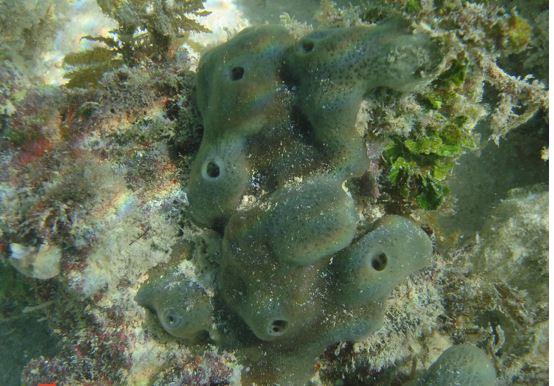
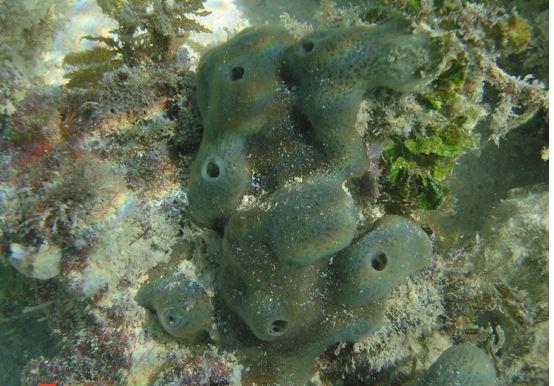
IMAGE

Credit: Courtesy The University of Queensland

Humans have a lot in common with the humble sea sponge, according to research that changes the way we think about animal evolution.

University of Queensland School of Biological Sciences researcher Dr Milos Tanurdzic said a collaborative study found sponges use a complex gene regulation toolkit similar to much more complex organisms such as humans.

Gene regulation refers to how and when a gene is activated.

"The research implies this complex mechanism was present at the evolutionary dawn of multicellular animals and across animal species as far apart as sponges and humans," Dr Tanurdzic said.

"Until very recently we thought increasing complexity in the animal kingdom was due to an ever-increasing number of genes that encode information about animal development and growth.

"However, the genomics explosion of the last decade taught us most animals have a similar number of genes encoded in their DNA.

"The alternative, and today the prevailing explanation, is that gene regulation is responsible for the evolution of animal diversity."

The study was largely undertaken by former UQ PhD student Dr Federico Gaiti, now at Weill Cornell Medicine in New York City, USA.

Dr Tanurdzic said a key mechanism responsible for regulating genes in multi-celled organisms was how the DNA was packaged within the genetic material, or genome.

"DNA associates with special proteins – called histones – in the nucleus," he said.

"Histones can bear certain chemical marks, which in turn determine if the DNA associated with them is going to be turned on or off."

Histone marking gone awry is also responsible for some of the more insidious genetic errors, such as when a normal cell becomes cancerous.

"Our study, which used a Great Barrier Reef sponge, Amphimedon queenslandica, set out to discover if this particular mechanism of gene regulation is present in the oldest multicellular animal lineage – the sponges," he said.

"Through analysis of DNA with certain histone marks we determined that histone-based gene regulation is part of the sponge gene regulatory tool kit.

"As the common ancestor of humans and sponges probably lived 700 million years ago, this implies that gene regulatory complexity relying on histone marks was fundamental for the evolution of animal multicellularity and diverse animal forms and functions."

###

The study, published in eLife, brought together a multi-disciplinary team of scientists from the Degnan and Tanurdzic labs at UQ.

Media Contact

Dr Milos Tanurdzic
[email protected]
61-733-652-491
@uq_news

http://www.uq.edu.au

############

Story Source: Materials provided by Scienmag

Share12Tweet8Share2ShareShareShare2

Related Posts

Tracking Lanthanide-Labeled Microplastics in Plants

June 25, 2026

POSTECH Researchers Slash Cost of Reconstituted Cell-Free Systems by 95%

June 25, 2026

AI and Physics Collaborate to Design Advanced Hydrogen Storage Materials

June 25, 2026

Natural Hallucinogens: Evolution’s Ecological Tools, Not Mere Chemical Byproducts

June 25, 2026
Please login to join discussion

POPULAR NEWS

  • Saying Goodbye to PGY-6: Pediatric Fellowship Realities

    103 shares
    Share 41 Tweet 26
  • Multi-Hospital Study Reveals Long Covid Burden Is Twice as High as Current Estimates

    92 shares
    Share 36 Tweet 23
  • Detection of EDCs in Breast Milk and Infant Urine Up to Six Months Highlights Early Exposure Risks

    77 shares
    Share 31 Tweet 19
  • New Drug Candidate Developed at McMaster Shows Potential for Treating Brain Cancer

    58 shares
    Share 23 Tweet 15

About

We bring you the latest biotechnology news from best research centers and universities around the world. Check our website.

Follow us

Recent News

Tracking Lanthanide-Labeled Microplastics in Plants

POSTECH Researchers Slash Cost of Reconstituted Cell-Free Systems by 95%

AI and Physics Collaborate to Design Advanced Hydrogen Storage Materials

Subscribe to Blog via Email

Enter your email address to subscribe to this blog and receive notifications of new posts by email.

Join 82 other subscribers
  • Contact Us

Bioengineer.org © Copyright 2023 All Rights Reserved.

Welcome Back!

Login to your account below

Forgotten Password?

Retrieve your password

Please enter your username or email address to reset your password.

Log In
No Result
View All Result
  • Homepages
    • Home Page 1
    • Home Page 2
  • News
  • National
  • Business
  • Health
  • Lifestyle
  • Science

Bioengineer.org © Copyright 2023 All Rights Reserved.