An international study has identified human TRAF6 deficiency as a previously unknown autosomal recessive inborn error of immunity that simultaneously causes osteopetrosis, severe lymphoproliferation, and life-threatening susceptibility to bacterial and viral infections. Published in Nature Genetics, the investigation evaluated affected children across three kindreds of Nêhiyawak Plains Cree, Omani, and Turkish ancestries presenting with recurrent pyogenic infections and severe viral pneumonia. Although animal studies previously established that tumor necrosis factor receptor-associated factor 6 functions as an essential E3 ubiquitin ligase downstream of key immune receptors, Traf6-deficient mice die perinatally, preventing analysis of its nonredundant physiological roles in intact living systems. Identifying viable pediatric patients homozygous for TRAF6 mutations provides definitive proof that human TRAF6 is indispensable for antimicrobial host defense, while acting cell-intrinsically to govern skeletal remodeling and restrain the spontaneous polyclonal expansion of effector CD4+ T lymphocytes.
Genetic mapping and Sanger sequencing revealed distinct rare or private homozygous alterations that segregated with disease penetrance across the affected lineages. Proband one from the Nêhiyawak kindred harbored a novel homozygous missense mutation (c.269G>T, p.Cys90Phe) within the amino-terminal RING finger domain, where cysteine 90 coordinates zinc ions essential for catalytic E3 ligase activity. The Omani patient carried a homozygous nonsense alteration (c.1381C>T, p.Arg461*) in the TRAF-C domain, while the Turkish proband exhibited a homozygous nonsense mutation (c.994C>T, p.Arg332*) in the coiled-coil TRAF-N domain. Population database evaluations in gnomAD confirmed that TRAF6 is constrained against loss-of-function variation under strong purifying selection, with a consensus negative selection score of negative 1.6 and a probability of loss-of-function intolerance score of 1.0. Reconstitution in TRAF6-knockout human embryonic kidney cells confirmed that while the p.Cys90Phe variant retained baseline expression, it failed to augment NF-kappa-B reporter activity upon IRAK1 co-transfection, whereas both nonsense variants produced truncated proteins incapable of sustaining canonical signaling.
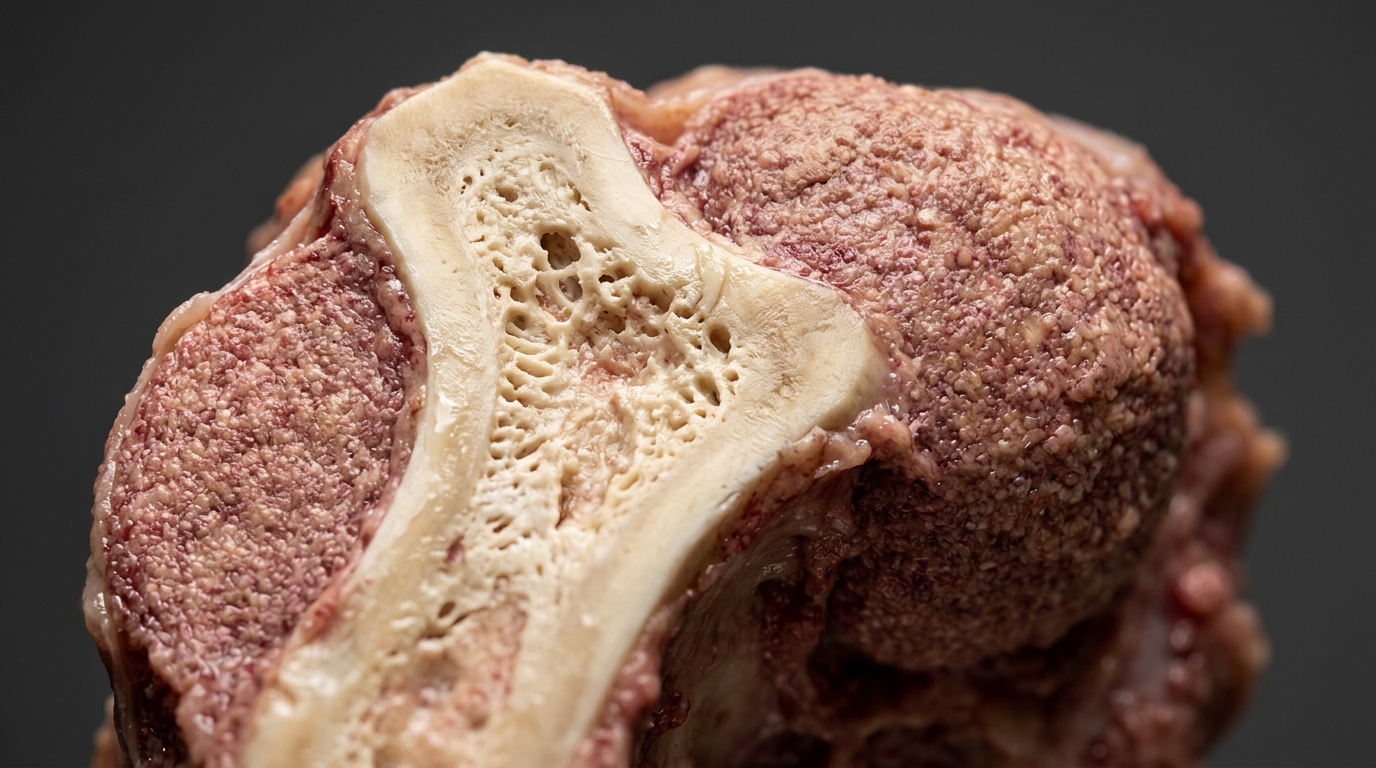
Despite repeated hospitalizations for viral pneumonia and invasive bacterial infections, routine diagnostic testing showed that these recurrent crises occurred without significant peripheral cytopenias or hypogammaglobulinemia. Radiographic examinations revealed classic osteopetrotic sclerosis throughout long bones, reflecting a failure of osteoclast-mediated bone resorption caused by interrupted signaling through the receptor activator of nuclear factor kappa-B pathway. Furthermore, physical examinations identified distinct ectodermal anomalies including severe alopecia and conical primary dentition, demonstrating that TRAF6 functions downstream of the ectodysplasin A receptor during human adnexal and dental morphogenesis. Without curative interventions, the clinical course proved devastating, emphasizing the vital role of functional TRAF6 across diverse human physiological systems.
To dissect the signaling defects responsible for bacterial susceptibility, the researchers examined patient fibroblasts and gene-edited monocytic THP-1 cell lines following exposure to inflammatory stimuli. Stimulation of patient fibroblasts with interleukin-1 beta failed to induce canonical NF-kappa-B activation, demonstrated by absent inhibitory kappa-B alpha degradation, impaired p65 nuclear translocation, and abolished induction of pro-inflammatory cytokines such as interleukin-6, interleukin-8, and monocyte chemoattractant protein-1. Mitogen-activated protein kinase activation was similarly abrogated, evidenced by absent phosphorylation of JNK and p38, alongside a total failure to induce DUSP6 and ATF3 transcripts. In contrast to cells from patients with NEMO deficiency, which show generalized signaling failure, TRAF6-deficient fibroblasts maintained normal NF-kappa-B and mitogen-activated protein kinase responses following tumor necrosis factor stimulation, proving that TRAF6 is essential specifically downstream of interleukin-1 receptor and MyD88-dependent cascades while remaining dispensable for tumor necrosis factor receptor signaling.
Functional analyses demonstrated that human TRAF6 is strictly required for Toll-like receptor signaling mediated by myeloid differentiation primary response protein 88. Challenging patient fibroblasts with synthetic lipopeptide FSL-1, which targets Toll-like receptors 2 and 6, or lipopolysaccharide, an agonist of Toll-like receptor 4, completely failed to elicit interleukin-6, interleukin-8, or monocyte chemoattractant protein-1 secretion. When neutrophils from patient six were challenged with lipopolysaccharide, they displayed a complete absence of CD62L surface shedding despite retaining normal shedding responses upon stimulation with phorbol 12-myristate 13-acetate, confirming defective Toll-like receptor 4 signaling. Furthermore, stimulation of TRAF6-deficient monocytic THP-1 cells with the Toll-like receptor 7 and 8 agonist R848 caused blunted p65 phosphorylation, impaired inhibitory kappa-B alpha degradation, and reduced interferon regulatory factor 7 expression. These results establish that TRAF6 serves as an obligatory signal transducer downstream of MyD88 across multiple Toll-like receptors in human stromal and myeloid lineages.
Investigating the mechanistic basis of recurrent viral pneumonia uncovered a surprising split downstream of Toll-like receptor 3. When patient fibroblasts were stimulated with extracellular polyinosinic-polycytidylic acid to engage Toll-like receptor 3, the phosphorylation of TANK-binding kinase 1 and interferon regulatory factor 3 proceeded normally, unlike in classic Toll-like receptor 3 deficiency. However, despite intact interferon regulatory factor 3 activation, secretion of interferon-beta and interferon-lambda-1 was abolished, accompanied by impaired NF-kappa-B and mitogen-activated protein kinase activation. Intracellular transfection of polyinosinic-polycytidylic acid restored interferon production via cytosolic RIG-I and MDA5 sensors, confirming that core transcription machinery remained functional. Because full transcriptional activation of the IFNB1 enhanceosome requires cooperative binding of interferon regulatory factor 3, NF-kappa-B, and activator protein 1, these findings demonstrate that TRAF6 is redundant for upstream IRF3 phosphorylation but essential for providing the parallel NF-kappa-B and MAPK signals necessary for antiviral interferon production.
Evaluation of humoral immunity revealed significant defects in B cell differentiation alongside preserved baseline antibody production. Peripheral blood immunophenotyping showed a severe depletion of class-switched memory B cells expressing CD19, CD27, and lacking immunoglobulin D, coupled with undetectable activation-induced cytidine deaminase. In vitro stimulation of patient peripheral blood mononuclear cells with CD40 ligand and interleukin-21 revealed impaired proliferation, survival, and differentiation into CD27-positive CD38-positive plasmablasts compared to healthy controls. Notably, circulating immunoglobulin A was present in two affected infants, indicating that alternative, CD40-independent class-switch recombination pathways remain functional in vivo. Furthermore, patient CD4+ T cells failed to normally upregulate CD40 ligand upon T cell receptor engagement, establishing that human TRAF6 deficiency impairs B cell activation through both intrinsic signaling deficits downstream of CD40 and defective extrinsic helper signaling provided by CD4+ T lymphocytes.
A prominent feature of human TRAF6 deficiency was massive CD4+ T cell lymphocytosis accompanied by extensive follicular effacement in enlarged lymph nodes and marked splenomegaly. Peripheral blood analyses documented profoundly elevated absolute CD4+ T cell counts that increased the systemic CD4 to CD8 ratio approximately tenfold above normal age-matched ranges. Flow cytometry demonstrated early and near-complete loss of circulating naive CD45RA-positive CD4+ T cells within the first months of life, accompanied by a marked expansion of effector memory and TEMRA populations. To determine whether this expansion reflected clonal malignancy or chronic antigen-driven stimulation, the authors performed single-cell T cell receptor sequencing on sorted CD4+ T cells. Strikingly, 94.6 percent of patient clonotypes were entirely unique, mirroring the 99.7 percent unique clonotype diversity in healthy controls, with no skewing of T cell receptor beta variable gene usage, demonstrating that TRAF6 deficiency unleashes a spontaneous, antigen-independent polyclonal lymphoproliferation.
Single-cell transcriptomic analyses of patient CD4+ T cells revealed a persistent, broad activation profile marked by upregulation of activation-associated genes including CD28, CD44, CD81, CD82, CD40LG, CTLA4, PRDM1, and HLA-DR. Gene set enrichment analysis showed significant enrichment for a T helper 2 signature driven by elevated GATA3 expression, consistent with the prominent eosinophilia observed in clinical presentations. Although chest computed tomography in patient six revealed near-total absence of thymic tissue, recent thymic emigrants and normal neonatal T cell receptor excision circles were detectable early in life, indicating that early thymocyte development initiates normally before undergoing premature thymic involution.
Biochemical investigations in gene-edited Jurkat T cells and patient fibroblasts identified the molecular mechanism of this uncontrolled lymphoproliferation as constitutive paracaspase hyperactivity. Under homeostatic conditions, TRAF6 restrains the catalytic paracaspase activity of mucosa-associated lymphoid tissue lymphoma translocation protein 1, designated MALT1. In TRAF6-deficient cells, the loss of this inhibitory restraint resulted in excessive, spontaneous cleavage of key MALT1 substrates, including the deubiquitinase CYLD, HOIL-1, A20, and the RNA-binding protein Roquin-1. Treatment with MLT-748, a selective MALT1 inhibitor, abolished this excessive substrate cleavage in both fibroblasts and Jurkat cells. Because Roquin-1 and Regnase-1 normally degrade messenger RNAs encoding activation molecules, their uncontrolled proteolytic destruction in TRAF6-deficient CD4+ T cells led to marked accumulation of transcripts encoding ICOS, OX40, CTLA4, and REL, driving continuous, spontaneous costimulatory signaling and relentless polyclonal T cell expansion.
Functional characterization of myeloid cells derived from expanded potential stem cells engineered with the patient p.Arg332* nonsense variant revealed cell-intrinsic antimicrobial impairments that compound host susceptibility to pyogenic infections. Although TRAF6-deficient stem-cell-derived monocytes differentiated normally into CD14-positive and CD16-positive subsets and preserved normal phagocytosis of Escherichia coli bioparticles, they displayed reduced CD107a surface expression upon lipopolysaccharide stimulation, indicating impaired degranulation. Moreover, patient monocytes exhibited downregulation of lysozyme, complement factors, and essential NADPH oxidase components including p47phox and gp91phox, producing a significant reduction in oxidative burst capacity. Highlighting the clinical significance of these findings, two affected siblings underwent allogeneic hematopoietic stem cell transplantation, which corrected their osteopetrosis with normalization of bone mineral density, restored naive CD4+ T cell pools and the CD4 to CD8 ratio, and eliminated recurrent bacterial and viral infections over four years of follow-up, confirming that human TRAF6 deficiency represents a curable hematopoietic-intrinsic disorder.
Subject of Research: Genetic and immunological characterization of human TRAF6 deficiency
Article Title: Human TRAF6 deficiency causes osteopetrosis, lymphoproliferation and immune deficiency
Article References: Hao, Y., Maillard, A., Lee, C. E., Lewis, A., AlShekaili, J., Liu, X., Phillips, J. C., Kwong, K., Miraghazadeh, B., Kang, M. K., Liu, F., Fraser, B., Suresh, S., Wright, N., Lewis, V., Boccuto, L., Cascio, L., Pauly, R., Walker, C., … Cook, M. C. (2026). Human TRAF6 deficiency causes osteopetrosis, lymphoproliferation and immune deficiency. Nature Genetics. https://doi.org/10.1038/s41588-026-02833-2
Image Credits: AI Generated
DOI: 10.1038/s41588-026-02833-2
Keywords: TRAF6, Inborn Errors of Immunity, Osteopetrosis, Lymphoproliferation, CD4+ T Cells, MALT1 Paracaspase, MyD88 Signaling, Toll-Like Receptors, Interleukin-1 Receptor, Type I Interferon, Hematopoietic Stem Cell Transplantation, Ectodermal Dysplasia, Primary Immunodeficiency, Monocyte Dysfunction, NF-kappa-B Pathway, Roquin-1, Oxidative Burst
News Source: Drew Townsend. (November 27, 2026). Human TRAF6 Inborn Errors Cause Severe Osteopetrosis and Massive Lymphoproliferation. Scienmag.