


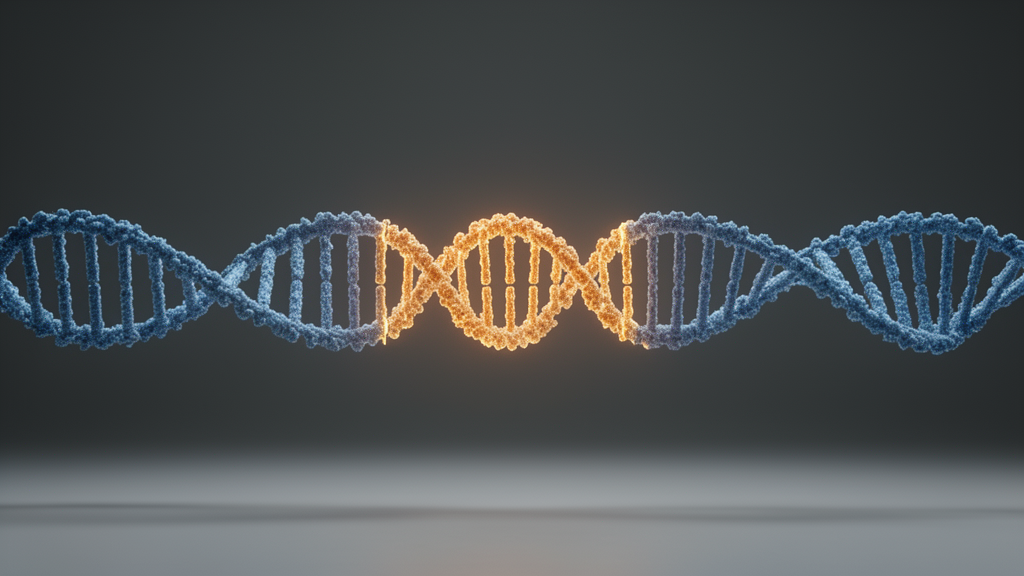
A large-scale scan of human pangenome assemblies has uncovered a structural variant in the immunoglobulin heavy chain constant gene locus that was long dismissed as an anomaly: a triplication of the genomic segment carrying the alpha, epsilon and gamma constant genes together with the 3′ Regulatory Region, the enhancer cluster that governs class switch recombination in B-lineage cells. The finding, published in Discover Immunity on 17 January 2026, suggests that a haplotype once thought to exist predominantly as a duplication in the human reference genome is in fact a common alternative carried by unrelated individuals across geographically distant populations.
The immunoglobulin heavy chain genes sit on chromosome 14 near the q telomere, a region riddled with segmental duplications that multiply the number of variable, diversity and joining genes and thereby expand the repertoire of antibody binding sites. In modern humans, roughly 57 functional V genes, 23 D genes and 6 J genes coexist with a comparable number of pseudogenes. The constant gene cluster and its downstream regulatory region, however, appear to have undergone fewer duplication events: in most mammals the IGH alpha gene and the 3’RR exist in a single copy. The Hominoidea lineage acquired a segmental duplication that gave humans two IGHA subclasses, one functional IGHE gene with its pseudogene, and four IGHG subclasses, modestly increasing the variability of the constant region.
The 3’RR is not a passive appendage. It contains a cluster of enhancers with a fundamental role in the adaptive immune response, modulating class switch recombination in B-lineage cells on chromosome 14. Within the human 3’RR1 sits the polymorphic enhancer hs1.2, whose alleles with internal duplications have been significantly linked to autoimmune diseases and to differential responses to viral infections. A longevity study found decreased homozygosity for the hs1.2 *2 allele in older individuals, hinting at a disadvantage in later life, possibly through effects on the immune system and inflammation. In European populations, the *2 allele has been associated with stronger immune responses in children under five, correlating with high serum levels of IGHG and IGHA and improved protection against environmental antigens. Women carrying *2 exhibited milder COVID-19 symptoms and better vaccination responses, a pattern attributed to estrogen binding in the 3’RR1 hs1.2 region that enhances immunoglobulin transcription. In adulthood, however, the same allele is associated with increased susceptibility to autoimmune diseases such as rheumatoid arthritis, especially in women. The alleles thus confer both immunological risks and benefits that appear to have reached an evolutionary balance.
Detecting such variability is a central goal of the international consortia that collect and curate large databases of sequenced human genomes. Advances in sequencing now enable fully reconstructed haplotypes, increasing sensitivity for structural variants even in regions dense with segmental duplications. The Human Pangenome Reference Consortium produced phased diploid assemblies from lymphoblastoid cells of individuals from around the world, and the authors of the new study carefully annotated the 464 available sequences. They identified a structural variant: a triplication of the genomic region containing the IGH genes and the 3’RR loci. Until now, this region had largely been described as a duplication in the reference human genome, with a triplication mentioned only in a few anecdotal reports.
The triplicated segment yields three IGHA subclasses, six IGHG subclasses and two functioning IGHE genes, with the pseudogene acting as the third element of the triplication. In individuals carrying the haplotype, this represents an additional expansion of the variability of the IGH constant region, with enhanced modulation of immunoglobulin class switching and immunoglobulin expression in plasma cells. The authors detected the triplication in samples from unrelated individuals across geographically distant populations, including China, South America and Africa, suggesting it represents a common haplotype of the human IGH constant region rather than a rare private mutation.
Methodologically, the team searched the 464 HPRC haplotypes available in the UCSC genome browser using blast, and compared the identified contig with the T2T and hg38 releases of the human genome using blast2seq. Reference records from GenBank and Ensembl anchored the annotation of each gene and enhancer mapping to the IGH constant locus, including the four hs1.2 alleles, the hs4 and hs3 enhancers, and the IGHA, IGHE, IGHG and IGHGP transcripts. Because currently available tools are primarily designed to analyse the VDJ region and often overlook the constant gene region and downstream regulatory elements, manual curation of the annotations was necessary. IgBLAST, developed at NCBI specifically for identifying immunoglobulin genes, helped detect the telomeric limits of the IGHC locus, while mapping of the TMEM121 gene defined the centromeric boundaries. Dot plot diagrams generated with Gepard compared the duplication in the T2T assembly with the triplication in one of the newly identified contigs.
The analysis of the 464 phased haploid assemblies identified 19 Homo sapiens isolates, each containing at least one contig with more than one match to the hs1.2 sequence. Selecting all contigs harbouring the IGHC locus from these isolates retained 36 contigs in total: 23 with two copies of the 3’RR, 6 with a single copy, and 7 with three copies, named 3’RR1, 3’RR3 and 3’RR2. The seven triplicated contigs came from five unrelated individuals, each belonging to a different population. In every sample, all three 3’RR copies contained an hs1.2 enhancer. The *4 allele appeared in all samples in the 3’RR1, while the *1 and *2 alleles occurred six and one times in the 3’RR2, and five and two times in the 3’RR3. Notably, one contig, JAGYYX010000018.1, harboured three different alleles of the hs1.2 enhancer within the same DNA molecule. Where somatic rearrangements had not yet involved the constant locus, each 3’RR copy was flanked by an IGHA gene, an IGHE gene or pseudogene, and a pair of IGHG genes, extending the limits of the triplicated region to include these genes.
Independent evidence came from two directions. The IMGT repository had already recorded the NA19240.pri.mat.f1_v2 haplotype, to which one of the triplicated contigs belongs, but its annotation missed the second copy of the IGHG4 gene present in the region. IMGT reports that a 185 kb region between IGHEP1 and IGHG4 contains genes that do not conform to the expected gene order and do not match already annotated alleles, effectively treating the haplotype as an anomaly peculiar to one individual’s genome rather than a common human variant. The authors argue that their findings clarify the origin of this apparently unusual order and that the haplotype should be reconsidered for complete annotation and inclusion among common variants, while acknowledging that validation as a novel variant awaits additional confirmation. Separately, a recent study of 945 Han Chinese genomes by Gong and colleagues reported a variant, DUP_59060, a 73 kb variant containing a third copy of the IGH constant region, detected in 4.92 percent of the samples. The authors suggest this may represent a minimum frequency for the triplication in the Han population, since the true prevalence may be underestimated because somatic recombination events can delete the supernumerary copy and because assembly software struggles to discriminate among different copies in segmental duplication regions.
The triplication also reshapes the possible pathways of class switch recombination, the sequential process through which progressive deletion of constant genes changes the antibody isotype a B cell produces. In haplotypes with the standard duplication, it may be hypothesised that IGHE can only switch to IGHA, because the alpha gene is the only one retained on chromosome 14 after the somatic rearrangement. In triplicated haplotypes, an IGHE produced from the central epsilon copy may also switch to an IGHG, or to a different IGHE allele. These alternative switching pathways challenge current assumptions about the fixed order and availability of constant genes during class switch recombination, potentially broadening antibody functional diversity, and the authors argue they should be considered when evaluating immune pathologies and therapies. The triplication additionally introduces a third 3’RR with its own copy of the hs1.2 enhancer, raising the possibility that not only the allele type but also its position within the triplication could modulate immune responses. Existing protocols studying hs1.2 function, to the authors’ knowledge, have not been specifically designed to distinguish the effects of its polymorphisms at different positions within the triplication; adopting long-read technology could help address this question in future studies.
Earlier hints of the variant exist. Bottaro and colleagues described a 150 kb insertion sequence in an Italian family in work from 1993 and 1994 using in vitro methods that differ substantially from current large-scale sequencing approaches. More recently, Gornitzka and colleagues detected a large duplication of roughly 120 kb in the IGHC region using Oxford Nanopore whole-genome sequencing, and Jana and colleagues reported the same finding in two African-ancestry subjects carrying an additional copy of the IGHE–IGHA1 region, resulting in a tandem triplication of the constant genes. Those reports remained anecdotal and were not further investigated, but both identified the triplication in African-ancestry haplotypes, whereas the new data indicate the variant is also shared by other populations. The authors conclude that valuable information can be uncovered among pangenome data, and that fully mining this resource requires critical re-examination of automated analyses, since available databases remain underexploited. They call for new in vitro studies of immunoglobulin production in individuals carrying the triplicated constant genes to clarify its functional impact, noting that the triplication of the hs1.2 enhancer, whose alleles are associated with both autoimmune diseases and heightened immune responses to viral infections, underscores the relevance of the finding for future immunological research.
Subject of Research: A meta-analysis of human pangenome assemblies identifying a triplication of the immunoglobulin heavy chain constant gene locus and its 3' Regulatory Region as a common haplotype.
Article Title: Deep meta-analysis of human pangenome data reveals triplication of the IGH constant gene locus
Article References: D’Addabbo, P., Cianci, R., & Frezza, D. (2026). Deep meta-analysis of human pangenome data reveals triplication of the IGH constant gene locus. Discover Immunity, 3(1), Article 2. https://doi.org/10.1007/s44368-026-00018-x
Image Credits: AI Generated
DOI: 10.1007/s44368-026-00018-x
Keywords: human pangenome, immunoglobulin heavy chain, IGH constant locus, 3' Regulatory Region, class switch recombination, hs1.2 enhancer, structural variant, segmental duplication, autoimmunity, antibody diversity, HPRC, haplotype
News Source: Juliet Wilcox. (October 30, 2026). Human pangenome analysis uncovers a widespread triplication of the antibody constant gene region. Scienmag.



