For the smallest survivors of premature birth, the months after leaving the neonatal intensive care unit are a fragile window in which the developing lung can either recover or slide into chronic disease. A new multicenter study now suggests that what those babies are fed during this window may matter more than clinicians have appreciated. Researchers analyzing data from more than 1,700 children with bronchopulmonary dysplasia, the chronic lung disease of prematurity, found that those who received human milk after NICU discharge had significantly fewer acute respiratory illnesses, less medication use, and fewer urgent healthcare visits than peers fed exclusively formula after leaving the hospital.
Bronchopulmonary dysplasia, or BPD, remains one of the most common and consequential complications of extreme prematurity. First described in 1967 by William Northway and colleagues in infants who had received mechanical ventilation for hyaline membrane disease, the condition has evolved over five decades into a different clinical entity: rather than the severe fibrotic lung injury of the ventilator era, most contemporary cases involve arrested alveolar and vascular development in extremely preterm infants. The result is a lung that never fully completes its postnatal growth program, leaving children vulnerable to recurrent wheezing, respiratory infections, and rehospitalization throughout early childhood.
The scale of the problem is substantial. Very low birth weight infants who develop BPD face prolonged hospital stays, higher medical costs, and elevated rates of readmission in the first year of life. Prior research has established that human milk feeding during the NICU stay itself reduces the incidence of BPD, with dose-dependent effects reported in several cohorts and confirmed by systematic reviews and meta-analyses. But the period after discharge, when families transition from hospital protocols to home feeding routines, has received far less scrutiny. The new study, led by Carol Cao and Brianna C. Aoyama of Johns Hopkins University together with collaborators across the BPD Collaborative, set out to determine whether human milk intake in this post-discharge period is associated with measurable differences in outpatient respiratory health.
The investigation took the form of a retrospective longitudinal cohort study of children under two years of age followed in specialized outpatient BPD clinics. Caregivers completed validated questionnaires assessing the presence and frequency of chronic respiratory symptoms as well as acute care usage, including sick visits, emergency department encounters, and prescription medications. Participants were categorized into two groups based on whether they received any human milk after NICU discharge. Statistical analysis employed logistic regression with clustering by subject, allowing the researchers to adjust for potential confounders while accounting for repeated measures within individual children over time.
The cohort comprised 1,731 children. Of these, 445, or 25.7 percent, received human milk after leaving the NICU, while 1,286, or 74.3 percent, did not. After adjusting for potential confounders, the human milk group showed consistently lower odds across every acute care and symptom measure examined. Children with post-NICU human milk exposure had 35 percent lower odds of sick visits, with an odds ratio of 0.65 and a p-value of 0.006, and 34 percent lower odds of emergency department visits, with an odds ratio of 0.66 and a p-value of 0.015.
Medication patterns told a parallel story. Human milk consumption was associated with 42 percent lower odds of antibiotic prescriptions, reflected in an odds ratio of 0.58 with a p-value of 0.005, and 54 percent lower odds of steroid prescriptions, with an odds ratio of 0.46 and a p-value below 0.001. The strongest single association involved beta-agonist use in the prior three months, which showed 31 percent lower odds in the human milk group, with an odds ratio of 0.69 and a p-value of 0.008. Beta-agonists, the bronchodilator medications commonly prescribed for wheezing and reactive airway symptoms, serve as a proxy for the frequency and severity of obstructive respiratory episodes in this population.
The biological plausibility of these findings rests on the distinctive composition of human milk. Unlike formula, human milk contains a dynamic array of immunologic factors, including secretory immunoglobulin A, lactoferrin, lysozyme, cytokines, and live maternal immune cells, all of which contribute to pathogen defense in a mucosal system still learning to protect itself. Human milk also delivers antioxidants that may counteract the oxidative injury implicated in BPD pathogenesis, and its bioactive components support somatic growth patterns that are themselves linked to lung repair. For preterm infants whose alveolar development is incomplete at birth, the post-discharge months coincide with the critical period of ongoing lung growth, meaning that nutritional and immunologic inputs during this phase could plausibly shape long-term respiratory trajectories.
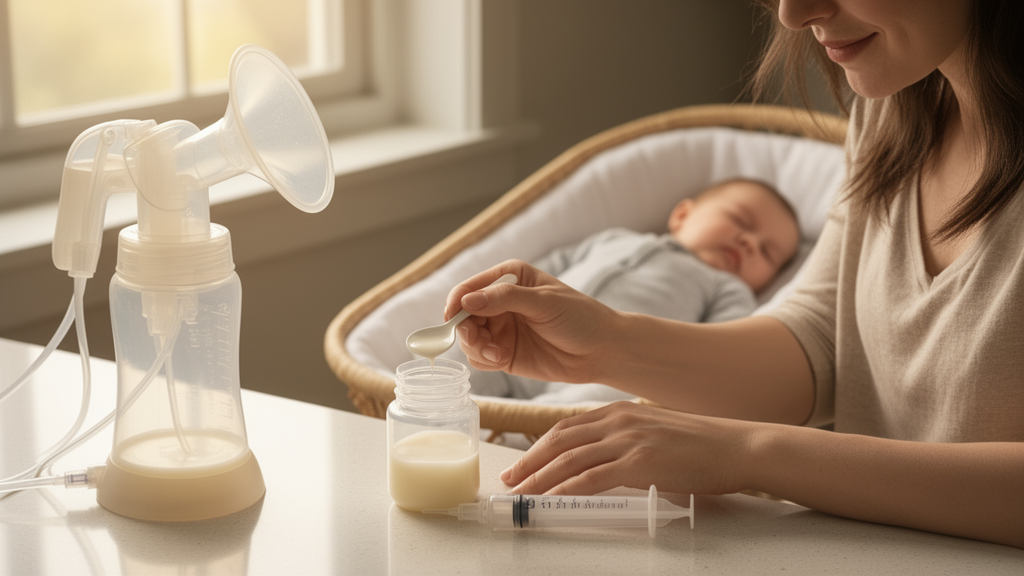
The authors frame human milk intake after NICU discharge as a potentially modifiable risk factor, a designation with real clinical weight. Unlike gestational age, birth weight, or genetic predisposition, feeding choices in the months after discharge represent something families and care teams can actually influence. The finding that only about a quarter of children in this large BPD cohort received any human milk after discharge highlights a substantial gap between what the evidence suggests and what families achieve in practice. Barriers to sustained human milk feeding after the NICU are well documented and include lactation challenges specific to preterm infants, the logistical burden of pumping and storing milk, workplace constraints, and the exhaustion that accompanies caring for a medically complex child.
The study’s design carries important caveats that the authors themselves acknowledge. As a retrospective cohort relying on caregiver-reported outcomes, it demonstrates association rather than causation, and unmeasured confounders, such as socioeconomic factors, maternal health, and the intensity of follow-up care, could influence both feeding patterns and respiratory outcomes. The binary classification of human milk exposure as any versus none obscures dose and duration effects, and the authors call for quantitative time-adjusted analyses to better define how the amount and timing of human milk intake relate to outcomes. They also note that further investigation is needed to evaluate long-term respiratory consequences and to address the barriers that prevent families from continuing human milk feeding after discharge.
Even with these limitations, the consistency of the associations across independent outcome measures, spanning healthcare utilization, prescription patterns, and chronic symptom reporting, strengthens the signal. The findings align with a growing body of evidence on human milk and preterm lung disease, including prior work from the same research group showing that breast milk exposure is associated with improved respiratory outcomes in infants with BPD, and recent cohort studies demonstrating dose-dependent protective effects. For clinicians caring for the growing population of BPD graduates in outpatient clinics, the study adds a concrete, evidence-based element to discharge counseling: supporting families in continuing human milk feeding after the NICU may be one of the few interventions available to reduce the acute respiratory burden these children carry. For researchers, it opens a clear agenda, one that includes prospective dose-response studies, evaluation of donor milk versus mother’s own milk in the post-discharge period, and trials of lactation support programs designed specifically for families navigating life after the NICU with a medically fragile infant.
Subject of Research: Pediatric pulmonology
Article Title: Impact of post-NICU human milk intake on respiratory outcomes in bronchopulmonary dysplasia
Article References: Cao, C., Collaco, J. M., Akangire, G. G., Anderson-Bell, D., Austin, E. D., Bhandari, A., Fierro, J. L., Hayden, L. P., Kelchtermans, J., Lai, K. V., Manimtim, W., Miller, A. N., Moore, P. E., Nelin, L. D., Rice, J. L., Sheils, C. A., Siddaiah, R., Tracy, M. C., Abman, S. H., … Aoyama, B. C. (2026). Impact of post-NICU human milk intake on respiratory outcomes in bronchopulmonary dysplasia. Pediatric Research. https://doi.org/10.1038/s41390-026-05438-x
Image Credits: AI Generated
DOI: 10.1038/s41390-026-05438-x
Keywords: bronchopulmonary dysplasia, human milk, NICU, preterm infants, respiratory outcomes, pediatric research, emergency department visits, antibiotics, steroids, breastfeeding, healthcare utilization, retrospective cohort
News Source: Denise Maddox. (October 16, 2026). Human Milk After NICU Discharge Tied to Fewer Breathing Problems in Children With BPD. Scienmag.