• HOME
  • NEWS
  • EXPLORE
    • CAREER
      • Companies
      • Jobs
    • EVENTS
    • iGEM
      • News
      • Team
    • PHOTOS
    • VIDEO
    • WIKI
  • BLOG
  • COMMUNITY
    • FACEBOOK
    • INSTAGRAM
    • TWITTER
Thursday, July 16, 2026
BIOENGINEER.ORG
No Result
View All Result
  • Login
  • HOME
  • NEWS
  • EXPLORE
    • CAREER
      • Companies
      • Jobs
        • Lecturer
        • PhD Studentship
        • Postdoc
        • Research Assistant
    • EVENTS
    • iGEM
      • News
      • Team
    • PHOTOS
    • VIDEO
    • WIKI
  • BLOG
  • COMMUNITY
    • FACEBOOK
    • INSTAGRAM
    • TWITTER
  • HOME
  • NEWS
  • EXPLORE
    • CAREER
      • Companies
      • Jobs
        • Lecturer
        • PhD Studentship
        • Postdoc
        • Research Assistant
    • EVENTS
    • iGEM
      • News
      • Team
    • PHOTOS
    • VIDEO
    • WIKI
  • BLOG
  • COMMUNITY
    • FACEBOOK
    • INSTAGRAM
    • TWITTER
No Result
View All Result
Bioengineer.org
No Result
View All Result
Home NEWS Science News Health

Human MAIT cells sense the metabolic state of enteric bacteria

Bioengineer by Bioengineer
May 9, 2018
in Health
Reading Time: 2 mins read
0
Share on FacebookShare on TwitterShare on LinkedinShare on RedditShare on Telegram
IMAGE

Credit: Department of Biomedicine, Tobias Rutishauser

A little-explored group of immune cells plays an important role in the regulation of intestinal bacteria. Changing metabolic states of the microbes have an effect on defense cells at different stages of alert or rest, as researchers from the Department of Biomedicine at the University and University Hospital of Basel report in the journal Mucosal Immunology.

It is known that the metabolites of bacteria influence the composition and function of immune cells resident within the gut. These defense cells include MAIT cells (mucosal-associated invariant T cells), which were only recently discovered and are naturally abundant in the gastrointestinal mucosa, skin liver and blood. These cells are specialized in recognizing the microorganisms living in every human being and monitoring their activities.

Different populations in gut vs. blood

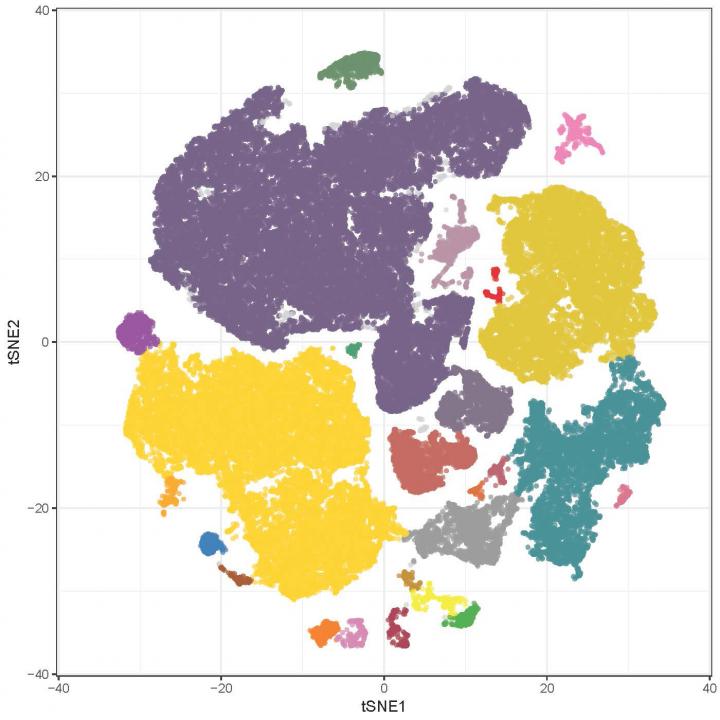
A group led by Prof. Dr. Gennaro De Libero from the University of Basel and PD Dr. Petr Hruz from the University Hospital of Basel have investigated how MAIT cell activation and function is influenced by bacterial metabolites produced in normal colon. The study revealed that distinct populations of MAIT cells are located in the human intestinal mucosa. These populations were identified in gut biopsies using highly innovative methods and bioinformatics analyses.

Result: MAIT cells are present in variable states of alert and rest, in accordance with the metabolic state of intestinal bacterial flora. The defense cells are most frequently stimulated by bacteria grown under low-oxygen and slow growth-phase – conditions such as those found in the large intestine. MAIT cells can then directly influence local inflammation but also tissue healing and cell fitness in the gut by producing different messenger substances.

"Fine balance"

"Our results show that there is a fine balance occurring in the gut between microbial growth conditions, the production of stimulating metabolites and the response of MAIT defense cells," state the researchers. The metabolism of microbes in the intestine constantly adapts to changing host conditions. By detecting the metabolic state of enteric bacteria, MAIT cells can potentiate their function in mucosal immunosurveillance.

###

Media Contact

Iris Mickein
[email protected]
41-612-072-495
@UniBasel_en

http://www.unibas.ch/

Related Journal Article

http://dx.doi.org/10.1038/s41385-018-0020-9
Share12Tweet8Share2ShareShareShare2

Related Posts

Sweeteners Slow Growth of Key Gut Bacteria in Laboratory Studies

July 16, 2026

Blood Test Model Predicts Postoperative Lung Infections in Older Hip Fracture Patients

July 16, 2026

Programming Fracture Resistance in Metamaterials through Elastic Instability Design

July 16, 2026

More Smokers Purchase Illicit Tobacco, Report Finds

July 16, 2026
Please login to join discussion

POPULAR NEWS

  • New Drug Candidate Developed at McMaster Shows Potential for Treating Brain Cancer

    58 shares
    Share 23 Tweet 15
  • Scientists Overcome Antimicrobial Resistance in Bacteria Linked to Cystic Fibrosis

    42 shares
    Share 17 Tweet 11
  • Porcine Heart Transplant

    50 shares
    Share 20 Tweet 13
  • A varied menu

    51 shares
    Share 22 Tweet 12

About

We bring you the latest biotechnology news from best research centers and universities around the world. Check our website.

Follow us

Recent News

Sweeteners Slow Growth of Key Gut Bacteria in Laboratory Studies

Rising European Dust Pollution Tied to a Changing Climate

Blood Test Model Predicts Postoperative Lung Infections in Older Hip Fracture Patients

Subscribe to Blog via Email

Enter your email address to subscribe to this blog and receive notifications of new posts by email.

Join 85 other subscribers
  • Contact Us

Bioengineer.org © Copyright 2023 All Rights Reserved.

Welcome Back!

Login to your account below

Forgotten Password?

Retrieve your password

Please enter your username or email address to reset your password.

Log In
No Result
View All Result
  • Homepages
    • Home Page 1
    • Home Page 2
  • News
  • National
  • Business
  • Health
  • Lifestyle
  • Science

Bioengineer.org © Copyright 2023 All Rights Reserved.