• HOME
  • NEWS
  • EXPLORE
    • CAREER
      • Companies
      • Jobs
    • EVENTS
    • iGEM
      • News
      • Team
    • PHOTOS
    • VIDEO
    • WIKI
  • BLOG
  • COMMUNITY
    • FACEBOOK
    • INSTAGRAM
    • TWITTER
Sunday, April 12, 2026
BIOENGINEER.ORG
No Result
View All Result
  • Login
  • HOME
  • NEWS
  • EXPLORE
    • CAREER
      • Companies
      • Jobs
        • Lecturer
        • PhD Studentship
        • Postdoc
        • Research Assistant
    • EVENTS
    • iGEM
      • News
      • Team
    • PHOTOS
    • VIDEO
    • WIKI
  • BLOG
  • COMMUNITY
    • FACEBOOK
    • INSTAGRAM
    • TWITTER
  • HOME
  • NEWS
  • EXPLORE
    • CAREER
      • Companies
      • Jobs
        • Lecturer
        • PhD Studentship
        • Postdoc
        • Research Assistant
    • EVENTS
    • iGEM
      • News
      • Team
    • PHOTOS
    • VIDEO
    • WIKI
  • BLOG
  • COMMUNITY
    • FACEBOOK
    • INSTAGRAM
    • TWITTER
No Result
View All Result
Bioengineer.org
No Result
View All Result
Home NEWS Science News Health

Human iPSC-derived MSCs from aged individuals acquire a rejuvenation signature

Bioengineer by Bioengineer
April 10, 2019
in Health
Reading Time: 2 mins read
0
IMAGE
Share on FacebookShare on TwitterShare on LinkedinShare on RedditShare on Telegram

Recent publication in Stem Cell Research and Therapy
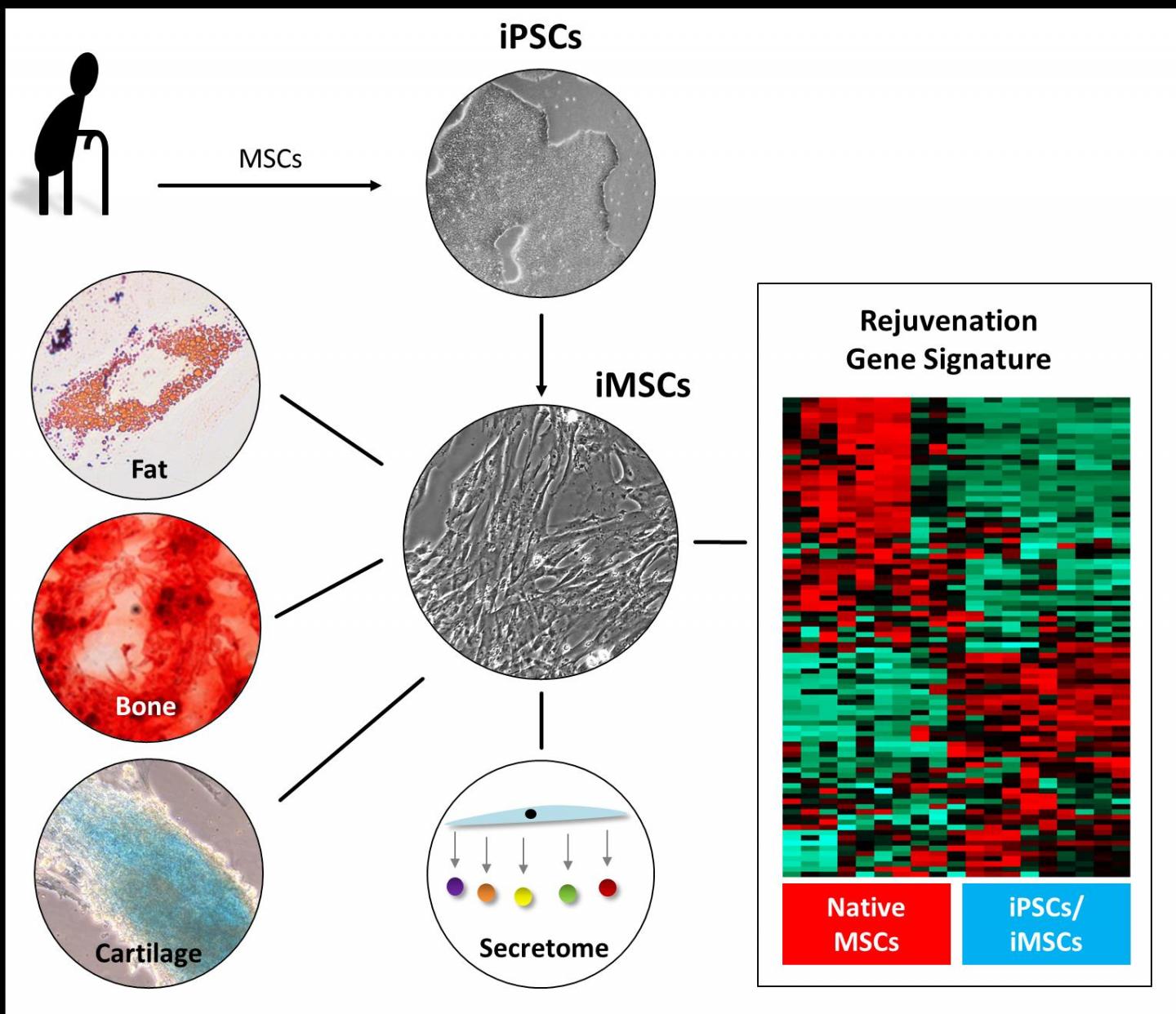
IMAGE

Credit: Spitzhorn LS, et. al.

The use of primary mesenchymal stem cells (MSCs) is fraught with ageing-related shortfalls such as limited expansion and early senescence. Human induced pluripotent stem cells (iPSCs) -derived MSCs (iMSCs) have been shown to be a useful clinically relevant source of MSCs that circumvent these ageing-associated drawbacks. The importance of this concept is manifested by the successful Phase 1 clinical trial for the treatment of GvHD by Cynata Therapeutics and the National Health Service- UK; a Phase 2 trial is planned for 2019. Note, this trial is independent of the work carried out by Spitzhorn et al.-described below.

A collaborative study co-ordinated by the Institute for Stem Cell Research and Regenerative Medicine (Prof. Dr. James Adjaye) which includes the Division of Paediatric Stem Cell Therapy, Clinic for Pediatric Oncology, Hematology and Clinical Immunology (Prof. Dr. Meisel) and the Institute for Transplantation Diagnostics and Cell Therapeutics (PD Dr. Sorg) from the Medical Faculty of Heinrich Heine University Düsseldorf and the Bone and Joint Research Group, Centre for Human Development, Stem Cells and Regeneration from the University of Southampton (Prof. Dr. Richard Oreffo) published in the journal Stem Cell Research and Therapy analysed the acquisition of rejuvenation-associated hallmarks in iMSCs.

In their study, the team compared cellular features, transcriptomes and secretomes of iMSCs differentiated from embryonic stem cells (ESCs-H1) and iPSCs, emanating from MSCs isolated young and elderly individuals. The generated iMSCs (irrespective of source) met the criteria set out for MSCs and dendrogram analyses confirmed that the transcriptomes of all iMSCs clustered together with the parental MSCs and distinct from pluripotent stem cells.

Irrespective of donor age and initial cell type, iMSCs acquired a rejuvenation-associated 50-gene comprising signature which is also expressed in pluripotent stem cells but not in the parental MSCs.

Significantly, in terms of regenerative medicine, iMSCs acquired a secretome similar to that of primary MSCs, thus highlighting their ability to act via paracrine signalling.

The iMSC concept has enabled circumventing the drawbacks associated with the use of adult MSCs and thus provide a promising tool for use in various clinical settings in the future.

###

Publication: Spitzhorn LS, Megges M, Wruck W, Rahman MS, Otte J, Degistirici Ö, Meisel R, Sorg RV, Oreffo ROC, Adjaye J. Human iPSC-derived MSCs (iMSCs) from aged individuals acquire a rejuvenation signature. Stem Cell Res Ther. 2019 Mar 18;10(1):100. doi: 10.1186/s13287-019-1209-x. PubMed PMID: 30885246.

Weblink: https://stemcellres.biomedcentral.com/articles/10.1186/s13287-019-1209-x

Media Contact
Dr. James Adjaye
[email protected]

Related Journal Article

http://dx.doi.org/10.1186/s13287-019-1209-x

Tags: Medicine/Health
Share12Tweet8Share2ShareShareShare2

Related Posts

PPARs’ Impact on Diabetic Kidney Disease Development

April 12, 2026

Medication Literacy Tool Developed for Older Chinese Patients

April 12, 2026

New High-Throughput Approach Targets MDM2 to Overcome Uveal Melanoma Radiation Resistance

April 12, 2026

Dual-Targeted CAR T Cells Beat Escape, Rejection

April 12, 2026
Please login to join discussion

POPULAR NEWS

  • Scientists Investigate Possible Connection Between COVID-19 and Increased Lung Cancer Risk

    51 shares
    Share 20 Tweet 13
  • Boosting Breast Cancer Risk Prediction with Genetics

    47 shares
    Share 19 Tweet 12
  • Popular Anti-Aging Compound Linked to Damage in Corpus Callosum, Study Finds

    44 shares
    Share 18 Tweet 11
  • Imagine a Social Media Feed That Challenges Your Views Instead of Reinforcing Them

    1012 shares
    Share 400 Tweet 250

About

We bring you the latest biotechnology news from best research centers and universities around the world. Check our website.

Follow us

Recent News

PPARs’ Impact on Diabetic Kidney Disease Development

Podoplanin and CCR7 Drive Triple-Negative Breast Cancer Spread

Medication Literacy Tool Developed for Older Chinese Patients

Subscribe to Blog via Email

Success! An email was just sent to confirm your subscription. Please find the email now and click 'Confirm' to start subscribing.

Join 78 other subscribers
  • Contact Us

Bioengineer.org © Copyright 2023 All Rights Reserved.

Welcome Back!

Login to your account below

Forgotten Password?

Retrieve your password

Please enter your username or email address to reset your password.

Log In
No Result
View All Result
  • Homepages
    • Home Page 1
    • Home Page 2
  • News
  • National
  • Business
  • Health
  • Lifestyle
  • Science

Bioengineer.org © Copyright 2023 All Rights Reserved.