• HOME
  • NEWS
  • EXPLORE
    • CAREER
      • Companies
      • Jobs
    • EVENTS
    • iGEM
      • News
      • Team
    • PHOTOS
    • VIDEO
    • WIKI
  • BLOG
  • COMMUNITY
    • FACEBOOK
    • INSTAGRAM
    • TWITTER
Wednesday, April 1, 2026
BIOENGINEER.ORG
No Result
View All Result
  • Login
  • HOME
  • NEWS
  • EXPLORE
    • CAREER
      • Companies
      • Jobs
        • Lecturer
        • PhD Studentship
        • Postdoc
        • Research Assistant
    • EVENTS
    • iGEM
      • News
      • Team
    • PHOTOS
    • VIDEO
    • WIKI
  • BLOG
  • COMMUNITY
    • FACEBOOK
    • INSTAGRAM
    • TWITTER
  • HOME
  • NEWS
  • EXPLORE
    • CAREER
      • Companies
      • Jobs
        • Lecturer
        • PhD Studentship
        • Postdoc
        • Research Assistant
    • EVENTS
    • iGEM
      • News
      • Team
    • PHOTOS
    • VIDEO
    • WIKI
  • BLOG
  • COMMUNITY
    • FACEBOOK
    • INSTAGRAM
    • TWITTER
No Result
View All Result
Bioengineer.org
No Result
View All Result
Home NEWS Science News

Hubble’s cosmic bubbles

Bioengineer by Bioengineer
April 21, 2017
in Science News
Reading Time: 2 mins read
0
Share on FacebookShare on TwitterShare on LinkedinShare on RedditShare on Telegram
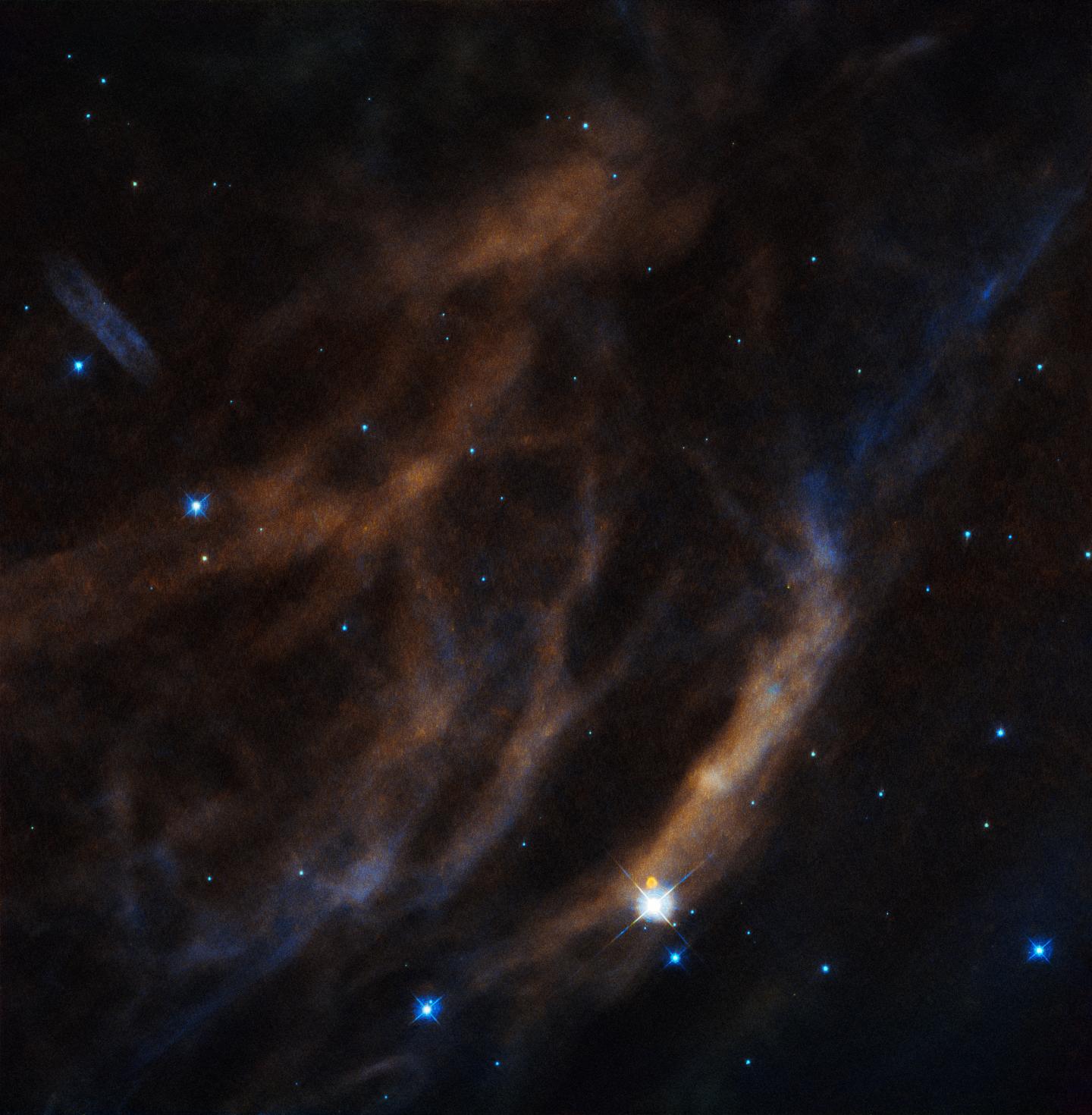
IMAGE

Credit: ESA/Hubble & NASA

This entrancing image shows a few of the tenuous threads that comprise Sh2-308, a faint and wispy shell of gas located 5,200 light-years away in the constellation of Canis Major (The Great Dog).

Sh2-308 is a large bubble-like structure wrapped around an extremely large, bright type of star known as a Wolf-Rayet Star — this particular star is called EZ Canis Majoris. These type of stars are among the brightest and most massive stars in the Universe, tens of times more massive than our own sun, and they represent the extremes of stellar evolution. Thick winds continually poured off the progenitors of such stars, flooding their surroundings and draining the outer layers of the Wolf-Rayet stars. The fast wind of a Wolf-Rayet star therefore sweeps up the surrounding material to form bubbles of gas.

EZ Canis Majoris is responsible for creating the bubble of Sh2-308 — the star threw off its outer layers to create the strands visible here. The intense and ongoing radiation from the star pushes the bubble out farther and farther, blowing it bigger and bigger. Currently the edges of Sh2-308 are some 60 light-years apart!

Beautiful as these cosmic bubbles are, they are fleeting. The same stars that form them will also cause their death, eclipsing and subsuming them in violent supernova explosions.

###

Credit: ESA/Hubble & NASA
Text credit: European Space Agency

Media Contact

Robert Gutro
[email protected]
@NASAGoddard

http://www.nasa.gov/goddard

############

Story Source: Materials provided by Scienmag

Share12Tweet8Share2ShareShareShare2

Related Posts

Cutting-Edge “Smart” Drugs Revolutionize Cancer Treatment

April 1, 2026
KIST-IAE Collaborative Team Surpasses Performance Limits in Lithium-Air Batteries with Innovative Two-Dimensional Catalyst

KIST-IAE Collaborative Team Surpasses Performance Limits in Lithium-Air Batteries with Innovative Two-Dimensional Catalyst

April 1, 2026

Brain Metastases Show Unique Macrophage Spatial Patterns

April 1, 2026

PRSS56 Drives and Treats Human High Myopia

April 1, 2026
Please login to join discussion

POPULAR NEWS

  • blank

    Revolutionary AI Model Enhances Precision in Detecting Food Contamination

    96 shares
    Share 38 Tweet 24
  • Imagine a Social Media Feed That Challenges Your Views Instead of Reinforcing Them

    1006 shares
    Share 398 Tweet 249
  • Promising Outcomes from First Clinical Trials of Gene Regulation in Epilepsy

    51 shares
    Share 20 Tweet 13
  • Popular Anti-Aging Compound Linked to Damage in Corpus Callosum, Study Finds

    43 shares
    Share 17 Tweet 11

About

We bring you the latest biotechnology news from best research centers and universities around the world. Check our website.

Follow us

Recent News

Cutting-Edge “Smart” Drugs Revolutionize Cancer Treatment

KIST-IAE Collaborative Team Surpasses Performance Limits in Lithium-Air Batteries with Innovative Two-Dimensional Catalyst

Brain Metastases Show Unique Macrophage Spatial Patterns

Subscribe to Blog via Email

Enter your email address to subscribe to this blog and receive notifications of new posts by email.

Join 78 other subscribers
  • Contact Us

Bioengineer.org © Copyright 2023 All Rights Reserved.

Welcome Back!

Login to your account below

Forgotten Password?

Retrieve your password

Please enter your username or email address to reset your password.

Log In
No Result
View All Result
  • Homepages
    • Home Page 1
    • Home Page 2
  • News
  • National
  • Business
  • Health
  • Lifestyle
  • Science

Bioengineer.org © Copyright 2023 All Rights Reserved.