• HOME
  • NEWS
  • EXPLORE
    • CAREER
      • Companies
      • Jobs
    • EVENTS
    • iGEM
      • News
      • Team
    • PHOTOS
    • VIDEO
    • WIKI
  • BLOG
  • COMMUNITY
    • FACEBOOK
    • INSTAGRAM
    • TWITTER
Monday, August 31, 2026
BIOENGINEER.ORG
No Result
View All Result
  • Login
  • HOME
  • NEWS
  • EXPLORE
    • CAREER
      • Companies
      • Jobs
        • Lecturer
        • PhD Studentship
        • Postdoc
        • Research Assistant
    • EVENTS
    • iGEM
      • News
      • Team
    • PHOTOS
    • VIDEO
    • WIKI
  • BLOG
  • COMMUNITY
    • FACEBOOK
    • INSTAGRAM
    • TWITTER
  • HOME
  • NEWS
  • EXPLORE
    • CAREER
      • Companies
      • Jobs
        • Lecturer
        • PhD Studentship
        • Postdoc
        • Research Assistant
    • EVENTS
    • iGEM
      • News
      • Team
    • PHOTOS
    • VIDEO
    • WIKI
  • BLOG
  • COMMUNITY
    • FACEBOOK
    • INSTAGRAM
    • TWITTER
No Result
View All Result
Bioengineer.org
No Result
View All Result
Home NEWS Science News

How visual attention selects important information

Bioengineer by Bioengineer
November 14, 2016
in Science News
Reading Time: 2 mins read
0
Share on FacebookShare on TwitterShare on LinkedinShare on RedditShare on Telegram
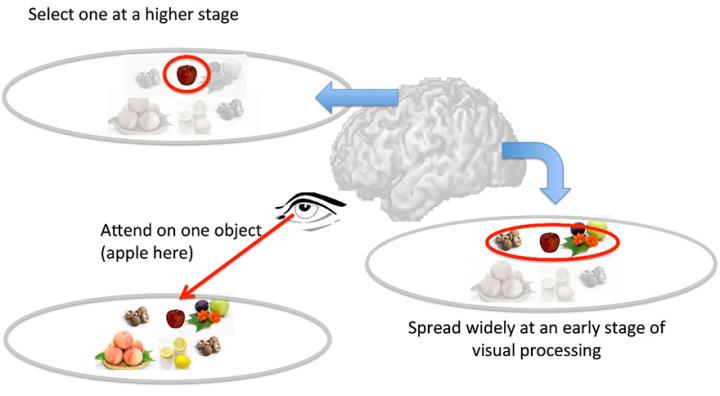
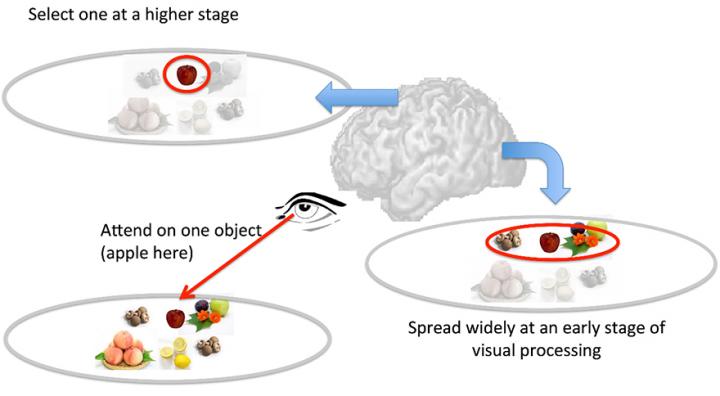
IMAGE

Credit: Satoshi Shioiri

Researchers at Tohoku University have revealed multiple functions of visual attention, the process of selecting important information from retinal images.

Studies of visual attention discovered an interesting inconsistency in spatial property. Specifically, some studies reported broad spatial spreads around attended locations, while others reported a selection of information at the attention focus.

For example – according to one study, when a person looks for a friend in a crowd, visual attention makes not only the friend, but also the people standing around the friend more visible. Another study claims that attention tends to focus on the friend's face, ignoring everyone else.

According to the research group led by Professor Satoshi Shioiri of the Research Institute of Electrical Communication, these discrepancies can be attributed to the different stages of the attention process. Their brain wave measurements revealed that a wide area around the attention focus is facilitated by attention at early visual processing, and that information at the attended location is extracted selectively at later processing. Information adjacent to the attention focus seems to be facilitated and suppressed simultaneously. So the inconsistency among previous studies can be explained by considering the effects of different attentional processes.

The research group thus proposes a model of spatial attention that has two stages with different functions. The attention model proposed could predict different attention effects for different visual processes.

This would be useful particularly for complex tasks such as driving, where it is important to notice not just pedestrians but also other elements on the road. Precise estimation of attention helps people to understand potential dangers in attention-demanding conditions.

This study was published in Scientific Reports on October 19, 2016.

###

Media Contact

Satoshi Shioiri
[email protected]
@TohokuUniPR

http://www.tohoku.ac.jp/en/

############

Story Source: Materials provided by Scienmag
Share12Tweet8Share2ShareShareShare2

Related Posts

β-Sitosterol from Ipomoea carnea Jacq. As a promising anti-inflammatory agent: Evidence from in silico modeling and in vitro validation

β-Sitosterol from Ipomoea carnea Jacq. As a promising anti-inflammatory agent: Evidence from in silico modeling and in vitro validation

August 31, 2026
Design, fabrication and characterization of a wearable Fiber Bragg grating sensor for cardiorespiratory monitoring using finger plethysmography

Design, fabrication and characterization of a wearable Fiber Bragg grating sensor for cardiorespiratory monitoring using finger plethysmography

August 31, 2026

KAIST opens the era of industrial-scale microbial foods, proposing growth strategies for the next-generation protein market

August 31, 2026

Virologist awarded $2 million NIH grant to investigate how virus-infected cells live and die

August 31, 2026
Please login to join discussion

POPULAR NEWS

  • β-Sitosterol from Ipomoea carnea Jacq. As a promising anti-inflammatory agent: Evidence from in silico modeling and in vitro validation

    29 shares
    Share 12 Tweet 7
  • Design, fabrication and characterization of a wearable Fiber Bragg grating sensor for cardiorespiratory monitoring using finger plethysmography

    29 shares
    Share 12 Tweet 7
  • KAIST opens the era of industrial-scale microbial foods, proposing growth strategies for the next-generation protein market

    29 shares
    Share 12 Tweet 7
  • Virologist awarded $2 million NIH grant to investigate how virus-infected cells live and die

    29 shares
    Share 12 Tweet 7

About

We bring you the latest biotechnology news from best research centers and universities around the world. Check our website.

Follow us

Recent News

β-Sitosterol from Ipomoea carnea Jacq. As a promising anti-inflammatory agent: Evidence from in silico modeling and in vitro validation

Design, fabrication and characterization of a wearable Fiber Bragg grating sensor for cardiorespiratory monitoring using finger plethysmography

KAIST opens the era of industrial-scale microbial foods, proposing growth strategies for the next-generation protein market

Subscribe to Blog via Email

Enter your email address to subscribe to this blog and receive notifications of new posts by email.

Join 85 other subscribers
  • Contact Us

Bioengineer.org © Copyright 2023 All Rights Reserved.

Welcome Back!

Login to your account below

Forgotten Password?

Retrieve your password

Please enter your username or email address to reset your password.

Log In
No Result
View All Result
  • Homepages
    • Home Page 1
    • Home Page 2
  • News
  • National
  • Business
  • Health
  • Lifestyle
  • Science

Bioengineer.org © Copyright 2023 All Rights Reserved.