(Watch video: https://www.youtube.com/watch?v=RrgCnkplfi0)
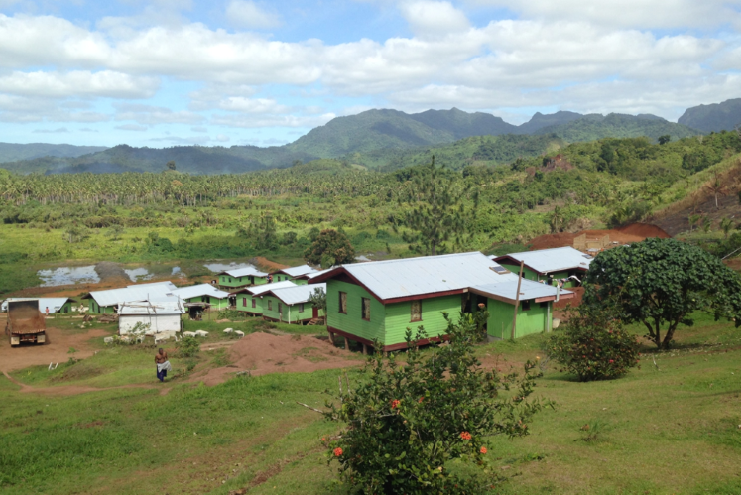
Credit: Nansen Initiative
(Watch video: https://www.youtube.com/watch?v=RrgCnkplfi0)
As sea levels rise and flooding becomes more frequent, many countries are considering a controversial strategy: relocation of communities. A Stanford analysis of planned relocations around the world, published July 27 in Nature Climate Change, reveals a blueprint for positive outcomes from an approach often considered a measure of last resort. The authors find that community engagement matters: the more community members drive decisions about whether, where, and how to relocate, the more successful the outcomes.
“Planned relocation is complex and generally considered a ‘measure of last resort,’ but countries like Fiji are developing national policies to guide approaches,” said study lead author Erica Bower, a PhD student in the Emmett Interdisciplinary Program in Environment and Resources in the Stanford Doerr School of Sustainability. “The findings of this paper offer insights for policy- and decision-makers to help ensure relocated communities are not left in worse circumstances.”
Rising seas, rising risks
Every year, flooding drives millions of people from their homes. This nightmare scenario is likely to become more common as rising seas and heavier rainfall increase risks. Moving communities away from these danger zones in a planned and anticipatory way can prevent future forced displacement, but has been considered an option of last resort because of its potential to lead to unemployment, food insecurity, heritage loss, and other damages.
To understand options for getting the best from a challenging situation, the researchers examined six types of outcomes for completed relocations around the world. Across 14 planned relocations, from Allenville, Arizona, to Vunidogoloa, Fiji, cultural dimensions, such as access to ancestral burial sites and places of worship, fared the worst. Conversely, physical, human, and natural dimensions were more often positive, while financial and social outcomes were mixed.
No single aspect of the planning or execution was consistent across all relocations deemed successful or unsuccessful in terms of the six outcomes required for sustainable livelihoods. However, most successful relocations were initiated and driven by community members rather than governments. This finding confirms insights from previous studies about the importance of meaningful community engagement at all stages of the relocation process.
The analysis also showed evidence for the first time that the pace of the relocation influences the prospects for positive outcomes, but in contrasting ways for small and large communities. Small, tightknit communities with a shared identity achieve the best results with slow, careful efforts. The slow pace can help keep the community together, not only philosophically but also physically through, for example, shared temporary housing. On the other hand, large communities benefit from processes that are speedy and efficient often as an urgent response to a disaster.
Perhaps most surprisingly, the analysis found the distance a community moved made little difference for livelihood outcomes. One possible explanation is that the success of a relocation is controlled more by elevation change than horizontal distance. Another is that cultural and jurisdictional factors may matter more than distance, especially for indigenous and other communities with strong attachment to place. In Fiji, for example, distance mattered less than whether the move took place within land already owned by the community, ensuring the move did not challenge territorial sovereignty, protected connection to place, had historical precedent, and enabled continuity of everyday practices and livelihoods, including small‐scale farming and fishing.
“It would be great if people never had to move,” said study co-author Chris Field, the Perry L. McCarty Director of the Stanford Woods Institute for the Environment within the Stanford Doerr School of Sustainability. “But relocations will be necessary, and we should be doing everything we can to ensure that, when people need to move, it is to locations that are safer and lives that are better.”
Study co-authors also include Anvesh Badamikar, a graduate student in Civil and Environmental Engineering; and Gabrielle Wong-Parodi, an assistant professor of Earth system science and a center fellow at the Stanford Woods Institute for the Environment.
-30-
Journal
Nature Climate Change
Article Publication Date
27-Jul-2023