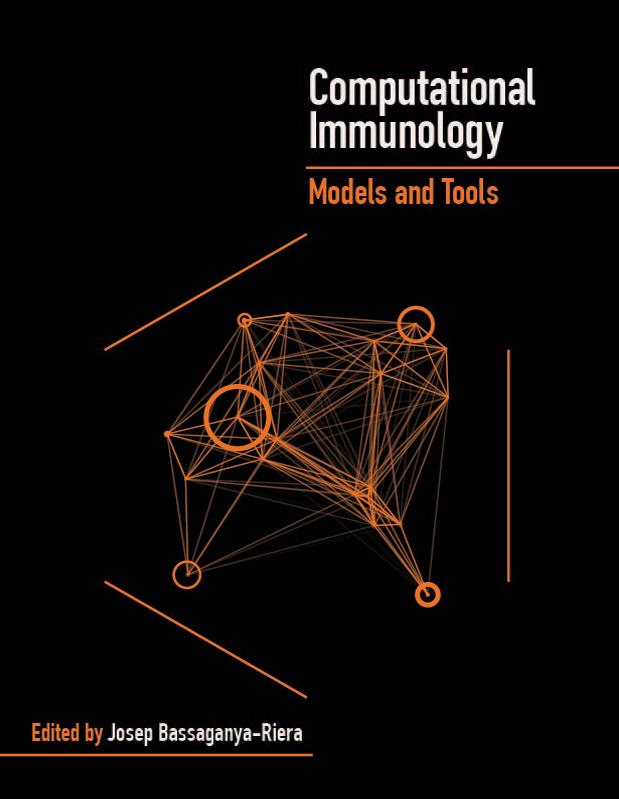
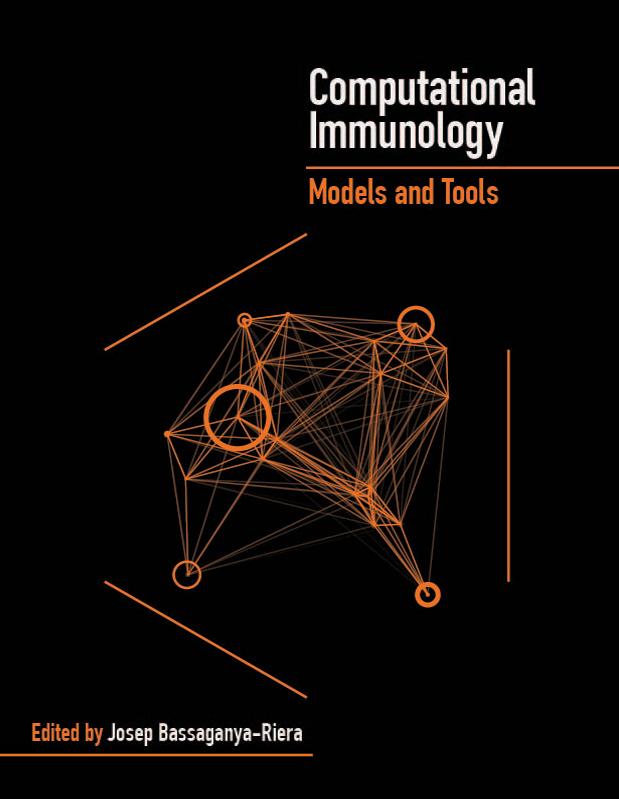
The complexity of the human immune response has been difficult to characterize on a 'big picture' level, but researchers at the Virginia Bioinformatics Institute at Virginia Tech have written the book on how it can be done.
'Computational Immunology: Models and Tools,' explains a set of techniques that enable researchers to study immunity at an unprecedented scale: simulated immune systems with tens of billions of interacting components.
"What makes this approach so exciting is that it reveals just how time and context-dependent our immune functions really are," said Josep Bassaganya-Riera, the book's editor and director of the Nutritional Immunology and Molecular Medicine Laboratory at the Virginia Bioinformatics Institute. "Modeling and informatics tools allow researchers to connect immunology to the world above the skin, testing interventions in virtual laboratories to guide human studies."
Understanding the human immune response has posed significant challenges in characterizing adaptive behavior, heterogeneity, and spatial complexity at the systems level.
While incremental progress has been made by studying key components of the immune system in isolation, technical limitations prevented researchers from efficiently investigating how all these interdependent pieces work together to influence functions at the systems level.
The new book offers methods for overcoming those obstacles.
The first reference of its kind, this volume was produced through a series of collaborations between computer scientists and immunologists at the Center for Modeling Immunity to Enteric Pathogens. Established with support from the National Institute of Allergy and Infectious Diseases, this center is dedicated to developing and disseminating user-friendly models for studying the immune system.
"'Computational Immunology: Models and Tools' provides valuable insights on the art of team science and how computer scientists, mathematicians, immunologists and bioinformaticians can successfully work together to build products that are greater than the sum of their parts," said Vida Abedi, a contributing author to the book and a member of the Nutritional Immunology and Molecular Medicine Laboratory.
To illustrate how these methods can be applied and refined, the book uses examples from studies modeling the body's complicated immune response to H. pylori, a common gut bacterium carried by half the world's population, and inflammatory bowel disease, a debilitating immune-mediated disease that afflicts over 4 million people worldwide.
"The use cases included in the book encompass our entire process for knowledge discovery from generating new hypotheses based on simulation data to testing those predictions in the lab," said Raquel Hontecillas, a contributing author to the book and co-director of the Nutritional Immunology and Molecular Medicine Laboratory. "In one illustration, our computational hypothesis allowed us to identify a population of CX3CR1+ macrophages that may help to regulate inflammation resulting from infection or auto-immune disease."
By developing technologies with the ability to predict how our bodies will manage disease, the book's authors hope to accelerate the path to cures by quickly identifying leads for further study and uncovering hidden truths about how our immune system operates.
"The development and use of advanced information and communication technologies in support of lab hypothesis generation and to developing novel interventions is fundamental to the advancement of precision medicine," said Bruno Sobral, a professor and director of the One Health Institute at Colorado State University and senior scientific adviser to the Virginia Bioinformatics Institute's Pathosystems Resource Integration Center team. "The coupling of systems of microorganisms with the mammalian immune system provides a fertile ground for such transformative innovation."
###
Released Nov. 1 by Elsevier, more information on 'Modeling Immunity' is available on the publisher's website. This work was supported in part by National Institute of Allergy and Infectious Diseases Contract No. HHSN272201000056C.