• HOME
  • NEWS
  • EXPLORE
    • CAREER
      • Companies
      • Jobs
    • EVENTS
    • iGEM
      • News
      • Team
    • PHOTOS
    • VIDEO
    • WIKI
  • BLOG
  • COMMUNITY
    • FACEBOOK
    • INSTAGRAM
    • TWITTER
Monday, August 31, 2026
BIOENGINEER.ORG
No Result
View All Result
  • Login
  • HOME
  • NEWS
  • EXPLORE
    • CAREER
      • Companies
      • Jobs
        • Lecturer
        • PhD Studentship
        • Postdoc
        • Research Assistant
    • EVENTS
    • iGEM
      • News
      • Team
    • PHOTOS
    • VIDEO
    • WIKI
  • BLOG
  • COMMUNITY
    • FACEBOOK
    • INSTAGRAM
    • TWITTER
  • HOME
  • NEWS
  • EXPLORE
    • CAREER
      • Companies
      • Jobs
        • Lecturer
        • PhD Studentship
        • Postdoc
        • Research Assistant
    • EVENTS
    • iGEM
      • News
      • Team
    • PHOTOS
    • VIDEO
    • WIKI
  • BLOG
  • COMMUNITY
    • FACEBOOK
    • INSTAGRAM
    • TWITTER
No Result
View All Result
Bioengineer.org
No Result
View All Result
Home NEWS Science News

How to mix old tires and building rubble to make sustainable roads

Bioengineer by Bioengineer
July 29, 2020
in Science News
Reading Time: 3 mins read
0
IMAGE
Share on FacebookShare on TwitterShare on LinkedinShare on RedditShare on Telegram

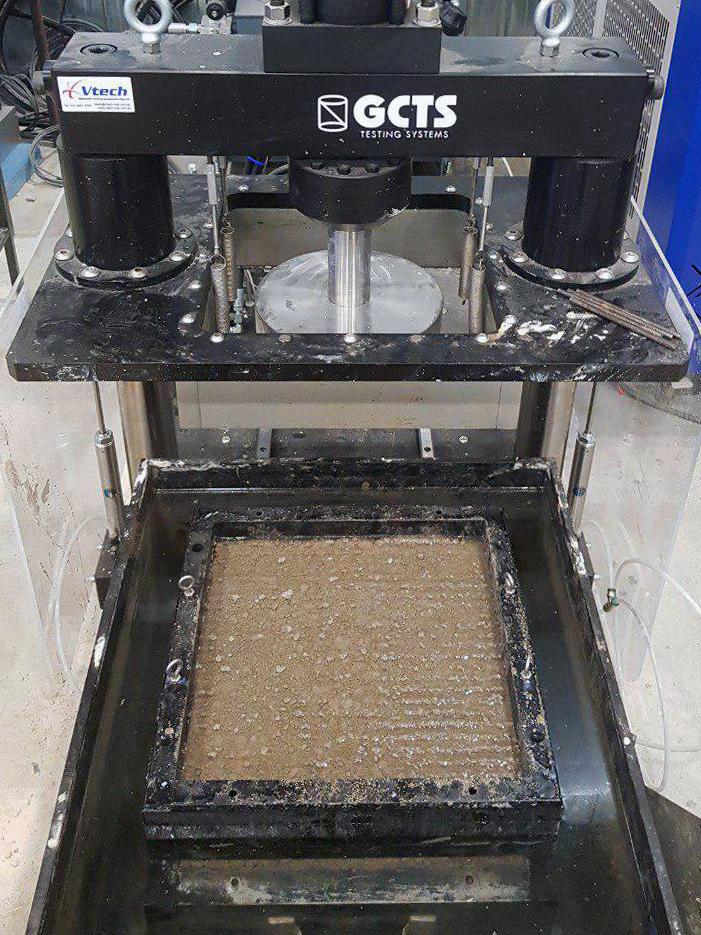
New material combines recycled concrete aggregate and rubber in a mix precisely optimised to meet road engineering safety standards
IMAGE

Credit: RMIT University

Researchers have shown how a blend of old tyres and building rubble could be used as a sustainable road-making material, in a zero-waste solution to boost recycling and support the circular economy.

Construction, renovation and demolition account for about half the waste produced annually worldwide, while around 1 billion scrap tyres are generated globally each year.

The new material, developed by researchers at RMIT University in Melbourne, Australia, is the first to combine recycled rubble and rubber in a mix that is precisely optimised to meet road engineering safety standards.

Designed to be used for base layers, the recycled blend is more flexible than standard materials, making roads less prone to cracking.

Lead researcher Dr Mohammad Boroujeni said the rubble-rubber mix could deliver both environmental and engineering benefits.

“Traditional road bases are made of unsustainable virgin materials – quarried rock and natural sand,” Boroujeni said.

“Our blended material is a 100% recycled alternative that offers a new way to reuse tyre and building waste, while performing strongly on key criteria like flexibility, strength and permanent deformation.

“As we push towards a circular economy that can eliminate waste and support the continual use of resources, our recycled blend is the right choice for better roads and a better environment.”

In Australia, only 16% of scrap tyres are domestically recycled. About 3.15 million tons of processed building rubble – known as recycled concrete aggregate (RCA) – is added to stockpiles each year rather than being reused.

In 2019, federal and state governments agreed to ban the export of certain waste materials, with the aim of building Australia’s capacity to generate high value recycled commodities and associated demand. As part of the agreement, whole used tyres will be banned from export by December 2021.

On the road to a circular economy

Roads are made of four layers – a subgrade, base and sub-base, with asphalt on top.

All the layers must be strong enough to withstand the pressures of heavy vehicles, while being flexible enough to allow the right amount of movement so a road doesn’t easily crack.

RCA can potentially be used on its own for road base layers, but adding recycled rubber can significantly enhance the finished product.

In previous research, the RMIT School of Engineering team has shown their rubble-rubber blend performs well when tested for stress, acid and water resistance, as well as strength, deformation and dynamic properties. Its low shrinkage and good flexibility reduce the risk of cracking.

The new study published in Construction and Building Materials looked at how the mix would withstand the pressures of being driven over by countless vehicles over its lifetime.

Researchers used special machinery to assess the blended material’s performance under frictional force, or shear stress, and compared different types of crumb rubber (fine and coarse) mixed into the RCA at different ratios.

The team identified an optimal mixture – 0.5% fine crumb rubber to 99.5% RCA – that delivered on shear strength while maintaining good cohesion between the two materials.

Chief investigator Professor Jie Li said while the recycling of construction waste and scrap tyres was growing, both industries continued to produce significantly more waste than is currently reused.

“Solutions to our waste problems will come not only from reducing how much goes to landfill and increasing how much we recycle; developing new and innovative uses for our recycled materials is absolutely vital,” Li said.

‘An experimental study on the shear behaviour of recycled concrete aggregate incorporating recycled tyre waste’ is published in Construction and Building Materials (DOI: 10.1016/j.conbuildmat.2020.120266).

###

Media Contact
Gosia Kaszubska
[email protected]

Related Journal Article

http://dx.doi.org/10.1016/j.conbuildmat.2020.120266

Tags: Civil EngineeringTechnology/Engineering/Computer Science
Share13Tweet8Share2ShareShareShare2

Related Posts

β-Sitosterol from Ipomoea carnea Jacq. As a promising anti-inflammatory agent: Evidence from in silico modeling and in vitro validation

β-Sitosterol from Ipomoea carnea Jacq. As a promising anti-inflammatory agent: Evidence from in silico modeling and in vitro validation

August 31, 2026
Design, fabrication and characterization of a wearable Fiber Bragg grating sensor for cardiorespiratory monitoring using finger plethysmography

Design, fabrication and characterization of a wearable Fiber Bragg grating sensor for cardiorespiratory monitoring using finger plethysmography

August 31, 2026

KAIST opens the era of industrial-scale microbial foods, proposing growth strategies for the next-generation protein market

August 31, 2026

Virologist awarded $2 million NIH grant to investigate how virus-infected cells live and die

August 31, 2026
Please login to join discussion

POPULAR NEWS

  • β-Sitosterol from Ipomoea carnea Jacq. As a promising anti-inflammatory agent: Evidence from in silico modeling and in vitro validation

    29 shares
    Share 12 Tweet 7
  • Design, fabrication and characterization of a wearable Fiber Bragg grating sensor for cardiorespiratory monitoring using finger plethysmography

    29 shares
    Share 12 Tweet 7
  • KAIST opens the era of industrial-scale microbial foods, proposing growth strategies for the next-generation protein market

    29 shares
    Share 12 Tweet 7
  • Virologist awarded $2 million NIH grant to investigate how virus-infected cells live and die

    29 shares
    Share 12 Tweet 7

About

We bring you the latest biotechnology news from best research centers and universities around the world. Check our website.

Follow us

Recent News

β-Sitosterol from Ipomoea carnea Jacq. As a promising anti-inflammatory agent: Evidence from in silico modeling and in vitro validation

Design, fabrication and characterization of a wearable Fiber Bragg grating sensor for cardiorespiratory monitoring using finger plethysmography

KAIST opens the era of industrial-scale microbial foods, proposing growth strategies for the next-generation protein market

Subscribe to Blog via Email

Enter your email address to subscribe to this blog and receive notifications of new posts by email.

Join 85 other subscribers
  • Contact Us

Bioengineer.org © Copyright 2023 All Rights Reserved.

Welcome Back!

Login to your account below

Forgotten Password?

Retrieve your password

Please enter your username or email address to reset your password.

Log In
No Result
View All Result
  • Homepages
    • Home Page 1
    • Home Page 2
  • News
  • National
  • Business
  • Health
  • Lifestyle
  • Science

Bioengineer.org © Copyright 2023 All Rights Reserved.