Now is the time to identify the conditions that cause plants to die. Doing so will allow us to better protect plants by choosing conservation targets more strategically, UC Riverside botanists argue in a new paper.
Credit: Changku88
Now is the time to identify the conditions that cause plants to die. Doing so will allow us to better protect plants by choosing conservation targets more strategically, UC Riverside botanists argue in a new paper.
Published in the Oxford Academic journal Conservation Physiology, the paper demonstrates how scientists can learn the limits past which plants’ vital functions shut down, and makes the case that not doing so is a mistake in this era of increasing drought and wildfires.
“We can measure the amount of water loss plants can tolerate before they start to wilt, and we can learn the temperature at which photosynthesis stops for different kinds of plants,” said Louis Santiago, UCR botany professor and corresponding author of the paper.
“It is so important to measure the critical limits of when things will fail, and not just how they’re doing now,” he said.
The UCR team believes understanding the current physiological status of a plant species during stress — which so many are experiencing more often with hotter, drier temperatures in many places — can be very useful for showing how close some plants are to local extinction already. Combined with critical limit data, limited conservation funds could be even more wisely spent, revealing plants’ warning signs before they become visible.
However, these critical stress limits are not often considered when assessing the health of plant populations, in part because they do not yet exist for most species. There are roughly 700,000 plant species on Earth, but only about 1,000 for whom the limits are known.
Plants can, in some cases, push past their limits for a short time and bounce back. For example, houseplants will wilt when they don’t get enough water, and bounce back when they finally receive it. However, if they stay wilted too long, they will likely die.
“Wilting, what we refer to as losing turgor pressure, is not always fatal but it’s one step toward death,” Santiago said. “Just like people with extremely high blood pressure might die if they don’t get it to come down.”
Santiago’s laboratory is focused on plant physiology, the chemical and physical processes associated with plant life. However, much of the activity in his lab has shifted in recent years to studying critical limits.
“It started after the last drought when we saw species suffering. We wanted to do these measurements to see if we could have predicted the die-offs that we saw,” Santiago said.
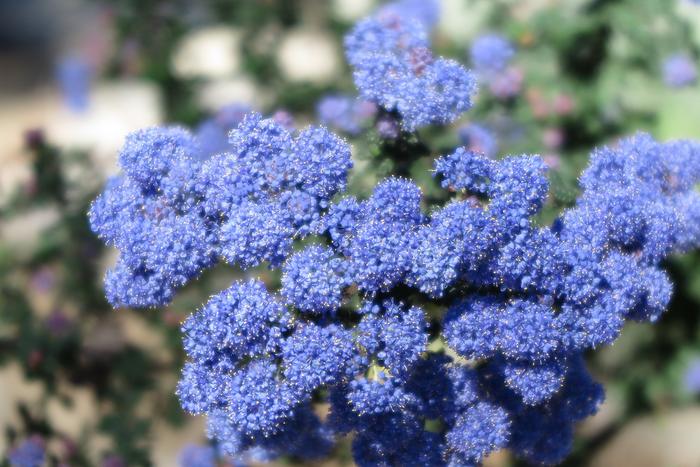
For this paper, he and his students measured the leaf wilting points for six species of Southern California chapparal shrubs, including California lilac and two types of sage. Their work demonstrates that there are multiple means to obtaining the critical limits and shows how the information could help conservation outcomes.
“Generally, we have the capacity to find the most vulnerable, rare species and focus on them. We have the ability to find which plants are most at risk from climate changes, but it’s going to take a collaboration of plant physiologists, conservation biologists, and land managers,” Santiago said.
Most plant species are going to face a climate in the coming decades that does not place them under the same kinds of stress they evolved to live in. For plant enthusiasts wanting to assist their survival, Santiago recommends getting involved with native plant societies.
“You can join them in pulling out invasive species, or count numbers of rare organisms, and there are countless volunteer projects,” Santiago said. “Let’s work smarter, and work together.”
Journal
Conservation Physiology
DOI
10.1093/conphys/coad073
Article Title
Plant physiological indicators for optimizing conservation outcomes
Article Publication Date
12-Sep-2023