• HOME
  • NEWS
  • EXPLORE
    • CAREER
      • Companies
      • Jobs
    • EVENTS
    • iGEM
      • News
      • Team
    • PHOTOS
    • VIDEO
    • WIKI
  • BLOG
  • COMMUNITY
    • FACEBOOK
    • INSTAGRAM
    • TWITTER
Wednesday, July 1, 2026
BIOENGINEER.ORG
No Result
View All Result
  • Login
  • HOME
  • NEWS
  • EXPLORE
    • CAREER
      • Companies
      • Jobs
        • Lecturer
        • PhD Studentship
        • Postdoc
        • Research Assistant
    • EVENTS
    • iGEM
      • News
      • Team
    • PHOTOS
    • VIDEO
    • WIKI
  • BLOG
  • COMMUNITY
    • FACEBOOK
    • INSTAGRAM
    • TWITTER
  • HOME
  • NEWS
  • EXPLORE
    • CAREER
      • Companies
      • Jobs
        • Lecturer
        • PhD Studentship
        • Postdoc
        • Research Assistant
    • EVENTS
    • iGEM
      • News
      • Team
    • PHOTOS
    • VIDEO
    • WIKI
  • BLOG
  • COMMUNITY
    • FACEBOOK
    • INSTAGRAM
    • TWITTER
No Result
View All Result
Bioengineer.org
No Result
View All Result
Home NEWS Science News Biology

How the coronavirus has changed air quality and what it could mean for the weather

Bioengineer by Bioengineer
May 4, 2020
in Biology
Reading Time: 2 mins read
0
IMAGE
Share on FacebookShare on TwitterShare on LinkedinShare on RedditShare on Telegram

IMAGE

Credit: Paul Miller, LSU.

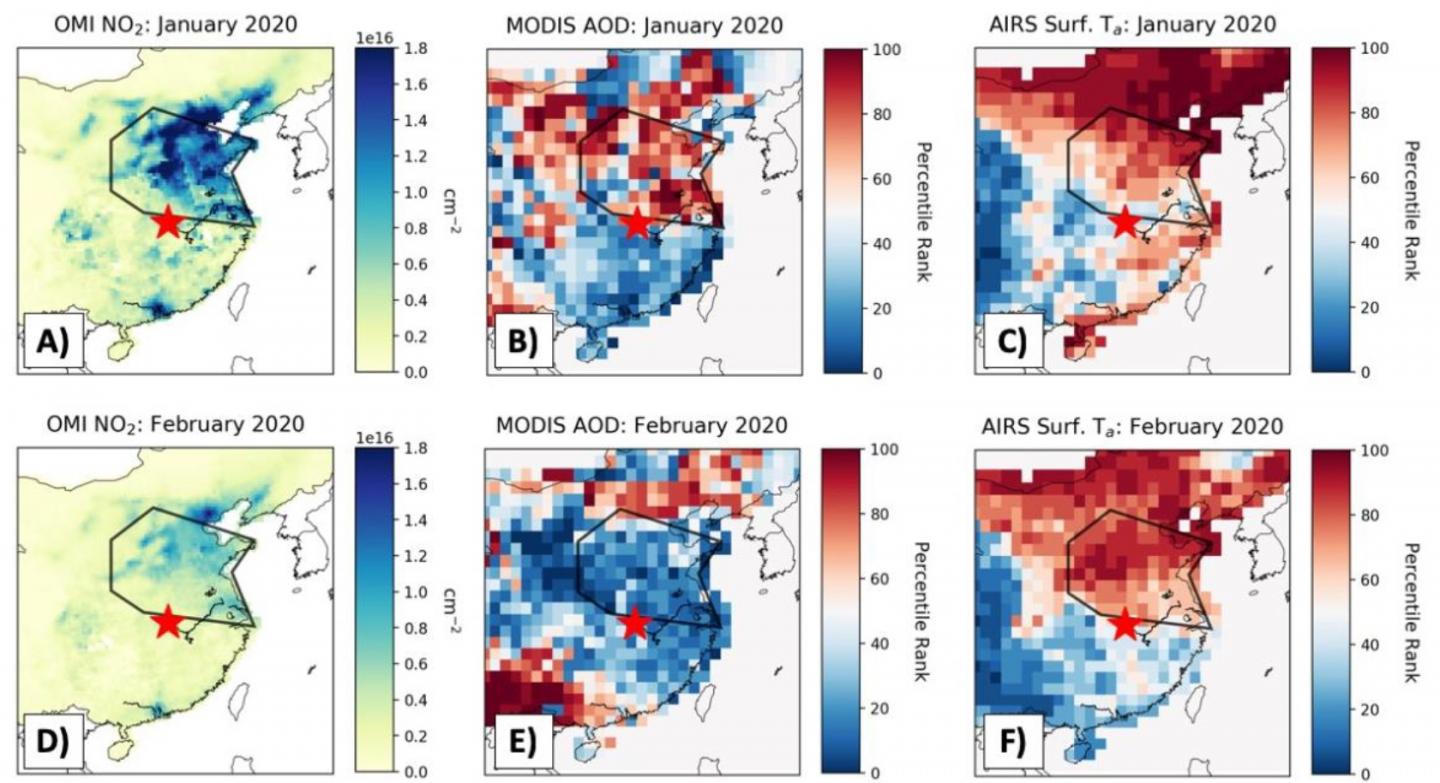
The change in air pollution in China from January to February as stay-at-home orders were put into place to stop the spread of the coronavirus has intrigued Louisiana State University meteorologist Paul Miller.

“There have been numerous news articles about the reduction of pollution in China, how clear the water is in Venice and the better air quality in L.A.,” said Miller, who is an assistant professor in the LSU Department of Oceanography & Coastal Sciences in the College of the Coast & Environment.

Most of these articles have focused on car exhaust or nitrogen dioxide. However, Miller is interested in the reductions of soot and other particulates that can normally cloud the atmosphere. He has conducted research previously on how particulates in the air effect temperature and rainfall.

He describes it as akin to shining a flashlight through smoke coming from a campfire, which will diffuse the light. Similarly, soot, smog and particulate matter diffuses the sun’s rays. Without it, the sun’s rays can hit Earth with greater intensity and result in higher temperatures near the surface. This has potential implications on virus transmission as some studies have shown that warmer temperatures can suppress the coronavirus.

“This phenomenon also may have wider implications for the atmosphere,” said Miller, who has received a $128,339 “Rapid” grant from the National Science Foundation to investigate this phenomenon.

Using satellite data and a weather model, he will observe how particulate matter in the air correlates with temperature at six-feet above the ground. Miller reports that preliminary results, which he hopes to circulate in an academic journal soon, are promising.

“When you start warming a layer of air, that air becomes less dense and starts to rise. It can create pockets of lower pressure and possibly redistribute clouds and rainfall. Even a minor difference in temperature can have different weather effects and atmospheric dynamics,” he said.

For this project, he will focus on East Asia, and China in particular, using satellite and ground data collected in the region and shared through the National Centers for Environmental Information. He plans to contextualize the link between air quality and temperature over the past several years compared to now.

###

Media Contact
Alison Satake
[email protected]

Original Source

https://www.lsu.edu/mediacenter/news/2020/05/04docs_miller_covid_air.php

Tags: Atmospheric ScienceClimate SciencePollution/RemediationTemperature-Dependent PhenomenaWeather/Storms
Share12Tweet8Share2ShareShareShare2

Related Posts

Promising New HIV Vaccine Shows Remarkable Success in Primate Trials — Biology

Promising New HIV Vaccine Shows Remarkable Success in Primate Trials

July 1, 2026
UMaine Researchers Discover Woodcocks Charge Deer to Protect Their Nests — Biology

UMaine Researchers Discover Woodcocks Charge Deer to Protect Their Nests

June 30, 2026

Early Asian Mammals Prioritized Strength Over Bite Power, Tooth Fossil Analysis Reveals

June 30, 2026

Scientists Unlock How Jellyfish Heal Wounds in Minutes

June 30, 2026
Please login to join discussion

POPULAR NEWS

  • Detection of EDCs in Breast Milk and Infant Urine Up to Six Months Highlights Early Exposure Risks

    77 shares
    Share 31 Tweet 19
  • Saying Goodbye to PGY-6: Pediatric Fellowship Realities

    103 shares
    Share 41 Tweet 26
  • New Drug Candidate Developed at McMaster Shows Potential for Treating Brain Cancer

    58 shares
    Share 23 Tweet 15
  • KTU Researchers Explore Ultrasound’s Role in Enhancing Blood Flow Beyond Diagnostics

    53 shares
    Share 21 Tweet 13

About

We bring you the latest biotechnology news from best research centers and universities around the world. Check our website.

Follow us

Recent News

Planetary Health Diet Index Linked to Breast Cancer Risk

University of Manchester Study Backs WHO’s Groundbreaking Global Air Pollution Update

Applying Physical Pressure Can Double EV Battery Lifespan and Slash Environmental Impact

Subscribe to Blog via Email

Enter your email address to subscribe to this blog and receive notifications of new posts by email.

Join 82 other subscribers
  • Contact Us

Bioengineer.org © Copyright 2023 All Rights Reserved.

Welcome Back!

Login to your account below

Forgotten Password?

Retrieve your password

Please enter your username or email address to reset your password.

Log In
No Result
View All Result
  • Homepages
    • Home Page 1
    • Home Page 2
  • News
  • National
  • Business
  • Health
  • Lifestyle
  • Science

Bioengineer.org © Copyright 2023 All Rights Reserved.