• HOME
  • NEWS
  • EXPLORE
    • CAREER
      • Companies
      • Jobs
    • EVENTS
    • iGEM
      • News
      • Team
    • PHOTOS
    • VIDEO
    • WIKI
  • BLOG
  • COMMUNITY
    • FACEBOOK
    • INSTAGRAM
    • TWITTER
Sunday, May 10, 2026
BIOENGINEER.ORG
No Result
View All Result
  • Login
  • HOME
  • NEWS
  • EXPLORE
    • CAREER
      • Companies
      • Jobs
        • Lecturer
        • PhD Studentship
        • Postdoc
        • Research Assistant
    • EVENTS
    • iGEM
      • News
      • Team
    • PHOTOS
    • VIDEO
    • WIKI
  • BLOG
  • COMMUNITY
    • FACEBOOK
    • INSTAGRAM
    • TWITTER
  • HOME
  • NEWS
  • EXPLORE
    • CAREER
      • Companies
      • Jobs
        • Lecturer
        • PhD Studentship
        • Postdoc
        • Research Assistant
    • EVENTS
    • iGEM
      • News
      • Team
    • PHOTOS
    • VIDEO
    • WIKI
  • BLOG
  • COMMUNITY
    • FACEBOOK
    • INSTAGRAM
    • TWITTER
No Result
View All Result
Bioengineer.org
No Result
View All Result
Home NEWS Science News Chemistry

How reducing body temperature could help a tenth of all ICU patients

Bioengineer by Bioengineer
February 23, 2021
in Chemistry
Reading Time: 2 mins read
0
IMAGE
Share on FacebookShare on TwitterShare on LinkedinShare on RedditShare on Telegram

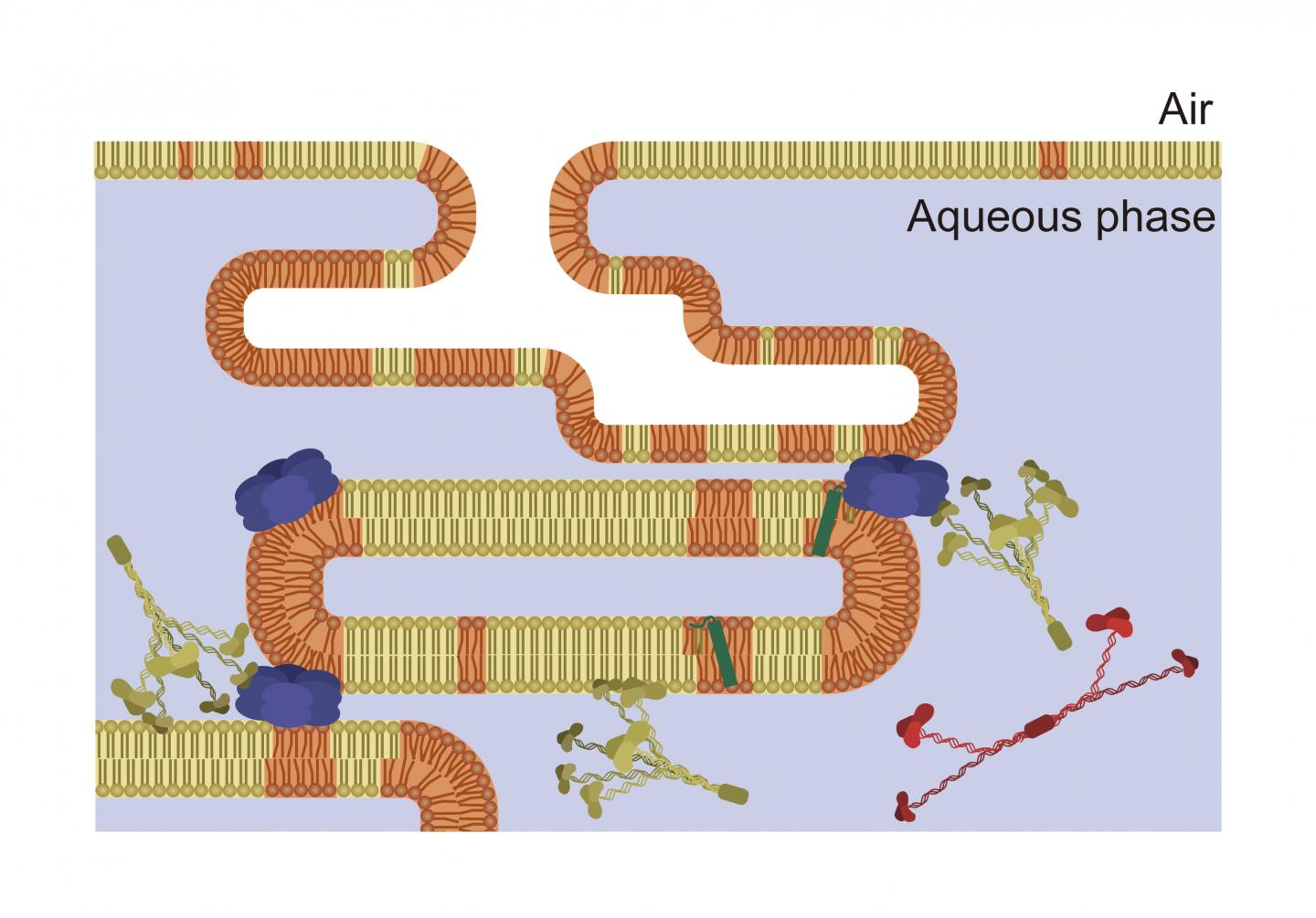
A new study reveals how lower temperatures improve the activity of surfactant, a molecular mixture that is essential for breathing. This indicates that therapeutic hypothermia is a potential treatment for acute respiratory distress syndrome, which affects
IMAGE

Credit: Image courtesy of Chiara Autilio and created by Alejandro Alonso.

ROCKVILLE, MD – A tenth of all intensive care unit patients worldwide, and many critical patients with COVID-19, have acute respiratory distress syndrome (ARDS). Therapeutic hypothermia, an intentional cooling of the body, has been suggested as a way to improve ARDS. New research by Chiara Autilio and colleagues in the lab of Jesus Perez-Gil at the Complutense University of Madrid shows not only how therapeutic hypothermia works in the lungs at the molecular level, but also why it could be successfully applied to ARDS. Autilio and her colleagues’ work was published in Nature Scientific Reports in January 2021 and will be presented on Tuesday, February 23 at the 65th Annual Meeting of the Biophysical Society to be held virtually.

Inside our lungs, surfactant is a molecular mixture that is essential for breathing. Premature babies are sometimes born without yet having developed surfactant and require emergency surfactant replacement treatments in order to breathe. But surfactant is also inactivated and broken up in adults with lung injuries or inflammation.

Because therapeutic hypothermia, a cooling of the body to about 33°C (or 91°F), has been used to improve breathing for some premature babies and for some kinds of cardiac arrest in adults, and some early studies have shown a benefit for ARDS, Autilio and colleagues wanted to know if cooling could impact surfactant. They looked at the physics of isolated surfactant in their lab, and Autilio said, “unexpectedly, we found an improvement in surfactant activity at 33°C.”

The team found that at 33°C, the surfactant had lower surface tension, which could make it easier for oxygen to enter the lungs. They also found that the lower tension changed the activity of the molecules in the surfactant, which prevented surfactant from being disrupted by blood molecules, which can occur during lung injury. Their results indicate that “using therapeutic hypothermia could help people with acute respiratory distress syndrome to breathe.”

There are currently clinical trials underway in other labs, testing therapeutic hypothermia as a treatment for severe breathing problems associated with COVID-19, according to Autilio. And in the Perez-Gil lab at the Complutense University, “we are working to create a surfactant for adults, a surfactant that could work in the context of acute respiratory distress syndrome,” says Autilio.

###

Media Contact
Leann Fox
[email protected]

Original Source

https://www.biophysics.org/news-room?ArtMID=802&ArticleID=10407&preview=true

Tags: Biomechanics/BiophysicsBiomedical/Environmental/Chemical EngineeringChemistry/Physics/Materials SciencesCritical Care/Emergency MedicineHealth CareInternal Medicine
Share12Tweet8Share2ShareShareShare2

Related Posts

Miniature Sensor Uses Light to Detect Touch — Chemistry

Miniature Sensor Uses Light to Detect Touch

May 8, 2026
Iron Minerals Determine Whether Dissolved Organic Matter Fuels Microbes or Becomes Long-Term Carbon Storage — Chemistry

Iron Minerals Determine Whether Dissolved Organic Matter Fuels Microbes or Becomes Long-Term Carbon Storage

May 8, 2026

Kate Evans Appointed Associate Lab Director for Biological and Environmental Systems Science at ORNL

May 8, 2026

Advancing Multiscale Modeling and Overcoming Operational Challenges in Autothermal CO₂-to-Methanol Reactors

May 8, 2026
Please login to join discussion

POPULAR NEWS

  • Research Indicates Potential Connection Between Prenatal Medication Exposure and Elevated Autism Risk

    840 shares
    Share 336 Tweet 210
  • New Study Reveals Plants Can Detect the Sound of Rain

    727 shares
    Share 290 Tweet 181
  • Scientists Investigate Possible Connection Between COVID-19 and Increased Lung Cancer Risk

    68 shares
    Share 27 Tweet 17
  • Salmonella Haem Blocks Macrophages, Boosts Infection

    61 shares
    Share 24 Tweet 15

About

We bring you the latest biotechnology news from best research centers and universities around the world. Check our website.

Follow us

Recent News

Evaluating Digoxin Use in Patients with Symptomatic Rheumatic Heart Disease

Evaluating the Effectiveness and Safety of Digitalis Glycosides in Treating Heart Failure

Urdu Fall Risk Questionnaire Adapted for Elderly

Subscribe to Blog via Email

Success! An email was just sent to confirm your subscription. Please find the email now and click 'Confirm' to start subscribing.

Join 82 other subscribers
  • Contact Us

Bioengineer.org © Copyright 2023 All Rights Reserved.

Welcome Back!

Login to your account below

Forgotten Password?

Retrieve your password

Please enter your username or email address to reset your password.

Log In
No Result
View All Result
  • Homepages
    • Home Page 1
    • Home Page 2
  • News
  • National
  • Business
  • Health
  • Lifestyle
  • Science

Bioengineer.org © Copyright 2023 All Rights Reserved.