• HOME
  • NEWS
  • EXPLORE
    • CAREER
      • Companies
      • Jobs
    • EVENTS
    • iGEM
      • News
      • Team
    • PHOTOS
    • VIDEO
    • WIKI
  • BLOG
  • COMMUNITY
    • FACEBOOK
    • INSTAGRAM
    • TWITTER
Thursday, July 2, 2026
BIOENGINEER.ORG
No Result
View All Result
  • Login
  • HOME
  • NEWS
  • EXPLORE
    • CAREER
      • Companies
      • Jobs
        • Lecturer
        • PhD Studentship
        • Postdoc
        • Research Assistant
    • EVENTS
    • iGEM
      • News
      • Team
    • PHOTOS
    • VIDEO
    • WIKI
  • BLOG
  • COMMUNITY
    • FACEBOOK
    • INSTAGRAM
    • TWITTER
  • HOME
  • NEWS
  • EXPLORE
    • CAREER
      • Companies
      • Jobs
        • Lecturer
        • PhD Studentship
        • Postdoc
        • Research Assistant
    • EVENTS
    • iGEM
      • News
      • Team
    • PHOTOS
    • VIDEO
    • WIKI
  • BLOG
  • COMMUNITY
    • FACEBOOK
    • INSTAGRAM
    • TWITTER
No Result
View All Result
Bioengineer.org
No Result
View All Result
Home NEWS Science News

How plants leave behind their parents’ genomic baggage

Bioengineer by Bioengineer
May 20, 2021
in Science News
Reading Time: 2 mins read
0
IMAGE
Share on FacebookShare on TwitterShare on LinkedinShare on RedditShare on Telegram

IMAGE

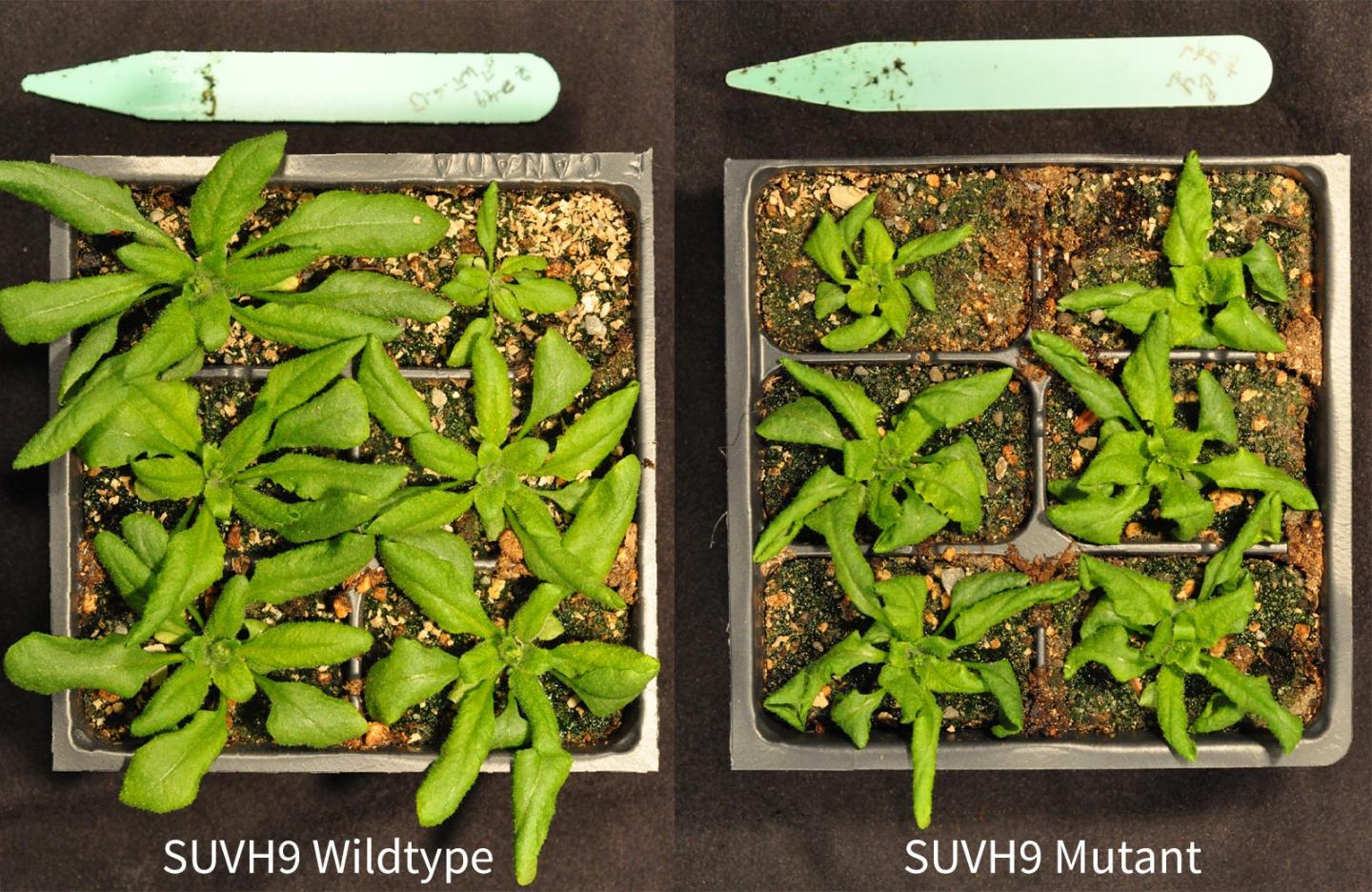
Credit: Parent/Martienssen lab, CSHL/2021

Passing down a healthy genome is a critical part of creating viable offspring. But what happens when you have harmful modifications in your genome that you don’t want to pass down? Baby plants have evolved a method to wipe the slate clean and reinstall only the modifications that they need to grow and develop. Cold Spring Harbor Laboratory (CSHL) Professor & HHMI Investigator Rob Martienssen and his collaborators, Jean-Sébastien Parent and Institut de Recherche pour le Développement Université de Montpellier scientist Daniel Grimanelli, discovered one of the genes responsible for reinstalling modifications in a baby plant’s genome.

A plant’s genomic modifications–called epigenetic modifications–help turn off genes at the right times. Epigenetic changes accumulate with age. Martienssen explains:

“If you think about a tree, the flowers that arise a hundred years after it germinated, they’re obviously a long way from the original acorn, and an awful lot of epigenetic changes could happen in that period. And so, these are important resets for development so that you don’t inherit this epigenetic collateral damage.”

Martienssen’s team discovered that after baby plants remove the epigenetic modifications, the SUVH9 protein puts back the ones they need to survive. Without SUVH9, plants develop poorly because the wrong genes turn on at the wrong time. Parent, a research scientist at Agriculture and Agri-Food Canada, says:

“I remember this moment where we were like, ‘Wow! This is not what we expected.’ There was an opening for an actor that was not accounted for in the standard models, and that was the most innovative part of our story.”

The SUVH9 protein uses small snippets of RNA to look for the right places to reinstall the beneficial modifications, which are on mobile genetic elements known as transposons. The SUVH9 protein adds the epigenetic modifications to them, and this ensures nearby genes are turned off at the right time. Reinstalling the beneficial modifications also stops the transposons from jumping around in the genome and disrupting other genes.

The scientists think SUVH9 protein contributed to today’s plant diversity. By stopping harmful transposons from disrupting genes, the protein allowed different species to evolve. Parent says:

“One of the big mysteries about flowering plants is how they manage to become so diverse and to generate so many different species so quickly in evolutionary history. And, we believe that we are touching here a part of a molecular mechanism that can allow this sort of flexibility.”

###

Media Contact
Sara Roncero-Menendez
[email protected]

Tags: AgricultureBiologyGenesGeneticsPlant Sciences
Share12Tweet8Share2ShareShareShare2

Related Posts

Apelin-APLNR Pathway: Endothelial Roles in Health

July 2, 2026

Cross-Stage, Cross-Species Malaria CD8+ T Cell Antigens Identified

July 2, 2026

Food Web Complexity Drives Biodiversity Impact

July 2, 2026

CSF Turnover Dysfunction: Early iRBD Biomarker?

July 2, 2026
Please login to join discussion

POPULAR NEWS

  • Detection of EDCs in Breast Milk and Infant Urine Up to Six Months Highlights Early Exposure Risks

    77 shares
    Share 31 Tweet 19
  • Saying Goodbye to PGY-6: Pediatric Fellowship Realities

    103 shares
    Share 41 Tweet 26
  • New Drug Candidate Developed at McMaster Shows Potential for Treating Brain Cancer

    58 shares
    Share 23 Tweet 15
  • KTU Researchers Explore Ultrasound’s Role in Enhancing Blood Flow Beyond Diagnostics

    53 shares
    Share 21 Tweet 13

About

We bring you the latest biotechnology news from best research centers and universities around the world. Check our website.

Follow us

Recent News

Apelin-APLNR Pathway: Endothelial Roles in Health

Cross-Stage, Cross-Species Malaria CD8+ T Cell Antigens Identified

Food Web Complexity Drives Biodiversity Impact

Subscribe to Blog via Email

Enter your email address to subscribe to this blog and receive notifications of new posts by email.

Join 82 other subscribers
  • Contact Us

Bioengineer.org © Copyright 2023 All Rights Reserved.

Welcome Back!

Login to your account below

Forgotten Password?

Retrieve your password

Please enter your username or email address to reset your password.

Log In
No Result
View All Result
  • Homepages
    • Home Page 1
    • Home Page 2
  • News
  • National
  • Business
  • Health
  • Lifestyle
  • Science

Bioengineer.org © Copyright 2023 All Rights Reserved.