

• HOME
  • NEWS
  • EXPLORE
    • CAREER
      • Companies
      • Jobs
    • EVENTS
    • iGEM
      • News
      • Team
    • PHOTOS
    • VIDEO
    • WIKI
  • BLOG
  • COMMUNITY
    • FACEBOOK
    • INSTAGRAM
    • TWITTER
Saturday, June 20, 2026
BIOENGINEER.ORG
No Result
View All Result
  • Login
  • HOME
  • NEWS
  • EXPLORE
    • CAREER
      • Companies
      • Jobs
        • Lecturer
        • PhD Studentship
        • Postdoc
        • Research Assistant
    • EVENTS
    • iGEM
      • News
      • Team
    • PHOTOS
    • VIDEO
    • WIKI
  • BLOG
  • COMMUNITY
    • FACEBOOK
    • INSTAGRAM
    • TWITTER
  • HOME
  • NEWS
  • EXPLORE
    • CAREER
      • Companies
      • Jobs
        • Lecturer
        • PhD Studentship
        • Postdoc
        • Research Assistant
    • EVENTS
    • iGEM
      • News
      • Team
    • PHOTOS
    • VIDEO
    • WIKI
  • BLOG
  • COMMUNITY
    • FACEBOOK
    • INSTAGRAM
    • TWITTER
No Result
View All Result
Bioengineer.org
No Result
View All Result
Home NEWS Science News Health

How plants bind their green pigment chlorophyll

Bioengineer by Bioengineer
October 18, 2018
in Health
Reading Time: 2 mins read
0
Share on FacebookShare on TwitterShare on LinkedinShare on RedditShare on Telegram
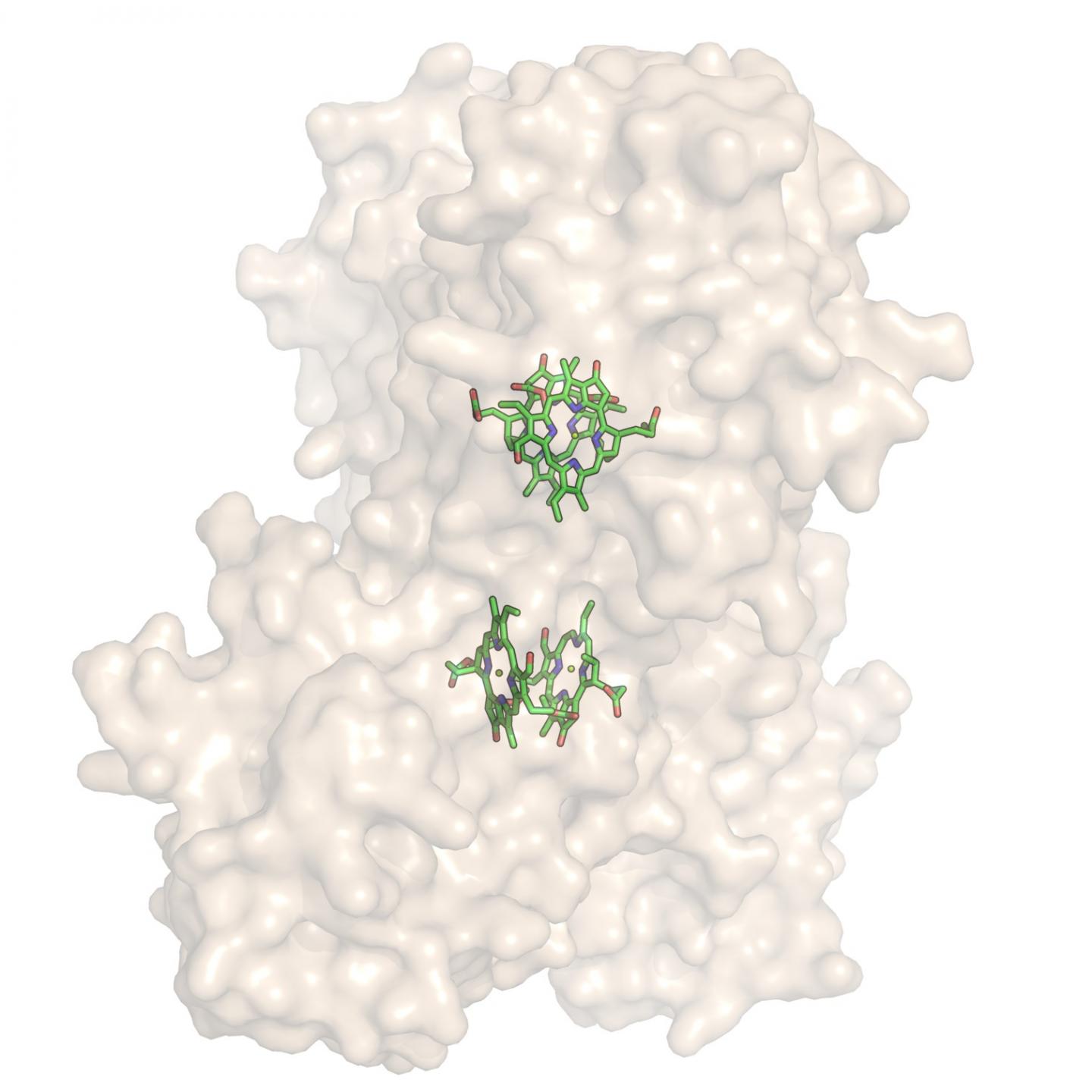
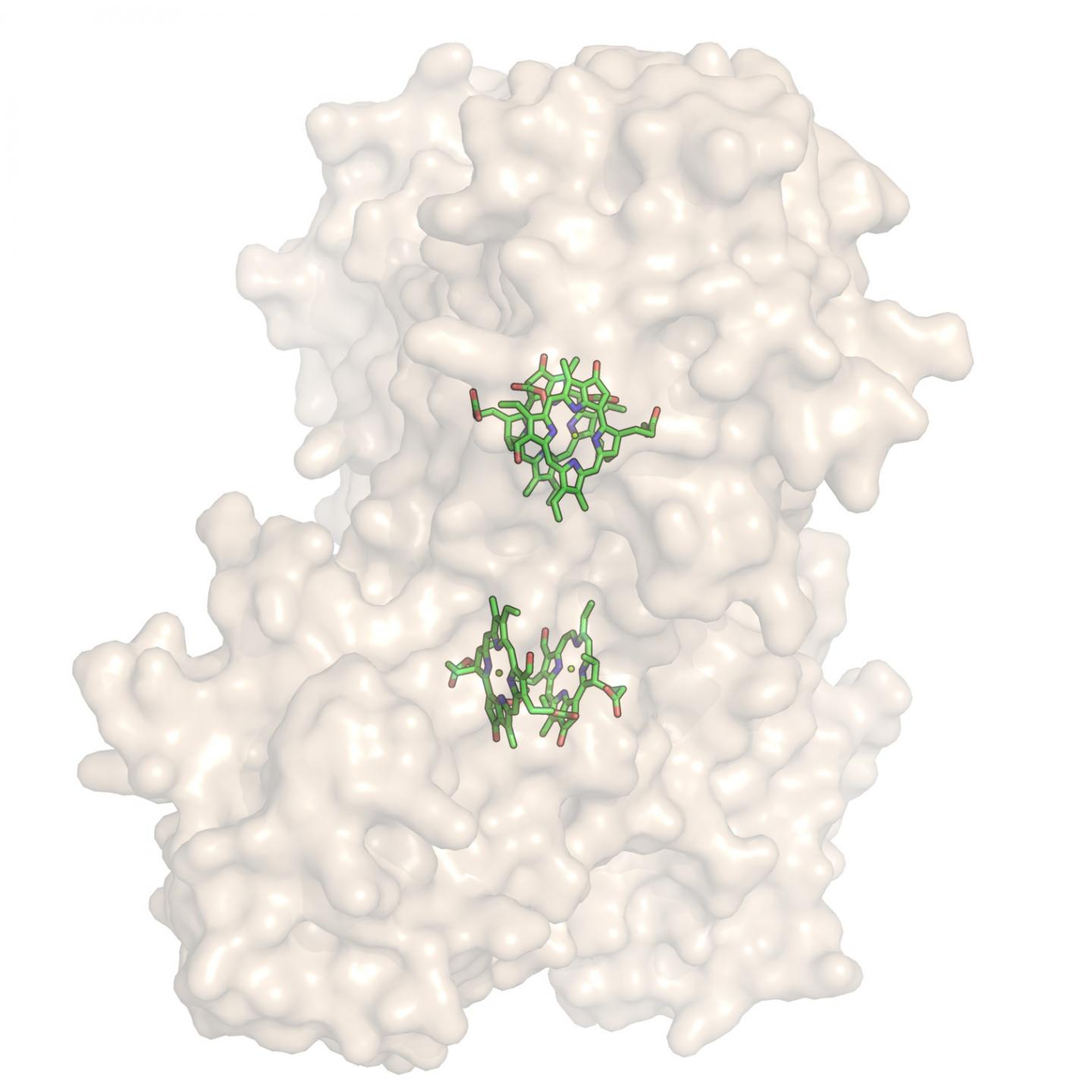
IMAGE

Credit: Ill./©: Alessandro Agostini, JGU

Whenever you see green color out in nature, you are likely to look at chlorophyll. This is the pigment used by all plants to do photosynthesis. There are two versions, chlorophyll a and chlorophyll b. These are structurally very similar to one another but have different colors, blue-green and yellowish green, respectively. Both pigments fulfill different jobs during photosynthesis and therefore are bound very selectively by the proteins of the photosynthesis apparatus in plants. How these plant proteins recognize the two chlorophylls, despite their small structural differences, and thus are able to bind them selectively, has been largely unknown so far.

Researchers of Johannes Gutenberg University Mainz (JGU), together with two Japanese colleagues, have partially solved this riddle. The team of Professor Harald Paulsen at the JGU Faculty of Biology used the so-called Water-soluble Chlorophyll Protein of cauliflower and Virginia pepperweed as a model protein. This protein possesses only a single chlorophyll binding site per protein molecule and is able to bind both chlorophyll versions. Upon variation of the amino acids near the chlorophyll binding site, the preference of the protein for one chlorophyll or the other changed. In one case, exchanging a single amino acid altered the relative binding strengths by a factor of 40. "This does not explain everything about Chl a/b binding specificity in the photosynthetic apparatus," said Paulsen, "but our results yield useful hypotheses that now can be tested with photosynthesis proteins. In the longer run, this may help to improve light harvesting in new photovoltaic devices or in artificial photosynthesis."

One of the lead authors of this publication in Nature Plants is Dr. Alessandro Agostini. He received his doctorate for his thesis on Water-soluble Chlorophyll Protein jointly from Mainz University (Paulsen group) and the University of Padova in Italy (group of Professor Donatella Carbonera). "This is a nice example of a successful international collaboration," added Paulsen, "not only in terms of research but also by jointly advising a graduate student." This work was funded by the German Research Foundation.

###

Media Contact

Professor Dr. Harald Paulsen
[email protected]
49-613-139-24633
@uni_mainz_eng

Startseite der JGU

Original Source

http://www.uni-mainz.de/presse/aktuell/6622_ENG_HTML.php http://dx.doi.org/10.1038/s41477-018-0273-z
Share12Tweet8Share2ShareShareShare2

Related Posts

Animal Models Advance Neuro-Urology in Spinal Injury

June 20, 2026

Epigenetic Control in Atherosclerosis: New Therapies

June 19, 2026

Unilateral Epidural Anesthesia Benefits Older Hip Fracture Patients

June 19, 2026

Confined Migration Causes DNA Damage in Neurons

June 18, 2026
Please login to join discussion

POPULAR NEWS

  • Saying Goodbye to PGY-6: Pediatric Fellowship Realities

    103 shares
    Share 41 Tweet 26
  • Multi-Hospital Study Reveals Long Covid Burden Is Twice as High as Current Estimates

    92 shares
    Share 36 Tweet 23
  • Detection of EDCs in Breast Milk and Infant Urine Up to Six Months Highlights Early Exposure Risks

    77 shares
    Share 31 Tweet 19
  • New Drug Candidate Developed at McMaster Shows Potential for Treating Brain Cancer

    58 shares
    Share 23 Tweet 15

About

We bring you the latest biotechnology news from best research centers and universities around the world. Check our website.

Follow us

Recent News

Animal Models Advance Neuro-Urology in Spinal Injury

Tiny Genetic Fragments Crucial for Signaling Brain Rest Identified

How H5N1 Bird Flu Went Undetected for Weeks in Dairy Cattle

Subscribe to Blog via Email

Enter your email address to subscribe to this blog and receive notifications of new posts by email.

Join 82 other subscribers
  • Contact Us

Bioengineer.org © Copyright 2023 All Rights Reserved.

Welcome Back!

Login to your account below

Forgotten Password?

Retrieve your password

Please enter your username or email address to reset your password.

Log In
No Result
View All Result
  • Homepages
    • Home Page 1
    • Home Page 2
  • News
  • National
  • Business
  • Health
  • Lifestyle
  • Science

Bioengineer.org © Copyright 2023 All Rights Reserved.
