• HOME
  • NEWS
  • EXPLORE
    • CAREER
      • Companies
      • Jobs
    • EVENTS
    • iGEM
      • News
      • Team
    • PHOTOS
    • VIDEO
    • WIKI
  • BLOG
  • COMMUNITY
    • FACEBOOK
    • INSTAGRAM
    • TWITTER
Sunday, May 10, 2026
BIOENGINEER.ORG
No Result
View All Result
  • Login
  • HOME
  • NEWS
  • EXPLORE
    • CAREER
      • Companies
      • Jobs
        • Lecturer
        • PhD Studentship
        • Postdoc
        • Research Assistant
    • EVENTS
    • iGEM
      • News
      • Team
    • PHOTOS
    • VIDEO
    • WIKI
  • BLOG
  • COMMUNITY
    • FACEBOOK
    • INSTAGRAM
    • TWITTER
  • HOME
  • NEWS
  • EXPLORE
    • CAREER
      • Companies
      • Jobs
        • Lecturer
        • PhD Studentship
        • Postdoc
        • Research Assistant
    • EVENTS
    • iGEM
      • News
      • Team
    • PHOTOS
    • VIDEO
    • WIKI
  • BLOG
  • COMMUNITY
    • FACEBOOK
    • INSTAGRAM
    • TWITTER
No Result
View All Result
Bioengineer.org
No Result
View All Result
Home NEWS Science News Chemistry

How photoblueing disturbs microscopy

Bioengineer by Bioengineer
February 26, 2021
in Chemistry
Reading Time: 2 mins read
0
IMAGE
Share on FacebookShare on TwitterShare on LinkedinShare on RedditShare on Telegram

IMAGE

Credit: Team Markus Sauer / University of Wuerzburg

The latest developments in fluorescence microscopy make it possible to image individual molecules in cells or molecular complexes with a spatial resolution of up to 20 nanometres. However, under certain circumstances, an effect occurs that falsifies the results: the laser light used can cause very reactive oxygen molecules to form in the sample. These can then damage the fluorescent dyes used to such an extent that they no longer fluoresce. Among microscopy experts, this effect is known as photobleaching.

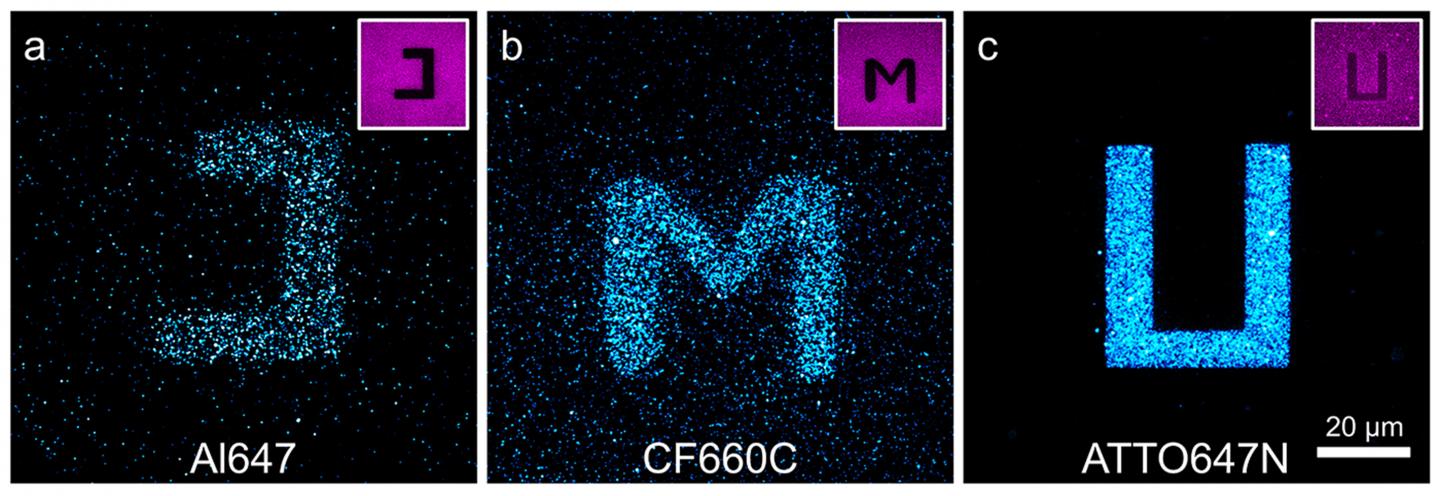
However, various fluorescent dyes can also be transformed by photobleaching so that they absorb light of shorter wavelengths. “A previously red fluorescent dye then glows green. Its fluorescence has been shifted towards the blue range on the wavelength scale. This is why this effect is called photoblueing,” explains Professor Markus Sauer, an expert in super-resolution microscopy from the Biocentre of Julius-Maximilians-Universität Würzburg (JMU) in Bavaria, Germany.

First exact description of photoblueing

Sauer’s team now presents the exact molecular mechanism of photoblueing for cyanine dyes like Cy5 for the first time in the journal Nature Methods. Dr. Martin Schnermann from the Center for Cancer Research in Frederick (USA) is also involved in the publication.

“Because we understood the mechanism so precisely, we were able to prevent photoblueing by simple additives such as vitamin C or to increase it by adding a kind of catalyst,” says Markus Sauer.

Preventing photoblueing can be quite important. Although the effect can only affect a few percent of the dye used, it can nevertheless lead to errors or misinterpretations of the microscopy, for example in energy transfer experiments (FRET). This is because the converted dyes are detected with the same high sensitivity as the starting products.

Simple buffers prevent photoblueing

“Our results show which dyes are affected and how photoblueing can be prevented by simple buffer additions,” Sauer summarises the contents of the Nature Methods paper. “But they equally show how photoblueing can possibly be used advantageously for fluorescence imaging and for tracking single, specifically converted dye molecules.”

That’s exactly what Sauer’s team plans to tackle next: Photoblueing is to be further developed for, among other things, the targeted tracking of individual bacterial and viral particles in infection processes.

###

Media Contact
Prof. Dr. Markus Sauer
[email protected]

Original Source

https://go.uniwue.de/photoblueing

Related Journal Article

http://dx.doi.org/10.1038/s41592-021-01061-2

Tags: BiologyBiomechanics/Biophysics
Share12Tweet8Share2ShareShareShare2

Related Posts

Miniature Sensor Uses Light to Detect Touch — Chemistry

Miniature Sensor Uses Light to Detect Touch

May 8, 2026
Iron Minerals Determine Whether Dissolved Organic Matter Fuels Microbes or Becomes Long-Term Carbon Storage — Chemistry

Iron Minerals Determine Whether Dissolved Organic Matter Fuels Microbes or Becomes Long-Term Carbon Storage

May 8, 2026

Kate Evans Appointed Associate Lab Director for Biological and Environmental Systems Science at ORNL

May 8, 2026

Advancing Multiscale Modeling and Overcoming Operational Challenges in Autothermal CO₂-to-Methanol Reactors

May 8, 2026
Please login to join discussion

POPULAR NEWS

  • Research Indicates Potential Connection Between Prenatal Medication Exposure and Elevated Autism Risk

    840 shares
    Share 336 Tweet 210
  • New Study Reveals Plants Can Detect the Sound of Rain

    727 shares
    Share 290 Tweet 181
  • Scientists Investigate Possible Connection Between COVID-19 and Increased Lung Cancer Risk

    68 shares
    Share 27 Tweet 17
  • Salmonella Haem Blocks Macrophages, Boosts Infection

    61 shares
    Share 24 Tweet 15

About

We bring you the latest biotechnology news from best research centers and universities around the world. Check our website.

Follow us

Recent News

Evaluating Digoxin Use in Patients with Symptomatic Rheumatic Heart Disease

Evaluating the Effectiveness and Safety of Digitalis Glycosides in Treating Heart Failure

Urdu Fall Risk Questionnaire Adapted for Elderly

Subscribe to Blog via Email

Success! An email was just sent to confirm your subscription. Please find the email now and click 'Confirm' to start subscribing.

Join 82 other subscribers
  • Contact Us

Bioengineer.org © Copyright 2023 All Rights Reserved.

Welcome Back!

Login to your account below

Forgotten Password?

Retrieve your password

Please enter your username or email address to reset your password.

Log In
No Result
View All Result
  • Homepages
    • Home Page 1
    • Home Page 2
  • News
  • National
  • Business
  • Health
  • Lifestyle
  • Science

Bioengineer.org © Copyright 2023 All Rights Reserved.