


A new study published in HeartRhythm reports that regular moderate alcohol consumption, drinking an average of 14 glasses of alcohol per week, is a modifiable risk factor for atrial fibrillation
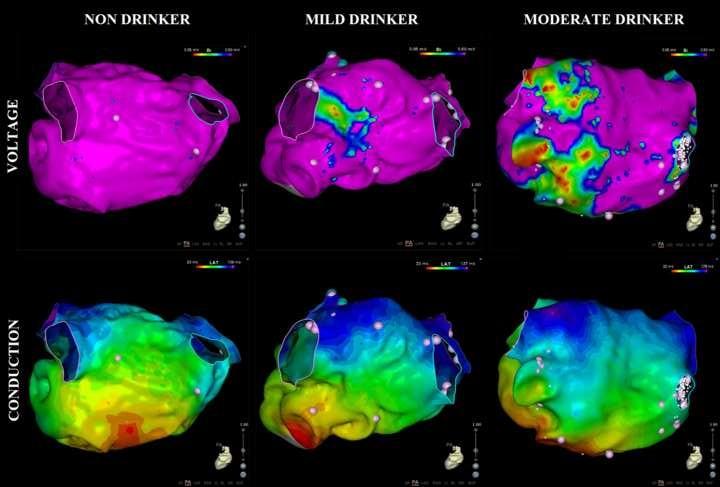
Credit: HeartRhythm
Philadelphia, January 10, 2019 – Alcohol is ubiquitous in Western society, and rates of excessive use among adults remain high. Excessive alcohol consumption is an established risk factor for atrial fibrillation (AF), but what are the effects of moderate and mild consumption on AF? In a new study published in HeartRhythm, the official journal of the Heart Rhythm Society and the Cardiac Electrophysiology Society, Australian researchers showed that regular moderate alcohol consumption (an average of 14 glasses per week) results in more electrical evidence of scarring and impairments in electrical signaling compared with non-drinkers and light drinkers. Alcohol consumption is therefore an important modifiable risk factor for AF.
AF is an abnormal heart rhythm characterized by rapid and irregular beating of the atria (the two upper chambers of the heart). Observational studies suggest that even moderate regular alcohol consumption may increase the risk of AF. A meta-analysis of seven studies involving nearly 860,000 patients and approximately 12,500 individuals with AF demonstrated an eight percent increase in incident AF for each additional daily standard drink. Despite the association between regular alcohol intake and AF, however, detailed human electrophysiological studies describing the nature of alcohol-related atrial remodeling have been lacking.
The purpose of this study was to determine the impact of different degrees of alcohol consumption on atrial remodeling using high-density electroanatomic mapping. In this multi-center cross-sectional study in Australia, investigators performed detailed invasive testing on the atria of 75 patients with AF, 25 in each of three categories: lifelong non-drinkers, mild drinkers, and moderate drinkers. Patients self-reported their average alcohol consumption in standard drinks per week (one standard glass is around 12 grams of alcohol) over the preceding 12 months. Patients consuming two to seven drinks per week were considered mild drinkers, while those consuming eight to 21 drinks per week (average 14 drinks per week) were defined as moderate drinkers.
The investigators found that individuals who consumed moderate amounts of alcohol (average 14 drinks per week) had more electrical evidence of scarring and impairments in electrical signaling than non-drinkers and light drinkers.
“This study underscores the importance of excessive alcohol consumption as an important risk factor in AF,” said lead investigator Professor Peter Kistler, MBBS, PhD, FHRS, from the Heart Centre, Alfred Hospital, Melbourne, Australia. “Regular moderate alcohol consumption, but not mild consumption, is an important modifiable risk factor for AF associated with lower atrial voltage and conduction slowing. These electrical and structural changes may explain the propensity to AF in regular drinkers. It is an important reminder for clinicians who are caring for patients with AF to ask about alcohol consumption and provide appropriate counselling in those who over-indulge.”
###
Media Contact
Jane Grochowski
[email protected]
406-542-8397
Related Journal Article
http://dx.



