The visual cortex is a marvel of biological engineering, responsible for transforming raw sensory input into the rich tapestry of visual experience we often take for granted. For decades, neuroscientists have studied this brain region to understand how millions of neurons interact to decode the lights, shadows, edges, and textures of the world around us. According to canonical models in textbooks, the earliest stage of visual processing in the cortex is dominated by two principal types of neurons: simple and complex cells. Both are finely attuned to edges—sharp transitions between light and dark—at specific positions or orientations within their receptive fields.
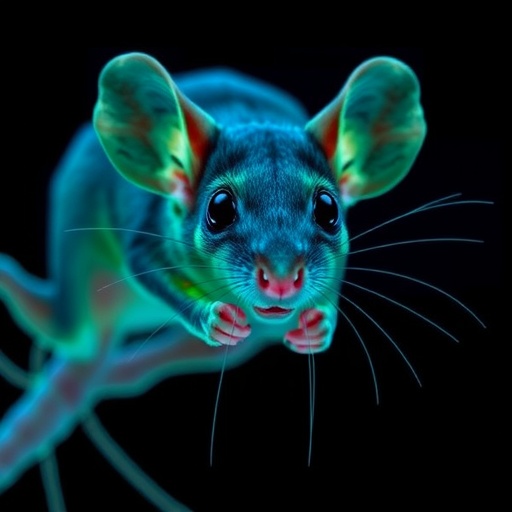
However, a groundbreaking study by an international team of researchers from Stanford University and the University of Göttingen is now challenging this long-held understanding. Utilizing cutting-edge machine learning techniques and deep neural networks, the researchers have identified a previously unrecognized class of neurons in the mouse primary visual cortex. Unlike classical cells that specialize in detecting edges based on brightness contrast, these neurons employ a sophisticated mechanism to process textures and spatial frequencies, potentially reshaping our grasp of visual cognition.
The team’s approach leveraged deep neural networks—a type of artificial intelligence architecture inspired by the brain itself—to create “digital twins” of actual mouse neurons. These computational models are capable of predicting how individual neurons respond to different visual stimuli with remarkable precision. Crucially, these predictive models identified images that maximally activated specific neurons, facilitating targeted in vivo experiments within mouse brains to verify the model’s predictions with biological data.
This methodology marks a significant improvement over traditional neuroscience techniques by enabling a systematic exploration of neuronal response properties over a massive dataset. “Neural networks are essential tools for discovering new properties from large data sets—such as these novel neuronal properties,” explained Professor Fabian Sinz from the University of Göttingen. “The predicted best images are not fantasies of our AI model,” added Professor Alexander Ecker. “Targeted experiments in real mouse brains, led by researchers at Stanford University, have confirmed the properties predicted by our model are real.”
The newly discovered neurons exhibit a strikingly unique receptive field architecture: a bipartite configuration composed of two distinct subregions. One half of the receptive field is tuned to textures, detecting complex patterns that resemble the intricacies found in a bird’s plumage or a detailed natural background. The other half is selectively activated when spatial patterns are precisely arranged, such as the facial features on a mouse or subtle cues pertinent to object recognition.
Spatial frequency, a key parameter in this neural tuning, represents the density of repetitive patterns such as bars, pixels, or stripes within the visual scene. High spatial frequencies correspond to fine details and sharp edges, while low spatial frequencies relate to broader, more homogeneous areas. Whereas classical simple and complex cells respond primarily to stark differences in brightness, these bipartite neurons demonstrate invariant responses across different spatial frequencies, effectively bridging abstract texture information with edge detection.
According to Professor Andreas Tolias of Stanford University, “Classic simple and complex cells are tuned to simple edges defined by differences in brightness. In contrast, the two-part neurons we found respond to more complex information about edges—that is, differences in texture or spatial frequency. These are precisely the kinds of signals needed to separate an object from its background.” This distinction is critical for understanding how the brain achieves figure-ground segregation, a fundamental perceptual capability allowing us to recognize an object from a noisy, cluttered environment.
The discovery of bipartite receptive fields also informs the era-old debate regarding how invariant visual recognition is implemented at the neuronal level. Classic models typically emphasize invariance to positional shifts or orientations of edges, but this newfound class of neurons signals a more nuanced invariance grounded in complex spatial frequency tuning. Such neurons may provide the computational substrate for higher-level object recognition and texture perception, bridging lower-level edge detection with the richness of natural scene analysis.
The interdisciplinary collaboration between computational neuroscientists, experimental neurobiologists, and machine learning experts significantly underscores the power of integrating artificial intelligence into neuroscience research. By merging predictive digital models with rigorous experimental validation, this approach charts a promising path toward unraveling the complexities of neural coding and the functional architecture of brain circuits.
Beyond its immediate scientific implications, this research opens avenues for developing advanced computer vision systems inspired by biological strategies. Existing artificial vision algorithms often struggle to disambiguate texture from edges in noisy or naturalistic scenes; embedding principles elucidated from these bipartite neurons could catalyze more robust and efficient sensory processing in artificial systems.
Finally, this study illuminates the utility of deep learning as a hypothesis-generating framework rather than a mere data-fitting tool. The authors demonstrate that AI can hypothesize testable neural functions, which—crucially—can be substantiated in living brains. This synergy of AI and neuroscience heralds a transformative era in which machine learning not only models but also guides fundamental biological discoveries.
In sum, the identification of neurons with bipartite receptive fields attuned to complex spatial frequencies profoundly enriches our understanding of the functional diversity within the primary visual cortex. These findings challenge the classical dichotomy of simple and complex cells and highlight the brain’s extraordinary capacity for nuanced visual computations that underlie everyday perception. Such discoveries exemplify the frontier where machine intelligence and biological intelligence meet, promising deeper insights into the brain’s enigmatic inner workings.
Subject of Research: Not applicable
Article Title: Functional bipartite invariance in mouse primary visual cortex receptive fields.
News Publication Date: 25-Feb-2026
References: Ding Z, Tran DT et al. Functional bipartite invariance in mouse primary visual cortex receptive fields. Nature Neuroscience (2026). DOI: 10.1038/s41593-026-02213-3
Image Credits: Tyler Sloan, Quorumetrix Studio
Tags: artificial intelligence in brain studiesdeep neural networks in neurosciencedigital twins in neurosciencemachine learning in visual cognitionmouse visual cortex neuronsneuroscience of edge detectionnewly discovered nerve cells in miceprimary visual cortex researchspatial frequency processingtexture detection neuronsvisual perception beyond edgesvisual processing in mice