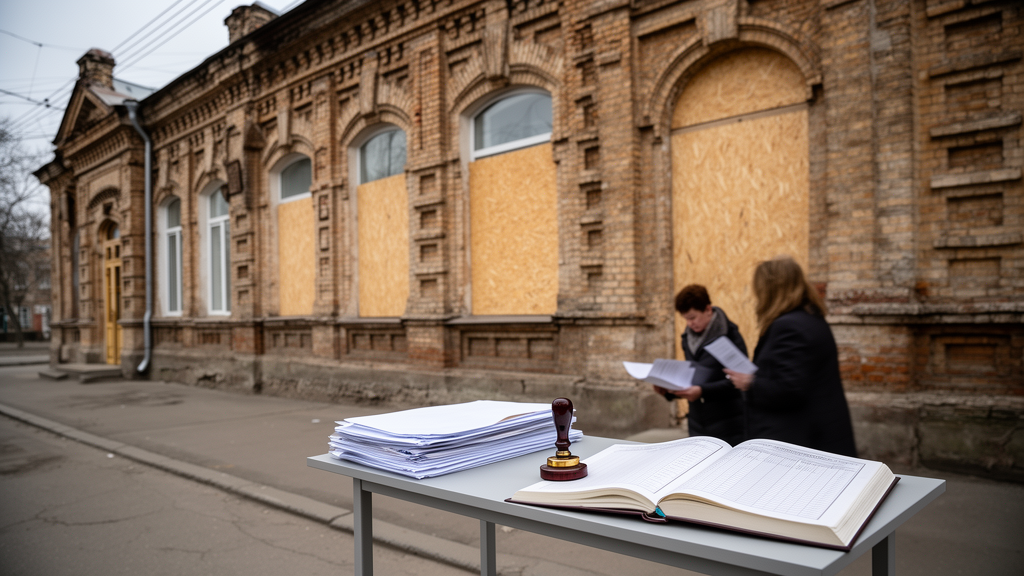
In 1998 alone, officials in the southern Russian city of Rostov-on-Don placed 324 buildings under formal heritage protection, part of a wave of designations that added 337 sites to the city’s protection lists during the 1990s. By the end of the transition decade, the regional government had listed 462 cultural heritage sites, accounting for 92 percent of all sites currently protected in the city. Yet this extraordinary expansion of formal recognition did not translate into the physical preservation of the buildings themselves. Many monuments ended up on the verge of disappearing, and some were later demolished despite their protected status.
A new study published in the journal Built Heritage examines this paradox in detail, tracing how heritage governance in Rostov-on-Don evolved during the post-socialist transition from the late 1980s to the 2000s, with a particular focus on residential heritage. Elena Batunova, the study’s author, draws on nine semi-structured interview sessions with three local experts conducted between spring 2023 and spring 2024, totalling 17 hours and 25 minutes of recorded conversation, alongside documentary sources, legal and planning documents, maps, and statistical data. The interviews were transcribed and analysed qualitatively using MAXQDA software.
The research introduces the concept of ‘bureaucratic heritage-making’ to describe how heritage designation itself became embedded in post-socialist institutional adaptation. According to the findings, the heritage designation process in Rostov-on-Don was commercialised in an unusual way, serving bureaucratic survival and revenue generation rather than long-term preservation. The Regional Inspectorate for the Protection and Operation of Monuments, established in 1996, operated on a self-financing model and was required to generate its own income to sustain itself, according to the cultural heritage specialist interviewed in the study.
The scale of the listing campaign stands out against the Soviet baseline. The Soviet government placed the first cultural heritage site in Rostov-on-Don under protection in 1960, and between 1960 and the collapse of the USSR only six sites were designated, selected mainly for their association with Soviet symbolism or state ideology. The transition-era surge therefore represented a formal departure from ideological selectivity, broadening what counted as heritage. However, the study finds that this process was not accompanied by public debate or a conscious re-evaluation of local heritage. It remained largely administrative, unfolding as a transformation of categories and statuses rather than an explicit cultural reinterpretation of the past.
The mechanics of the 1998 mass listing reveal a discontinuity masked by apparent continuity. The listing relied on materials previously prepared by the North Caucasus branch of the Special Project Institute for Restoration, whose late-Soviet studies treated the historic centre as an integrated urban environment, documenting not only candidate monuments but also background buildings and other architecturally significant components of the historic fabric. According to two of the experts interviewed, the subsequent listing was carried out not by the original experts but by administrative bodies applying the materials without further research or professional consultation. The 1998 register frequently contained only minimal information, such as ‘memorial building’ and an address, without clarification of building type or attributed value. An expert-driven urban conservation approach was thus replaced by a bureaucratic, object-by-object listing process.
This opacity made legal protection instruments vulnerable to manipulation. The cultural heritage specialist reported that it was often possible to obtain an ‘expert’ opinion that would remove a building from protection in exchange for money, and cited numerous examples of buildings being silently listed and unlisted to carry out renovation work, secure an owner’s commercial interests, or obtain funding. The practising architect interviewed described a disconnection between institutions working in urban development and heritage protection, producing situations in which a building, despite its monument status, was falling apart because no one could deal with it. Heritage status itself could become what the study calls a ‘death sentence’ for a building: without transparency and clear rules, potential investors avoided protected properties, while residents of landmark buildings lacked the financial means to carry out repairs to conservation requirements.
Economic restructuring compounded these institutional weaknesses. The post-socialist transition brought falling state budgets, inflation, and the disappearance of the state as the principal client for architects and restorers. Mass privatisation of housing disrupted the maintenance and repair mechanisms established by the Soviet state and transferred responsibility for historic buildings to new owners who lacked the financial, legal, and organisational capacities to maintain them. New private investors and developers entered the market with little interest in preservation, and construction was often chaotic, in the experts’ accounts sometimes involving corruption and leading to the direct destruction of historic buildings. New buildings frequently violated the spatial and cultural logic of the urban fabric.
The study also identifies an under-recognised preservation mechanism: residents’ everyday maintenance practices, which the author describes as ‘preservation through use’. During the late Soviet period, the survival of the historic centre depended not only on the state’s limited capacity for reconstruction but on the fact that pre-socialist buildings remained inhabited, managed, adapted, and partially modernised within the routines of everyday housing provision. The actual preservation of many historic residential buildings during the Soviet era was, all three experts agreed, due not to heritage concern but to a lack of resources for new construction and the need to keep existing buildings in use. As housing management structures weakened after 1991, the practical conditions sustaining this everyday preservation deteriorated.
The case is framed against the broader context of Rostov-on-Don itself, a city of more than 1.14 million inhabitants formed from two formerly independent cities, Rostov-on-Don and Nakhichevan-on-Don, unified administratively in 1928. Its historic residential fabric consists largely of one- to three-storey brick buildings in eclectic, modernist, and classicist styles from the late 19th and early 20th centuries, representing everyday housing rather than monumental ensembles. The Second World War damaged or destroyed more than 12,000 buildings, yet substantial portions of the pre-Soviet fabric survived. Today, central districts contain approximately 90 percent of the city’s recognised architectural monuments, while nearly half of the historic housing stock is considered to be in unsatisfactory or poor condition.
The study’s limitations are explicit: it focuses on a single city, rests on a small number of expert participants, and relies on incomplete documentary sources, with retrospective interviews potentially subject to memory distortion. Official sources, the author notes, do not always reflect the informal decision-making mechanisms that played an important role in heritage protection. Nevertheless, the findings contribute to post-socialist urban studies and debates on the commodification of cultural heritage by showing how, in a large non-capital city, weak symbolic revaluation, administrative expansion of designation, bureaucratic repurposing of expert knowledge, commercialisation of recognition practices, and the decline of housing maintenance systems combined to produce expanding protection lists alongside a deteriorating historic environment. The urgency of that deterioration is captured by a viral internet anecdote: after two historic buildings were demolished in May 2022, one of them formerly listed, users of Yandex Maps labelled the site the ‘Excavator Operator’s Mistake Square’, echoing the local authorities’ initial explanation of the demolition.
Subject of Research: Post-socialist heritage governance and the commercialisation of heritage designation in Rostov-on-Don
Article Title: Institutional transformations and the governance of built heritage in post-socialist Rostov-on-Don
Article References: Batunova, E. (2026). Institutional transformations and the governance of built heritage in post-socialist Rostov-on-Don. Built Heritage, 10(1), Article 61. https://doi.org/10.1186/s43238-026-00305-4
Image Credits: AI Generated
DOI: 10.1186/s43238-026-00305-4
Keywords: built heritage, Rostov-on-Don, post-socialist transition, heritage governance, bureaucratic heritage-making, housing privatisation, de-ideologisation, institutional transformation, residential heritage, urban conservation, Russia, expert interviews
News Source: Courtney Benton. (October 29, 2026). How Heritage Listing Became a Bureaucratic Survival Tool in Rostov-on-Don. Scienmag.