• HOME
  • NEWS
  • EXPLORE
    • CAREER
      • Companies
      • Jobs
    • EVENTS
    • iGEM
      • News
      • Team
    • PHOTOS
    • VIDEO
    • WIKI
  • BLOG
  • COMMUNITY
    • FACEBOOK
    • INSTAGRAM
    • TWITTER
Saturday, February 7, 2026
BIOENGINEER.ORG
No Result
View All Result
  • Login
  • HOME
  • NEWS
  • EXPLORE
    • CAREER
      • Companies
      • Jobs
        • Lecturer
        • PhD Studentship
        • Postdoc
        • Research Assistant
    • EVENTS
    • iGEM
      • News
      • Team
    • PHOTOS
    • VIDEO
    • WIKI
  • BLOG
  • COMMUNITY
    • FACEBOOK
    • INSTAGRAM
    • TWITTER
  • HOME
  • NEWS
  • EXPLORE
    • CAREER
      • Companies
      • Jobs
        • Lecturer
        • PhD Studentship
        • Postdoc
        • Research Assistant
    • EVENTS
    • iGEM
      • News
      • Team
    • PHOTOS
    • VIDEO
    • WIKI
  • BLOG
  • COMMUNITY
    • FACEBOOK
    • INSTAGRAM
    • TWITTER
No Result
View All Result
Bioengineer.org
No Result
View All Result
Home NEWS Science News Biology

How does cooperation evolve?

Bioengineer by Bioengineer
July 23, 2020
in Biology
Reading Time: 2 mins read
0
IMAGE
Share on FacebookShare on TwitterShare on LinkedinShare on RedditShare on Telegram

Researchers unravel why organisms frequently help each other
IMAGE

Credit: Department of Ecology at the Osnabrueck University

OSNABRUECK / JENA.- In nature, organisms often support each other in order to gain an advantage. However, this kind of cooperation contradicts the theory of evolution proposed by Charles Darwin: Why would organisms invest valuable resources to help others? Instead, they should rather use them for themselves, in order to win the evolutionary competition with other species. A new study led by Prof. Dr. Christian Kost from the Department of Ecology at the Osnabrueck University now solved this puzzle. The results of the study were published in the scientific journal Current Biology (link: 10.1016/j.cub.2020.06.100). The research project was performed in collaboration with the Max Planck Institute for Chemical Ecology in Jena.

Interactions between two or more organisms, in which all partners involved gain an advantage, are ubiquitous in nature and have played a key role in the evolution of life on Earth. For example, root bacteria fix nitrogen from the atmosphere, thus making it available to plants. In return, the plant supplies its root bacteria with nutritious sugars. However, it is nevertheless costly for both interaction partners to support each other. For example, the provision of sugar requires energy, which is then not available to the plant anymore. From this results the risk of cheating interaction partners that consume the sugar without providing nitrogen in return.

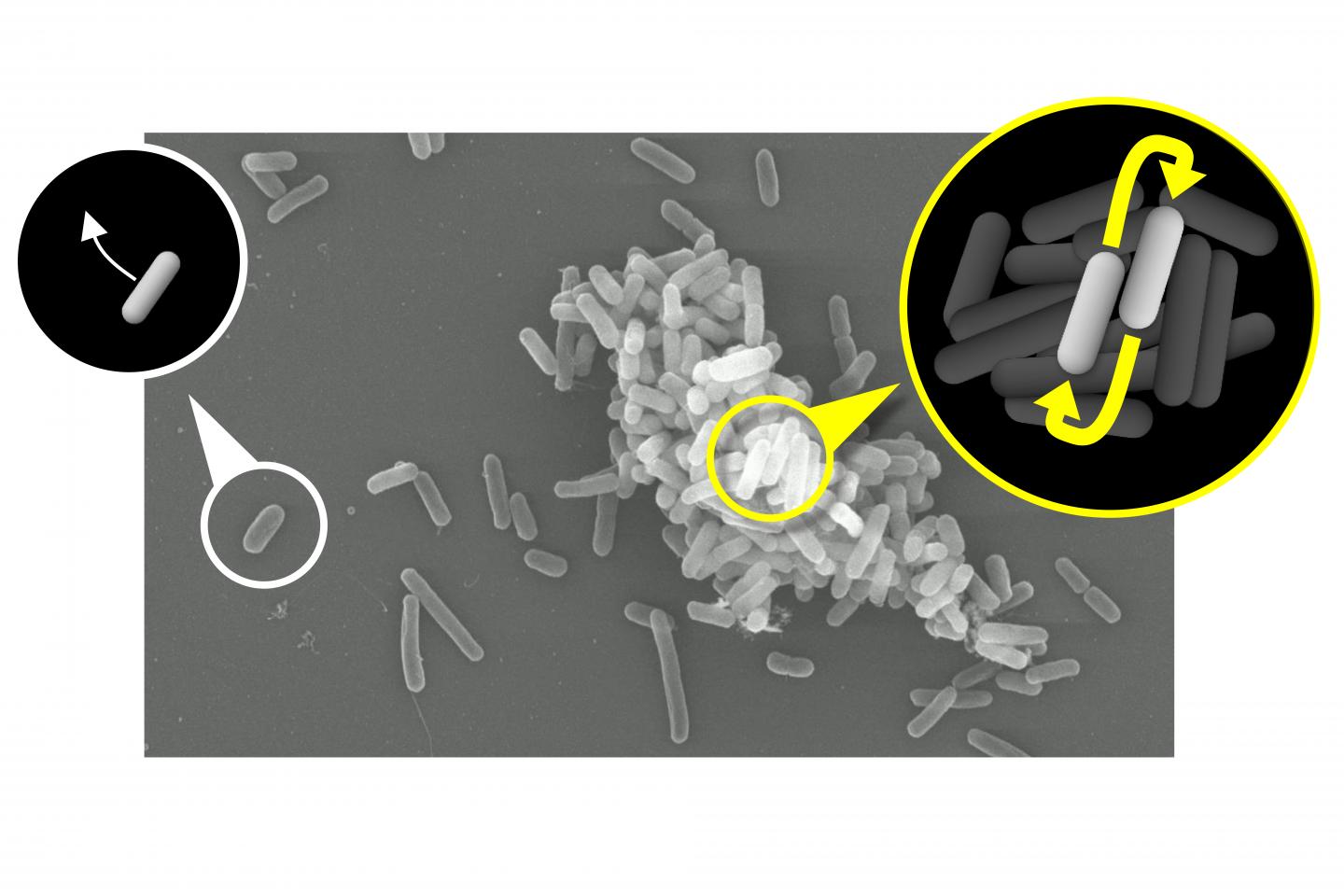
The research team led by Prof. Dr. Christian Kost used bacteria as a model system to study the evolution of mutual cooperation. At the beginning of the experiment, two bacterial strains could only grow when they provided each other with essential amino acids. Over the course of several generations, however, the initial exchange of metabolic byproducts developed into a real cooperation: both partners increased the production of the exchanged amino acids in order to benefit their respective partner. Even though the increased amino acid production enhanced growth when both partners were present, it was extremely costly when individual bacterial strains had to grow without their partner.

The observed changes were caused by the fact that individual bacterial cells had assembled into multicellular clusters. In these cell groups, cooperative mutants were rewarded. The more resources they invested in the growth of other cells, the more nutrients they received in return from their partners.

“This kind of feedback represents a previously unknown mechanism, which promotes the evolution of cooperative interactions between two different organisms,” says Prof. Dr. Christian Kost, leader of the study. Although the study was performed with bacteria in a test tube, the mechanism discovered can most likely explain the evolution of cooperation in many different ecological interactions.

###

Media Contact
Prof. Dr. Christian Kost
[email protected]

Original Source

http://www.ice.mpg.de/ext/index.php?id=1641&L=0

Related Journal Article

http://dx.doi.org/10.1016/j.cub.2020.06.100

Tags: BacteriologyBiologyEcology/EnvironmentEvolutionMicrobiology
Share12Tweet8Share2ShareShareShare2

Related Posts

Florida Cane Toad: Complex Spread and Selective Evolution

Florida Cane Toad: Complex Spread and Selective Evolution

February 7, 2026
New Study Uncovers Mechanism Behind Burn Pit Particulate Matter–Induced Lung Inflammation

New Study Uncovers Mechanism Behind Burn Pit Particulate Matter–Induced Lung Inflammation

February 6, 2026

DeepBlastoid: Advancing Automated and Efficient Evaluation of Human Blastoids with Deep Learning

February 6, 2026

Navigating the Gut: The Role of Formic Acid in the Microbiome

February 6, 2026
Please login to join discussion

POPULAR NEWS

  • Robotic Ureteral Reconstruction: A Novel Approach

    Robotic Ureteral Reconstruction: A Novel Approach

    82 shares
    Share 33 Tweet 21
  • Digital Privacy: Health Data Control in Incarceration

    63 shares
    Share 25 Tweet 16
  • Study Reveals Lipid Accumulation in ME/CFS Cells

    57 shares
    Share 23 Tweet 14
  • Breakthrough in RNA Research Accelerates Medical Innovations Timeline

    53 shares
    Share 21 Tweet 13

About

We bring you the latest biotechnology news from best research centers and universities around the world. Check our website.

Follow us

Recent News

Inflammasome Protein ASC Drives Pancreatic Cancer Metabolism

Phage-Antibiotic Combo Beats Resistant Peritoneal Infection

Boosting Remote Healthcare: Stepped-Wedge Trial Insights

Subscribe to Blog via Email

Enter your email address to subscribe to this blog and receive notifications of new posts by email.

Join 73 other subscribers
  • Contact Us

Bioengineer.org © Copyright 2023 All Rights Reserved.

Welcome Back!

Login to your account below

Forgotten Password?

Retrieve your password

Please enter your username or email address to reset your password.

Log In
No Result
View All Result
  • Homepages
    • Home Page 1
    • Home Page 2
  • News
  • National
  • Business
  • Health
  • Lifestyle
  • Science

Bioengineer.org © Copyright 2023 All Rights Reserved.