• HOME
  • NEWS
  • EXPLORE
    • CAREER
      • Companies
      • Jobs
    • EVENTS
    • iGEM
      • News
      • Team
    • PHOTOS
    • VIDEO
    • WIKI
  • BLOG
  • COMMUNITY
    • FACEBOOK
    • INSTAGRAM
    • TWITTER
Saturday, May 16, 2026
BIOENGINEER.ORG
No Result
View All Result
  • Login
  • HOME
  • NEWS
  • EXPLORE
    • CAREER
      • Companies
      • Jobs
        • Lecturer
        • PhD Studentship
        • Postdoc
        • Research Assistant
    • EVENTS
    • iGEM
      • News
      • Team
    • PHOTOS
    • VIDEO
    • WIKI
  • BLOG
  • COMMUNITY
    • FACEBOOK
    • INSTAGRAM
    • TWITTER
  • HOME
  • NEWS
  • EXPLORE
    • CAREER
      • Companies
      • Jobs
        • Lecturer
        • PhD Studentship
        • Postdoc
        • Research Assistant
    • EVENTS
    • iGEM
      • News
      • Team
    • PHOTOS
    • VIDEO
    • WIKI
  • BLOG
  • COMMUNITY
    • FACEBOOK
    • INSTAGRAM
    • TWITTER
No Result
View All Result
Bioengineer.org
No Result
View All Result
Home NEWS Science News Biology

How do plants rest photosynthetic activity at night?

Bioengineer by Bioengineer
August 16, 2018
in Biology
Reading Time: 2 mins read
0
Share on FacebookShare on TwitterShare on LinkedinShare on RedditShare on Telegram
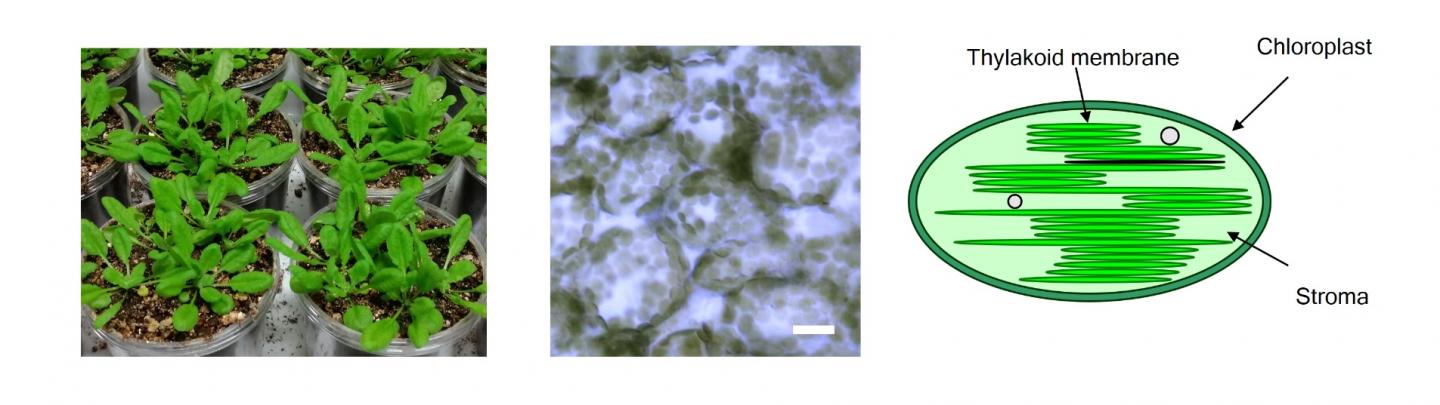
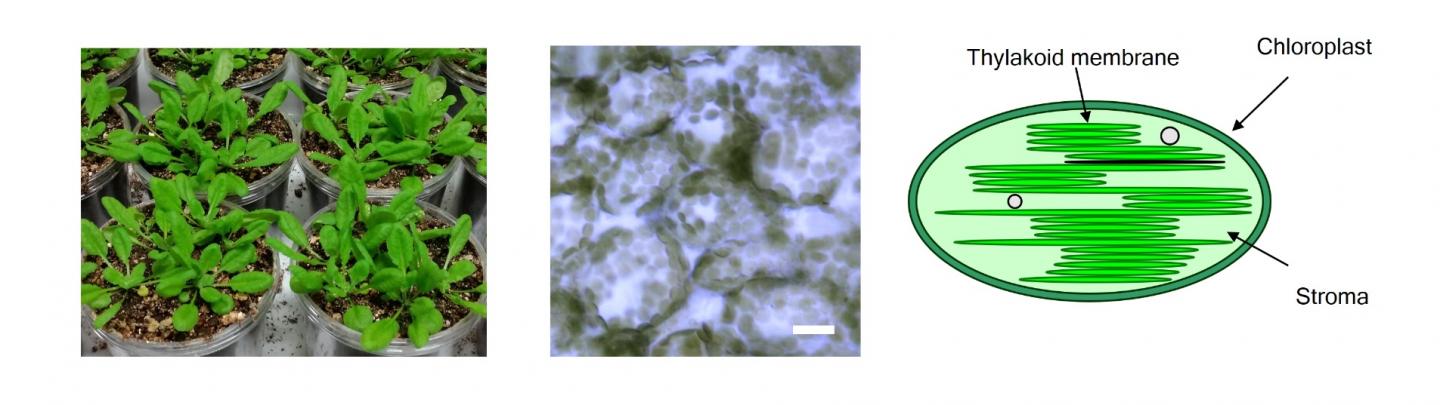
IMAGE

Credit: Toru Hisabori

Photosynthesis, the process by which plants generate food, is a powerful piece of molecular machinery that needs sunlight to run. The proteins involved in photosynthesis need to be 'on' when they have the sunlight they need to function, but need to idle, like the engine of a car at a traffic light, in the dark, when photosynthesis is not possible. They do this by a process called 'redox regulation'–the activation and deactivation of proteins via changes in their redox (reduction/oxidation) states. What happens in light is well understood: the ferredoxin-thioredoxin reductase (FTR)/thioredoxin (Trx) pathway is responsible for the reduction process, which activates the photosynthetic pathway. However, scientists have long been in the dark about what happens when light is not available, and how plants reset photosynthetic proteins to be ready to function when light is resumed.

Now, Keisuke Yoshida, Toru Hisabori and colleagues have identified two proteins, constituting the thioredoxin-like2 (TrxL2)/2-Cys peroxiredoxin (2CP) redox cascade, that help control the reoxidation of these photosynthetic proteins by modifying key parts of the molecular players. These two proteins appear to function as part of a cascade that siphons energy from the photosynthetic proteins to the always energy-hungry hydrogen peroxide. TrxL2, unlike similar, better-known proteins, seems to be specialized for the 'switching off' process; it's an efficient oxidizer of many proteins, but only reduces 2CP, allowing the energy drained by TrxL2 from several upstream reactions to pass to 2CP and thence hydrogen peroxide. This cascade thus keeps photosynthesis on standby until light is available again.

TrxL2/2CP do work in light as well, but are overshadowed by the normal activation machinery in plants and only take center stage in the absence of light. Interestingly, this cascade does not seem to affect photosynthesis itself, as mutant plants without 2CP behave normally in light; however, the 'switching off' mechanism is significantly less efficient in these mutant plants than in wild-type plants. Moreover, the fact that this process is less efficient, rather than absent altogether, suggests that other, as yet unknown, proteins serve similar functions in plants. These researchers thus shed light on how plants reserve the activity of photosynthetic proteins for when it's actually useful.

###

Media Contact

Emiko Kawaguchi
[email protected]
81-357-342-975

http://www.titech.ac.jp/english/index.html

Related Journal Article

http://dx.doi.org/10.1073/pnas.1808284115

Share12Tweet8Share2ShareShareShare2

Related Posts

Uncovering C. elegans Immunity via Genetic Screens — Biology

Uncovering C. elegans Immunity via Genetic Screens

May 16, 2026
Single mother must adapt swiftly — the survival of her colony depends on it — Biology

Single mother must adapt swiftly — the survival of her colony depends on it

May 15, 2026

Why Are Nearly Everyone Right-Handed? It Might Be Linked to How We Learned to Walk

May 15, 2026

Excessive Neuronal Activity Initiates Severe Autoimmune Brain Disorder

May 15, 2026
Please login to join discussion

POPULAR NEWS

  • Research Indicates Potential Connection Between Prenatal Medication Exposure and Elevated Autism Risk

    844 shares
    Share 338 Tweet 211
  • New Study Reveals Plants Can Detect the Sound of Rain

    730 shares
    Share 291 Tweet 182
  • Salmonella Haem Blocks Macrophages, Boosts Infection

    62 shares
    Share 25 Tweet 16
  • Breastmilk Balances E. coli and Beneficial Bacteria in Infant Gut Microbiomes

    58 shares
    Share 23 Tweet 15

About

We bring you the latest biotechnology news from best research centers and universities around the world. Check our website.

Follow us

Recent News

Uncovering C. elegans Immunity via Genetic Screens

Congenital Heart Disease’s Lasting Impact on Brain Health

Metabolic Stress Worsens Parkinson’s via Mitochondrial Ferroptosis

Subscribe to Blog via Email

Enter your email address to subscribe to this blog and receive notifications of new posts by email.

Join 82 other subscribers
  • Contact Us

Bioengineer.org © Copyright 2023 All Rights Reserved.

Welcome Back!

Login to your account below

Forgotten Password?

Retrieve your password

Please enter your username or email address to reset your password.

Log In
No Result
View All Result
  • Homepages
    • Home Page 1
    • Home Page 2
  • News
  • National
  • Business
  • Health
  • Lifestyle
  • Science

Bioengineer.org © Copyright 2023 All Rights Reserved.