• HOME
  • NEWS
  • EXPLORE
    • CAREER
      • Companies
      • Jobs
    • EVENTS
    • iGEM
      • News
      • Team
    • PHOTOS
    • VIDEO
    • WIKI
  • BLOG
  • COMMUNITY
    • FACEBOOK
    • INSTAGRAM
    • TWITTER
Monday, October 5, 2026
BIOENGINEER.ORG
No Result
View All Result
  • Login
  • HOME
  • NEWS
  • EXPLORE
    • CAREER
      • Companies
      • Jobs
        • Lecturer
        • PhD Studentship
        • Postdoc
        • Research Assistant
    • EVENTS
    • iGEM
      • News
      • Team
    • PHOTOS
    • VIDEO
    • WIKI
  • BLOG
  • COMMUNITY
    • FACEBOOK
    • INSTAGRAM
    • TWITTER
  • HOME
  • NEWS
  • EXPLORE
    • CAREER
      • Companies
      • Jobs
        • Lecturer
        • PhD Studentship
        • Postdoc
        • Research Assistant
    • EVENTS
    • iGEM
      • News
      • Team
    • PHOTOS
    • VIDEO
    • WIKI
  • BLOG
  • COMMUNITY
    • FACEBOOK
    • INSTAGRAM
    • TWITTER
No Result
View All Result
Bioengineer.org
No Result
View All Result
Home NEWS Science News Health

How bacteria play pass the parcel — and help each other evade antibiotics

Bioengineer by Bioengineer
September 13, 2018
in Health
Reading Time: 2 mins read
0
Share on FacebookShare on TwitterShare on LinkedinShare on RedditShare on Telegram
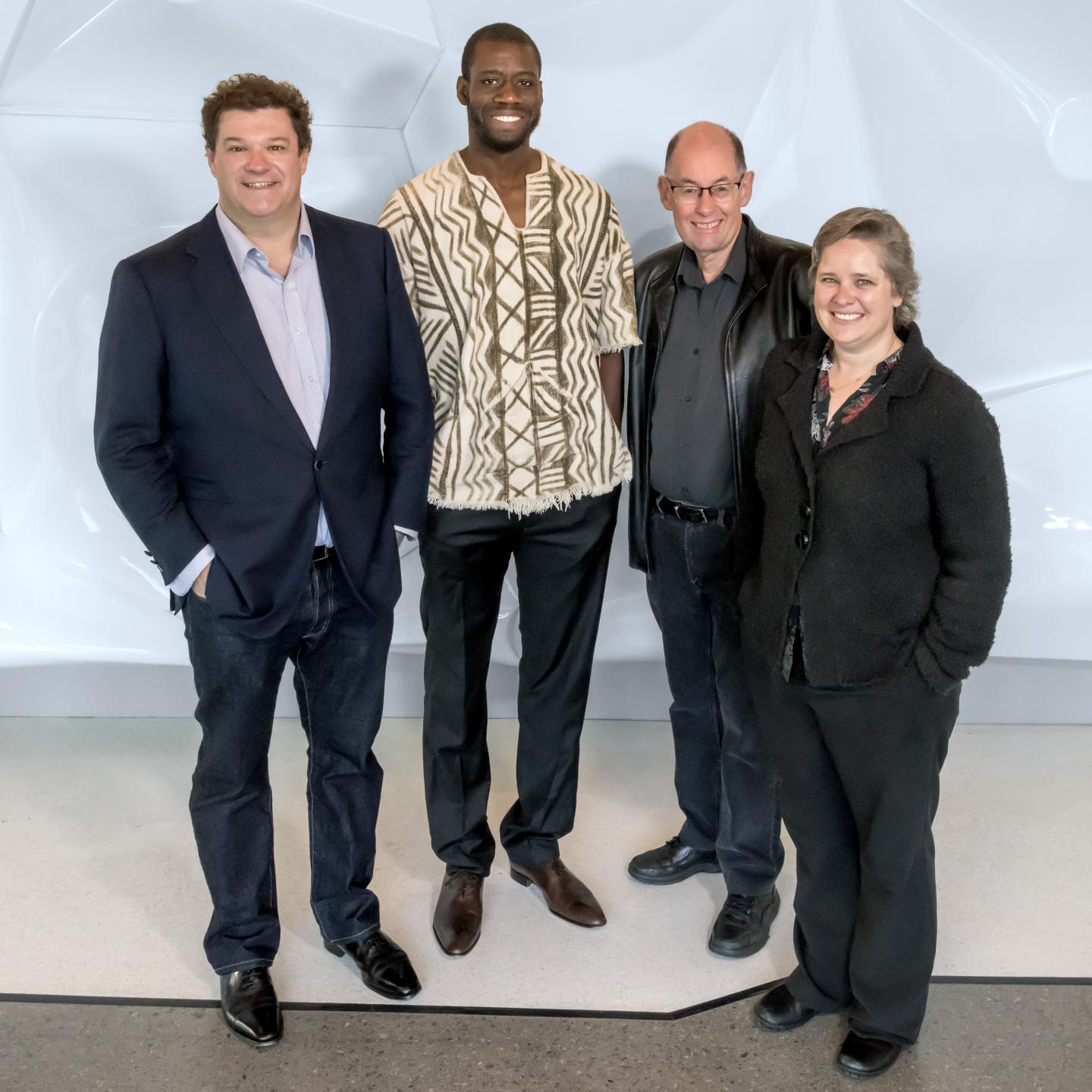
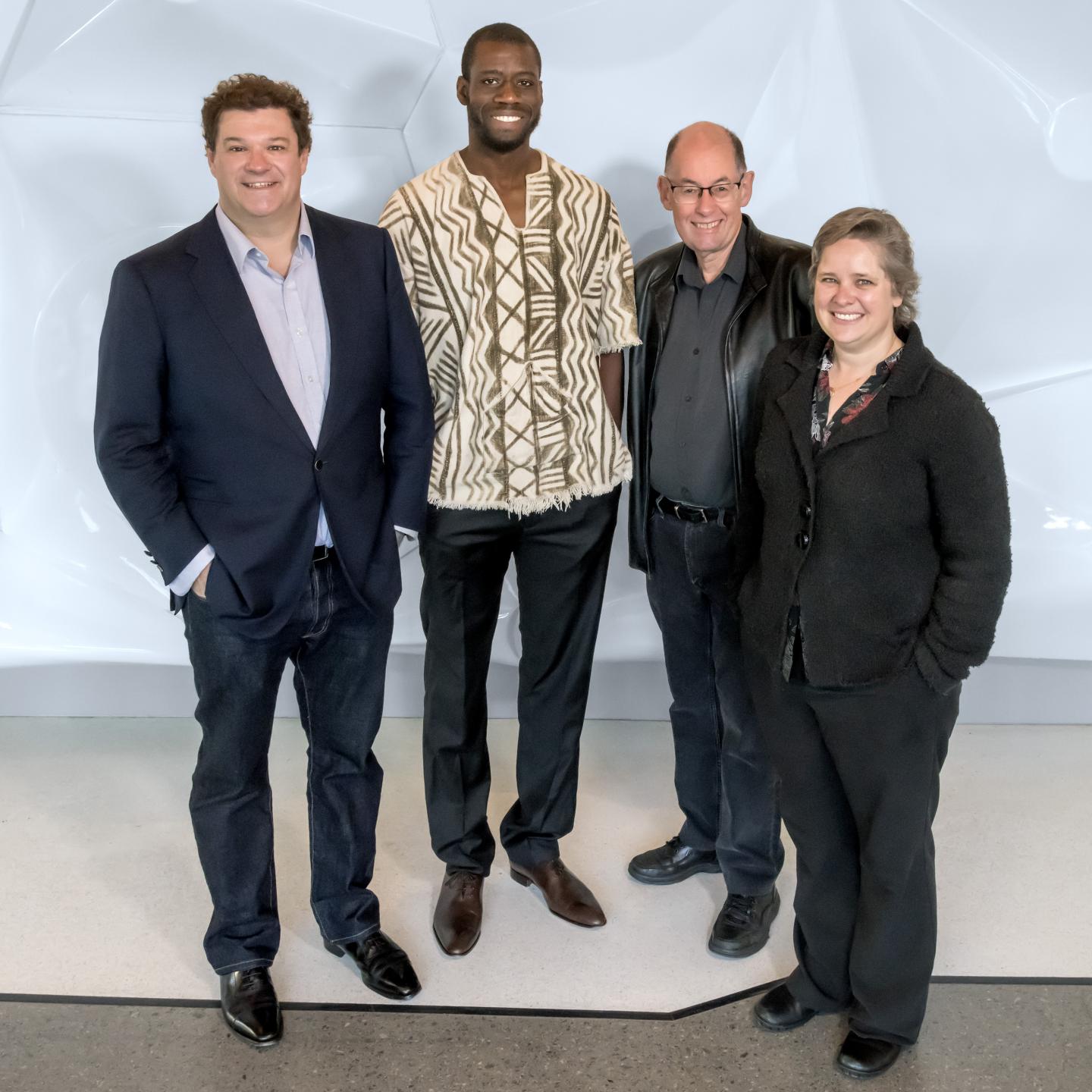
IMAGE

Credit: Monash University

Bacteria are very sneaky in their efforts to develop resistance to antibiotics. Some strains of bacteria package up the genetic instructions for how they defend themselves and cause disease, and pass this information on to neighbouring, naïve, bacteria – essentially gifting their colleagues with the defences they need to survive against our medical armoury of antibiotics.

If that isn't bad enough, the information transferred also allows the receiving bacteria to pass on the same information to others, meaning that the ability to resist antibiotics and produce toxins rapidly spreads from one bacterium to another.

It's a frightening thought.

Scientists at Monash University's Biomedicine Discovery Institute and the ARC Centre of Excellence in Advanced Molecular Imaging, working with the Australian Synchrotron, have answered a key question about how a dangerous bacterium, Clostridium perfringens, shares its genetic information.

C. perfringens causes more than one million cases of food poisoning every year in the United States and causes the rapidly spreading, fatal condition 'gas gangrene'. It is also an economically important cause of disease in chickens, sheep and cattle.

The team, including Dr Daouda Traore, Dr Jess Wisniewski, Dr Vicki Adams, Professor Julian Rood and Professor James Whisstock discovered information about how a previously unknown gene – called tcpK – functions to help pass the genetic instructions (DNA) for antibiotic-resistance from one C. perfringens bacterium to another.

These findings were published today in Nature Communications.

When they initially identified the new gene the team searched international databases for information about how it might work.

"We couldn't find any clues as to TcpK function anywhere," Dr Traore said.

"It's only found in C. perfringens and related disease causing bacteria, but is critical for the bacteria to spread antibiotic resistance," Dr Adams said.

Firing high energy X-rays generated by the Australian Synchrotron at a TcpK protein crystal, the researchers were able to determine the 3D molecular structure of the protein.

"Our structural analysis revealed that the molecule resembles a universal DNA binding module called a winged-Helix-turn-Helix. This was the key breakthrough that allowed us to discover that TcpK works by marking the DNA for transfer to another bacterium," Dr Traore said.

Dr Traore and his colleagues anticipate that this discovery will facilitate future research aimed at controlling the spread of antibiotic resistance and toxin genes.

###

Read the full paper in Nature Communications titled Crystal structure of TcpK in complex with oriT DNA of the antibiotic resistance plasmid pCW3.

About the Monash Biomedicine Discovery Institute

Committed to making the discoveries that will relieve the future burden of disease, the newly established Monash Biomedicine Discovery Institute at Monash University brings together more than 120 internationally-renowned research teams. Our researchers are supported by world-class technology and infrastructure, and partner with industry, clinicians and researchers internationally to enhance lives through discovery.

Media enquiries:

Tania Ewing
+61 408 378 422
[email protected]

Media Contact

Grace Williams
[email protected]
61-399-059-597
@MonashUni

http://www.monash.edu.au

Related Journal Article

http://dx.doi.org/10.1038/s41467-018-06096-2
Share12Tweet8Share2ShareShareShare2

Related Posts

Traditional Liver Remedies From Ethiopia Fail a Simple Toxicity Test, Raising Safety Alarms

Traditional Liver Remedies From Ethiopia Fail a Simple Toxicity Test, Raising Safety Alarms

October 5, 2026
Blood Protein May Signal Nerve Damage in Rare Autoimmune Disease, Study Finds

Blood Protein May Signal Nerve Damage in Rare Autoimmune Disease, Study Finds

October 5, 2026

Large Extracellular Vesicles Step Out of the Shadow of Exosomes in Landmark Review

October 5, 2026

Engineering Plant Immune Receptors to Build Durable, Broad-Spectrum Crop Resistance

October 5, 2026
Please login to join discussion

POPULAR NEWS

  • Alloys That Shrink Their Own Grains: New PIX Mechanism Refines Metals With Heat Alone

    Alloys That Shrink Their Own Grains: New PIX Mechanism Refines Metals With Heat Alone

    29 shares
    Share 12 Tweet 7
  • Endurance Exercise Reshapes the Liver in Males and Females Through Distinct Molecular Routes

    29 shares
    Share 12 Tweet 7
  • Single Transcription Factor PU.1 Rapidly Converts Fibroblasts into Macrophage-Lineage Cells

    29 shares
    Share 12 Tweet 7
  • New Scale Measures How Ready Nurse Educators Really Are for the AI Era

    29 shares
    Share 12 Tweet 7

About

We bring you the latest biotechnology news from best research centers and universities around the world. Check our website.

Follow us

Recent News

Alloys That Shrink Their Own Grains: New PIX Mechanism Refines Metals With Heat Alone

Endurance Exercise Reshapes the Liver in Males and Females Through Distinct Molecular Routes

Single Transcription Factor PU.1 Rapidly Converts Fibroblasts into Macrophage-Lineage Cells

Subscribe to Blog via Email

Success! An email was just sent to confirm your subscription. Please find the email now and click 'Confirm' to start subscribing.

Join 85 other subscribers
  • Contact Us

Bioengineer.org © Copyright 2023 All Rights Reserved.

Welcome Back!

Login to your account below

Forgotten Password?

Retrieve your password

Please enter your username or email address to reset your password.

Log In
No Result
View All Result
  • Homepages
    • Home Page 1
    • Home Page 2
  • News
  • National
  • Business
  • Health
  • Lifestyle
  • Science

Bioengineer.org © Copyright 2023 All Rights Reserved.