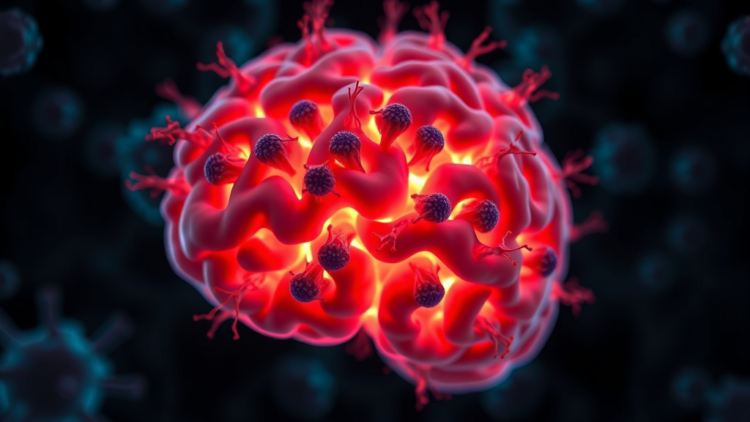
Cancer has long been understood as a disease of corrupted genes and rogue cells, but a quieter story has been unfolding in laboratories around the world. Tumors are not just masses of malignant tissue; they are ecosystems, populated by bacteria and other microbes that appear to shape how cancers begin, how they grow, and how they respond to treatment. At the same time, the trillions of microbes living in the gut send systemic signals that influence immunity and metabolism far beyond the digestive tract. A comprehensive review published in Genome Biology now maps out how researchers are combining multi-omics technologies with artificial intelligence to decode this hidden biology, and what it will take to turn those discoveries into real clinical tools.
The stakes are enormous. Cancer affects roughly 20 million people each year, and projections suggest the annual burden could climb to 30.5 million by 2050. While tumor-intrinsic factors such as mutations and dysregulated signaling pathways remain central to oncology, researchers increasingly recognize that tumor-extrinsic factors, including everything non-cancerous within the tumor microenvironment and the broader tumor macroenvironment, powerfully influence disease trajectories. The cancer microbiome, spanning both the gut microbiome and the tumor-associated microbiome, has emerged as one of the most intriguing of these factors. Early studies focused on colorectal cancer simply because of anatomical proximity, but evidence now shows the gut microbiome acts systemically, modulating host immunity and metabolism across the body, and has been implicated in tumorigenesis, progression, treatment response, and immune-related adverse events.
The tumor-associated microbiome tells a different story. Unlike the gut’s rich microbial communities, intratumoral microbes exist in low abundance, sparse populations that vary dramatically by cancer type. Tumors exposed to the external environment, such as colorectal, gastric, and oral cancers, harbor relatively more microbial biomass, while pancreatic, liver, lung, and breast tumors are considered low-biomass settings. Evidence from experimental models and human datasets has linked these intratumoral communities to cancer progression, prognosis, and treatment response, and the microbes can localize both outside and inside cancer and immune cells, sometimes with distinct spatial organization. They influence their surroundings through infection, inflammation, and the production of metabolites, yet separating genuine microbial signals from laboratory contaminants remains one of the field’s hardest problems.
Computationally, the field has traveled a long road. Early studies relied on classical statistical tools such as differential abundance methods, including LEfSe and metagenomeSeq, to identify taxa associated with cancer risk, survival, and treatment response. But microbiome data are notoriously difficult: high-dimensional, sparse, zero-inflated, and compositional, properties that can reduce reproducibility. Network-based approaches like SparCC, CoNet, and SPIEC-EASI extended the toolkit by modeling microbial interactions and identifying community structures linked to cancer processes, yet they struggle with complex nonlinear relationships. Deep learning has now entered the picture, enabling integration of microbiome and multi-omics data to model higher-order interactions and improve biomarker discovery and clinical outcome prediction. The catch is that most AI models must work with high-dimensional but small-sample datasets, raising overfitting risks and threatening biomarker stability, especially without strong external or prospective validation.
Generating reliable data is the first battleground. Cancer microbiome studies produce diverse data types, each capturing different aspects of microbial composition, function, and host interaction. Partial 16S rRNA sequencing is affordable but usually resolves taxonomy only to the genus level; full-length 16S improves resolution to species; shotgun metagenomics captures all genes in a sample, enabling both taxonomy and functional prediction. Metatranscriptomics captures real-time gene expression but is technically demanding, limited by RNA instability and stringent handling requirements. Metaproteomics, which profiles expressed proteins, offers a more direct functional view but has barely touched cancer: a PubMed search as of June 2026 identified only nine cancer microbiome metaproteomics studies. Metabolomics rounds out the picture, measuring the small molecules microbes produce, with databases such as MiMeDB, the Natural Products Atlas, and MASST helping to attribute metabolites to microbial origins, while spatial metabolomics now maps region-specific metabolic changes within tumors.
Detecting intratumoral microbes demands special tools. Researchers have reanalyzed bulk RNA-seq and whole-genome sequencing data to infer microbial signals from non-human reads, but this approach is vulnerable to contamination, and a recent large-scale tumor whole-genome analysis found that after host subtraction and decontamination, detectable microbiome signals were largely restricted to orodigestive cancers. Specialized pipelines have emerged to help: CSI_Microbe extracts microbial reads from The Cancer Genome Atlas sequencing data, SAHMI denoises microbial signals from single-cell RNA sequencing, and INVADEseq adds a primer targeting the conserved 16S region to map microbes within individual human cells. Spatial technologies such as imaging mass cytometry with mass-tagged antibodies and desorption electrospray ionization mass spectrometry imaging can visualize microbial presence alongside host immune and tumor cells. The review also lays out practical standards for credible signals: negative controls, conservative host-read subtraction, evaluation of batch structure, and orthogonal validation through qPCR, culture, in situ hybridization, or spatial imaging.
Once data are trustworthy, AI modeling begins in earnest, and the review offers a sobering lesson: bigger is not always better. Benchmarking studies show that classical, regularized models remain strong baselines. In a 16S rRNA benchmark with 490 subjects and 6,920 features, L2-regularized logistic regression matched random forest performance while training faster and remaining more interpretable. A larger benchmark across 83 gut microbiome cohorts and 20 diseases found ridge regression and random forest among the best performers, with neural networks and gradient boosting not consistently outperforming them. Deep learning architectures, including multilayer perceptrons, transformers, graph neural networks, and autoencoders, expand modeling capacity for nonlinear and structure-aware analysis, and foundation models pretrained on large-scale microbiome data, such as MGM, GenomeOcean, and Evo2, promise transferable representations, but fine-tuning on small cancer cohorts still risks overfitting, and interpretability remains limited.
The applications are already impressive. Multi-view deep learning frameworks distinguish metastatic from non-metastatic colorectal cancer using gut microbial features, while methods like GDmicro combine graph convolutional networks with domain adaptation to improve cross-cohort robustness against differences in region, diet, and sequencing protocols. Integration frameworks such as VTrans use large-scale pretraining and selective co-attention to combine microbiome features with host transcriptomics and copy-number profiles, enhancing survival risk stratification in small cohorts. Interpretability methods, from SHAP values and integrated gradients to graph-based community explanations like Micah, are evolving from simple feature ranking toward direction-aware, network-level insights. Looking ahead, causal AI frameworks such as DAG-deepVASE, which combines deep networks with knockoff features to identify nonlinear causal relationships, could move the field beyond pure association, though the review stresses that such findings remain hypothesis-generating until validated.
Mechanistic evidence is accumulating for real biological effects. Intratumoral Fusobacterium nucleatum has been implicated in promoting tumor progression, metastasis, and chemoresistance through immune modulation, autophagy activation, and oncogenic signaling, while enterotoxigenic Bacteroides fragilis promoted tumorigenesis and metastasis in breast cancer models. Gut microbes directly metabolize therapeutic drugs: bacterial β-glucuronidase reactivates the inactive metabolite of irinotecan in the gut, causing diarrhea, and inhibiting this enzyme can preserve drug efficacy while limiting toxicity. In immunotherapy, antibiotic use before immune checkpoint inhibitor treatment is associated with poorer response and survival, fecal microbiota transplantation from responders enhances anti-PD-1 responses in preclinical models, and findings from the CIAO clinical trial showed that total intratumoral bacterial abundance was the only microbiome-related feature predicting immune checkpoint blockade response in head and neck cancer, with higher abundance linked to an immunosuppressive microenvironment.
Translating these discoveries into the clinic is the final and steepest climb. The review emphasizes a three-stage evidentiary hierarchy, analytical validation, clinical validation, and demonstrated clinical utility, that most cancer microbiome biomarkers have not yet climbed. Fecal metagenomic classifiers for colorectal cancer are the most mature, retaining accuracy around an AUC of 0.8 in independent cohorts, while tumor-intrinsic signatures have faced serious challenges over host-read misclassification and normalization artifacts. Interventional strategies show encouraging but preliminary signals, with responder-derived fecal transplants reinstating anti-PD-1 responses in some ICI-refractory melanoma patients, yet a fatal transmission of a drug-resistant bacterium during fecal transplantation underscores the safety stakes. The path forward, the authors argue, requires standardized reporting under frameworks like STORMS, contamination-aware pipelines, prospective multicenter validation, and AI systems treated as prioritization tools rather than oracles. Emerging paradigms, including agentic AI systems like Eubiota, human-in-the-loop frameworks, and digital twin approaches, may eventually knit microbiome data into iterative clinical translation, but only if every model is paired with uncertainty estimation and external validation. The era of the cancer microbiome is no longer a question of whether microbes matter in oncology, but of whether the field can prove it rigorously enough for patients to benefit.
Subject of Research: Integration of multi-omics technologies and artificial intelligence for decoding the cancer microbiome and translating discoveries into clinical oncology applications
Article Title: Decoding the cancer microbiome: multi-omics, AI, and translational opportunities
Article References: Decoding the cancer microbiome: multi-omics, AI, and translational opportunities. (n.d.). https://doi.org/10.1186/s13059-026-04284-8
Image Credits: AI Generated
DOI: 10.1186/s13059-026-04284-8
Keywords: cancer microbiome, tumor-associated microbiome, gut microbiome, multi-omics, artificial intelligence, deep learning, biomarker discovery, immunotherapy response, Fusobacterium nucleatum, metagenomics, precision oncology, clinical translation
Cite Scienmag News
APA MLA Chicago
Morgan Morrow. (September 20, 2026). How AI and Multi-Omics Are Unlocking the Hidden Microbial World Inside Tumors. Scienmag. https://scienmag.com/how-ai-and-multi-omics-are-unlocking-the-hidden-microbial-world-inside-tumors/
Morgan Morrow. “How AI and Multi-Omics Are Unlocking the Hidden Microbial World Inside Tumors.” Scienmag, 20 September 2026, https://scienmag.com/how-ai-and-multi-omics-are-unlocking-the-hidden-microbial-world-inside-tumors/. Accessed 20 September 2026.
Morgan Morrow. “How AI and Multi-Omics Are Unlocking the Hidden Microbial World Inside Tumors.” Scienmag. September 20, 2026. https://scienmag.com/how-ai-and-multi-omics-are-unlocking-the-hidden-microbial-world-inside-tumors/
Copy citation Download RIS
Tags: AI-driven cancer microbiome analysisArtificial Intelligenceartificial intelligence in oncologybiomarker discoverycancer microbiomeclinical translationdeep learningFusobacterium nucleatumGut microbiomegut microbiome influence on cancerimmunotherapy responseintegrating multi-omics for cancer diagnosismetagenomicsmicrobial impact on cancer treatment responsemulti-omicsmulti-omics technologies in cancer researchprecision oncologyrole of microbiome in cancer progressionsystemic immune modulation by microbestumor ecosystem and microbiota interactionstumor microenvironmenttumor-associated bacteriatumor-associated microbiome