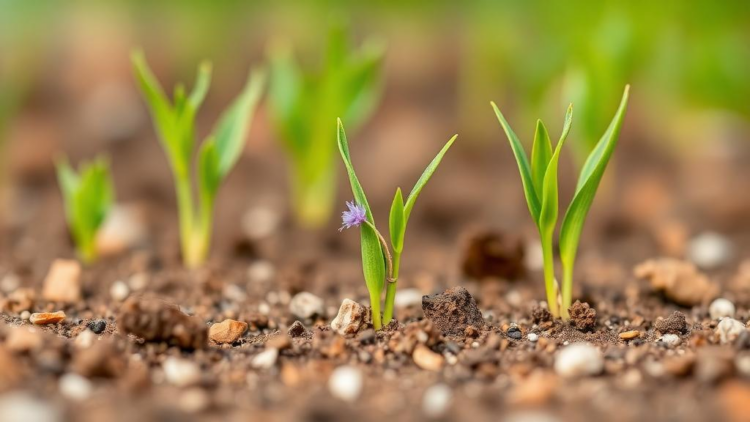
As heatwaves scorch farmland, soils grow saltier and heavy metals linger in the ground, agriculture is running out of easy answers. A review published in the journal Crop Health argues that one of the most promising tools may be a molecule so small and so ordinary that it has been hiding in plain sight: glycine betaine, a trimethyl derivative of the amino acid glycine. The paper, authored by Fei Zhao, Jinyan Luo, Ezzeldin Ibrahim and colleagues, synthesizes decades of work on how this compatible solute protects plants and microbes from abiotic stress, and lays out a roadmap for producing it sustainably through genetic engineering rather than polluting chemistry or seasonal crop extraction.
Glycine betaine is found in nearly all living organisms, where it acts as an osmoregulator, a methyl donor and even a direct nutrient for microbes. Its agricultural appeal stems from a combination of excellent biocompatibility, a favorable carbon-to-nitrogen ratio and the ability to accumulate to high concentrations inside cells without disrupting biochemistry. When crops such as rice and potato receive exogenous betaine on their leaves or roots, their tolerance to salinity, drought, heat and cold measurably improves. The review’s central claim is that betaine matters twice over: it hardens the crops themselves, and it hardens the living microorganisms that make up the next generation of eco-friendly microbial fertilizers.
The protective chemistry is elegant. Under salt stress, the main threat is osmotic: extracellular pressure rises and cells risk losing water. Betaine accumulation rebalances internal and external osmotic pressure, preventing dehydration. It also interacts with phospholipid molecules in cell membranes, lowering the phase transition temperature of membrane lipids and preserving the fluidity needed for transport and signaling. Enzymes, too, benefit; betaine stabilizes their molecular structures so they keep functioning in conditions that would otherwise denature them. In one cited experiment, lettuce grown under 100 millimolar sodium chloride stress and treated with 25 millimolar betaine showed higher total antioxidant and phenol contents, altered antioxidant enzyme activity and shifted organic acid and amino acid profiles compared with untreated plants.
Drought tells a similar story with an added villain: reactive oxygen species. Betaine helps cells maintain osmotic balance, protects membrane integrity, sustains enzyme activity and boosts antioxidant defenses. When microbial fertilizers containing betaine-producing or betaine-supported microbes are applied to arid soils, the microorganisms can multiply into robust communities that reshape root morphology and transporter activity, increasing plant uptake of nitrate and phosphate. These microbes also secrete growth-regulating compounds such as indoleacetic acid, cytokinin and ACC deaminase. In sugarcane seedlings under water deficit, foliar betaine spraying raised stomatal conductance, transpiration, photosynthesis, the maximum quantum efficiency of photosystem II and leaf water potential, while reducing photoinhibition. Seedlings grown from betaine-treated seeds survived drought better overall.
Heat stress poses a different problem: keeping membranes fluid and proteins correctly folded. Betaine prevents membrane lipid peroxidation, acts as a chemical chaperone that mitigates protein misfolding, and maintains the hydration layer around proteins. It also steadies energy metabolism, keeping intracellular ATP levels relatively stable through increased glycogen synthesis and balanced carbon flow. For microbial fertilizer producers, moderate betaine addition during fermentation improves both yield and the microbes’ resilience to high temperatures, and in the field it helps fertilizers stay effective through hot summers. A three-year study by Chowdhury and colleagues found that split foliar applications of potassium nitrate and betaine outperformed single high-dose sprays in wheat, protecting flag-leaf chlorophyll and membrane integrity throughout the post-anthesis period.
Heavy metals add yet another layer of cellular danger, from DNA mutations to protein mismatches and oxidative bursts. Betaine helps organisms preferentially retain beneficial ions while limiting heavy metal accumulation, upregulating genes for metal transporter proteins and antioxidant enzymes and forming chelators with metal ions. Microbial fertilizers treated with betaine survived better in contaminated soils, and remediated plants developed longer roots with greater surface area, improving uptake of nitrogen, phosphorus and potassium. When sugar beet grew in soil contaminated with 50 milligrams per kilogram of cadmium and 100 milligrams per kilogram of lead, 1 millimolar foliar betaine significantly raised antioxidant content and activity in root and stem tissues. Betaine application even increased soil microbial diversity and the abundance of beneficial populations, partially restoring ecological function.
Where does the betaine come from? Today, two industrial routes dominate in China. Chemical synthesis reacts chloroacetic acid with trimethylamine under alkaline conditions, delivering high purity at scale but carrying environmental pollution risks and difficult purification. Natural extraction, mainly from sugar beet molasses, is safer and favored in pharmaceutical and cosmetic markets, but it is hostage to geography and season, with complex separation steps and unstable supply. The review champions two greener alternatives: engineering the betaine pathway directly into crop plants, which eliminates extraction altogether, and fermenting it with engineered microorganisms, which can run continuously year-round with simple downstream processing.
The biosynthetic logic splits into two routes. The choline oxidation pathway, used by plants, proceeds in two steps: choline monooxygenase converts choline to betaine aldehyde, and betaine aldehyde dehydrogenase finishes the job. CMO is the rate-limiting enzyme, its expression tuned by drought, salinity and phytohormone signals. In E. coli, the parallel system uses choline dehydrogenase encoded by betA and BADH encoded by betB, while certain Arthrobacter species shortcut the route with a single choline oxidase. The glycine methylation pathway, rarer and found mainly in extremophiles, adds three methyl groups from S-adenosylmethionine via the enzymes GSMT and SDMT. It is energetically brutal, costing roughly 12 ATP equivalents per methyl cycle, which is why only halophiles and a handful of others use it, sometimes as a backup when choline is scarce.
Genetic engineering has already delivered striking results. Since the BADH gene was first cloned from spinach in 1990, researchers have transferred choline-pathway genes into dicots such as tomato, tobacco, sweet potato and Arabidopsis, and monocots including rice, maize, sugarcane and wheat, raising betaine content to as much as 40 milligrams per gram dry weight and boosting stress tolerance. On the methylation side, transferring GSMT and SDMT from the cyanobacterium Aphanothece halophytica into E. coli raised betaine levels two- to four-and-a-half-fold, and methylation genes from halophilic archaea and algae have hardened rice, cotton, Arabidopsis and Jatropha against salt, drought and cold. Engineered E. coli carrying betaine genes from Halomonas elongata or Halobacillus dabanensis synthesized betaine under high salinity, and recombinant Pseudomonas with cyanobacterial methyltransferases withstood 400 millimolar salt and 15-degree temperatures.
The review’s forward-looking section proposes three strategies to push engineered microbes further. First, re-edit the synthetic pathway: integrate stress-derived key genes into the chassis genome by homologous recombination and use CRISPR to knock out competing pathways, such as deleting glyA so glycine stays abundant for betaine synthesis. Second, apply promoter engineering, screening and mutagenizing promoter and ribosome binding site sequences to maximize expression. Third, shore up energy supply, since methylation devours ATP and choline oxidation consumes NAD+, suggesting overexpression of ATP synthase, balancing carbon flow between the TCA cycle and glycine synthesis, and cofactor engineering via pntAB to regenerate NAD+. Integrated into plant growth-promoting rhizobacteria, these tweaks could yield fertilizer microbes that colonize hostile soils, survive longer and shield crops through the mounting extremes of a changing climate, a quiet molecular ally for sustainable farming.
Subject of Research: Metabolic engineering of glycine betaine biosynthesis to enhance abiotic stress tolerance in crops and microorganisms
Article Title: Engineering stress resistance: advances in glycine betaine production for sustainable agriculture
Article References: Zhao, F., Luo, J., Ibrahim, E., Chen, L., Shen, Y., Ibrahim, M., Alonazi, W. B., Lu, J., Luo, Y., & Wu, H. (2025). Engineering stress resistance: advances in glycine betaine production for sustainable agriculture. Crop Health, 3(1), Article 5. https://doi.org/10.1007/s44297-025-00044-5
Image Credits: AI Generated
DOI: 10.1007/s44297-025-00044-5
Keywords: glycine betaine, abiotic stress, osmolyte, metabolic engineering, microbial fertilizers, salt tolerance, drought tolerance, choline oxidation, glycine methylation, genetic engineering, sustainable agriculture, plant biotechnology
Cite Scienmag News
APA
MLA
Chicago
Alan Morgan. (October 3, 2026). How a Tiny Osmolyte Could Shield Crops From Salt, Drought and Heat. Scienmag. https://scienmag.com/how-a-tiny-osmolyte-could-shield-crops-from-salt-drought-and-heat/
Alan Morgan. “How a Tiny Osmolyte Could Shield Crops From Salt, Drought and Heat.” Scienmag, 3 October 2026, https://scienmag.com/how-a-tiny-osmolyte-could-shield-crops-from-salt-drought-and-heat/. Accessed 3 October 2026.
Alan Morgan. “How a Tiny Osmolyte Could Shield Crops From Salt, Drought and Heat.” Scienmag. October 3, 2026. https://scienmag.com/how-a-tiny-osmolyte-could-shield-crops-from-salt-drought-and-heat/
Copy citation
Download RIS
Tags: abiotic stressabiotic stress mitigation in agriculturebiocompatible plant additivescholine oxidationdrought toleranceenvironmental impact of crop protection methodsGenetic Engineeringgenetic engineering for crop resilienceglycine betaineGlycine betaine in crop stress toleranceglycine methylationimproving crop tolerance to heat and coldmetabolic engineeringmicrobe-nutrient interactions in plantsmicrobial fertilizersnatural plant stress defense mechanismsosmolyteosmolytes for drought and salt resistanceplant biotechnologyrole of osmolytes in plant healthsalt tolerancesoil salinity and heavy metal stress mitigationsustainable agriculturesustainable production of plant protectants