• HOME
  • NEWS
  • EXPLORE
    • CAREER
      • Companies
      • Jobs
    • EVENTS
    • iGEM
      • News
      • Team
    • PHOTOS
    • VIDEO
    • WIKI
  • BLOG
  • COMMUNITY
    • FACEBOOK
    • INSTAGRAM
    • TWITTER
Tuesday, September 1, 2026
BIOENGINEER.ORG
No Result
View All Result
  • Login
  • HOME
  • NEWS
  • EXPLORE
    • CAREER
      • Companies
      • Jobs
        • Lecturer
        • PhD Studentship
        • Postdoc
        • Research Assistant
    • EVENTS
    • iGEM
      • News
      • Team
    • PHOTOS
    • VIDEO
    • WIKI
  • BLOG
  • COMMUNITY
    • FACEBOOK
    • INSTAGRAM
    • TWITTER
  • HOME
  • NEWS
  • EXPLORE
    • CAREER
      • Companies
      • Jobs
        • Lecturer
        • PhD Studentship
        • Postdoc
        • Research Assistant
    • EVENTS
    • iGEM
      • News
      • Team
    • PHOTOS
    • VIDEO
    • WIKI
  • BLOG
  • COMMUNITY
    • FACEBOOK
    • INSTAGRAM
    • TWITTER
No Result
View All Result
Bioengineer.org
No Result
View All Result
Home NEWS Science News Chemistry

How a cup of water can unlock the secrets of our Universe

Bioengineer by Bioengineer
August 23, 2023
in Chemistry
Reading Time: 3 mins read
0
Image
Share on FacebookShare on TwitterShare on LinkedinShare on RedditShare on Telegram

Researchers from Queen Mary University of London have made a discovery that could change our understanding of the universe. In their study published in Science Advances, they reveal, for the first time, that there is a range in which fundamental constants can vary, allowing for the viscosity needed for life processes to occur within and between living cells. This is an important piece of the puzzle in determining where these constants come from and how they impact life as we know it. 
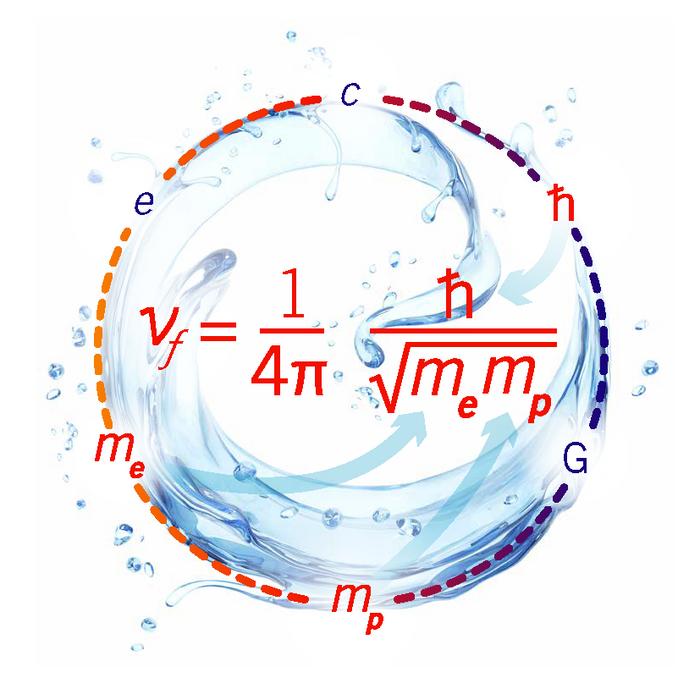
Image

Credit: thehackneycollective.com

Researchers from Queen Mary University of London have made a discovery that could change our understanding of the universe. In their study published in Science Advances, they reveal, for the first time, that there is a range in which fundamental constants can vary, allowing for the viscosity needed for life processes to occur within and between living cells. This is an important piece of the puzzle in determining where these constants come from and how they impact life as we know it. 

In 2020, the same team found that the viscosity of liquids is determined by fundamental physical constants, setting a limit on how runny a liquid can be. Now this result is taken into the realm of life sciences. 

Fundamental physical constants shape the fabric of the universe we live in. Physical constants are quantities with a value that is generally believed to be both universal in nature and to remain unchanged over time – for example the mass of the electron. They govern nuclear reactions and can lead to the formation of molecular structures essential to life, but their origin is unknown. This research might bring scientists one step closer to determining where these constants come from. 

“Understanding how water flows in a cup turns out to be closely related to the grand challenge to figure out fundamental constants. Life processes in and between living cells require motion and it is viscosity that sets the properties of this motion. If fundamental constants change, viscosity would change too impacting life as we know it. For example, if water was as viscous as tar life would not exist in its current form or not exist at all. This applies beyond water, so all life forms using the liquid state to function would be affected.” 

“Any change in fundamental constants including an increase or decrease would be equally bad news for flow and for liquid-based life. We expect the window to be quite narrow: for example, viscosity of our blood would become too thick or too thin for body functioning with only a few per cent change of some fundamental constants such as the Planck constant or electron charge.” Professor of Physics Kostya Trachenko said. 

Surprisingly, the fundamental constants were thought to be tuned billions of years ago to produce heavy nuclei in stars and back then life as we know it today didn’t exist. There was no need for these constants to be fine-tuned at that point to also enable cellular life billions of years later, and yet these constants turn out to be bio-friendly to flow in and between living cells. 

An accompanying conjecture is that multiple tunings may have been involved and this then suggests a similarity to biological evolution where traits were acquired independently. Through evolutionary mechanisms, fundamental constants may be the result of nature arriving at sustainable physical structures. It remains to be seen how the principles of evolution can be helpful to understand the origin of fundamental constants.


Journal

Science Advances

DOI

10.1126/sciadv.adh9024

Article Title

Constraints on fundamental physical constants from bio-friendly viscosity and diffusion

Article Publication Date

23-Aug-2023

Share12Tweet8Share2ShareShareShare2

Related Posts

β-Sitosterol from Ipomoea carnea Jacq. As a promising anti-inflammatory agent: Evidence from in silico modeling and in vitro validation

β-Sitosterol from Ipomoea carnea Jacq. As a promising anti-inflammatory agent: Evidence from in silico modeling and in vitro validation

August 31, 2026
Graded membranes point to a sustainable route for refining complex petroleum

Graded membranes point to a sustainable route for refining complex petroleum

August 31, 2026

Round-robin tests quantify catalyst activity and deactivation in CO2 hydrogenation modelling

August 30, 2026

Researchers reveal guiding principles for electrochemical synthesis of multimetallic nanocrystals

August 30, 2026

POPULAR NEWS

  • β-Sitosterol from Ipomoea carnea Jacq. As a promising anti-inflammatory agent: Evidence from in silico modeling and in vitro validation

    29 shares
    Share 12 Tweet 7
  • Design, fabrication and characterization of a wearable Fiber Bragg grating sensor for cardiorespiratory monitoring using finger plethysmography

    29 shares
    Share 12 Tweet 7
  • KAIST opens the era of industrial-scale microbial foods, proposing growth strategies for the next-generation protein market

    29 shares
    Share 12 Tweet 7
  • Virologist awarded $2 million NIH grant to investigate how virus-infected cells live and die

    29 shares
    Share 12 Tweet 7

About

We bring you the latest biotechnology news from best research centers and universities around the world. Check our website.

Follow us

Recent News

β-Sitosterol from Ipomoea carnea Jacq. As a promising anti-inflammatory agent: Evidence from in silico modeling and in vitro validation

Design, fabrication and characterization of a wearable Fiber Bragg grating sensor for cardiorespiratory monitoring using finger plethysmography

KAIST opens the era of industrial-scale microbial foods, proposing growth strategies for the next-generation protein market

Subscribe to Blog via Email

Enter your email address to subscribe to this blog and receive notifications of new posts by email.

Join 85 other subscribers
  • Contact Us

Bioengineer.org © Copyright 2023 All Rights Reserved.

Welcome Back!

Login to your account below

Forgotten Password?

Retrieve your password

Please enter your username or email address to reset your password.

Log In
No Result
View All Result
  • Homepages
    • Home Page 1
    • Home Page 2
  • News
  • National
  • Business
  • Health
  • Lifestyle
  • Science

Bioengineer.org © Copyright 2023 All Rights Reserved.