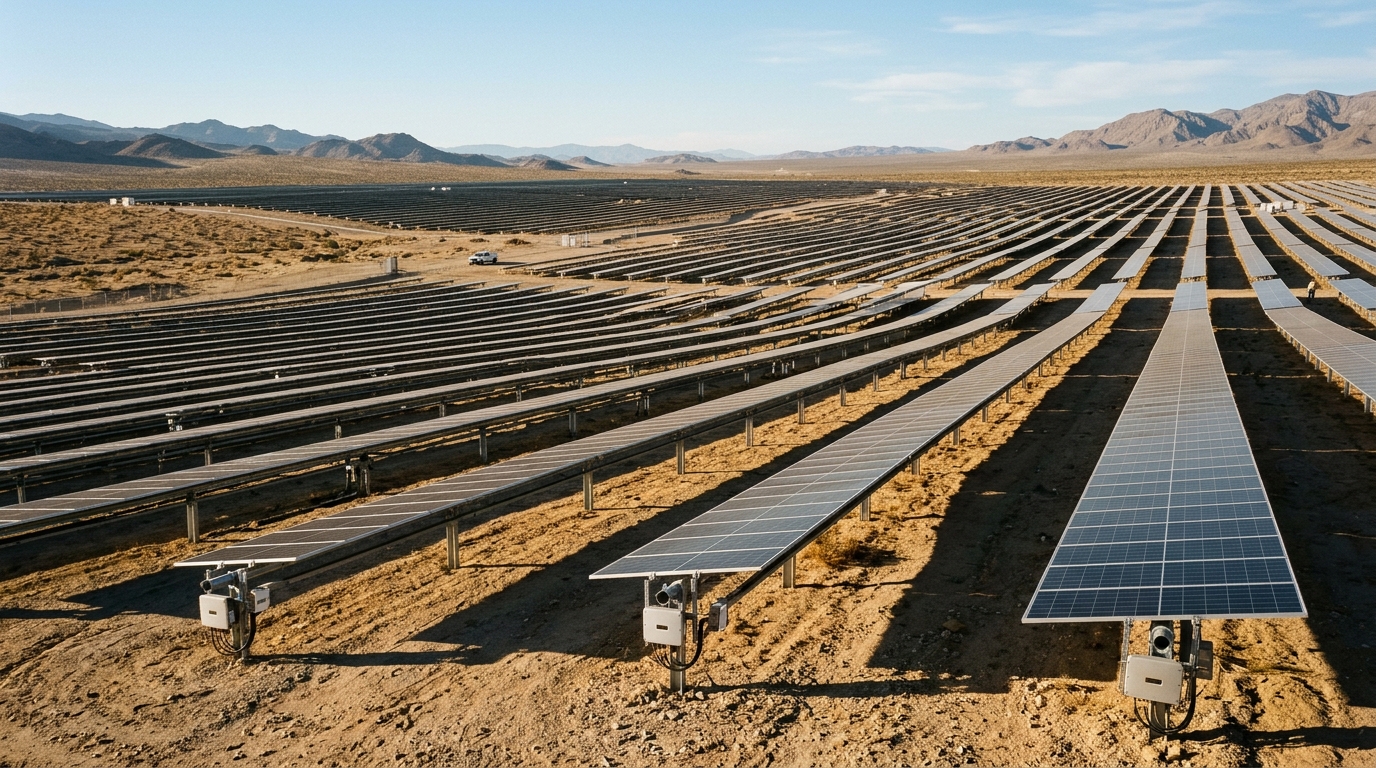
Researchers at the University of Khartoum have reported that photovoltaic systems in hot desert climates can maintain remarkably stable annual power output, despite the known adverse effects of high ambient temperatures on solar panel efficiency. The study, published in the journal Green Technology, Resilience, and Sustainability, monitored a grid-connected 5 kW photovoltaic system installed on the rooftop of the Energy Research Center at the University of Khartoum, Sudan. The primary finding indicates that the negative impact of high temperatures on module efficiency is effectively compensated by the region’s high solar irradiation levels, leading to a consistent energy yield throughout the year.
The research team, led by Samah M. Hashim and Rayan I. Hassan, collected data from April 2017 to March 2018. This one-year monitoring period allowed for a comprehensive analysis of the system’s performance under the specific climatic conditions of Khartoum, which is classified as having a hot arid desert climate. The system consisted of 20 solar modules, each rated at 250 Wp, arranged in two strings, and an SMA inverter that converted the direct current to grid-compliant three-phase power. The total energy produced by the system during the study period was 8,343 kWh.
A central technical challenge in photovoltaic engineering is the negative temperature coefficient of solar cells, which causes a decrease in power generation as the cell temperature rises. Literature cited in the study suggests that this efficiency loss can amount to approximately 0.45% per degree Celsius for certain materials. In hot regions like Khartoum, where the average ambient temperature reached 31.1 °C, this temperature-induced degradation is a significant factor that traditionally leads to lower expected performance ratios compared to cooler climates.
However, the study found that the average final yield of the Khartoum system was 4.57 kWh/kWp, a value that is competitive with systems in other locations. The final yield is a standard metric that normalizes the system’s AC energy output by its rated DC power, providing a measure of overall system performance relative to weather conditions. The performance ratio, which indicates the overall effect of losses due to temperature and system inefficiencies, was calculated at 0.79. This value is notably higher than the range of 0.65 to 0.70 previously reported by Kawajiri et al. for similar regions, suggesting that ground-based data may offer a different perspective than satellite-derived estimates.
The stability of the power output was a key observation, characterized by a standard deviation of only 0.21 from the average final yield. The researchers attributed this stability to a compensatory mechanism between temperature and irradiation. During the summer months, high irradiation levels offset the efficiency losses caused by high temperatures. Conversely, in the winter months, although irradiation levels were relatively lower, the cooler temperatures helped maintain higher module efficiency. This balance resulted in a low seasonal index of 1.2, indicating minimal variation in monthly output.
The study also highlighted the geographic and climatic factors contributing to this stability. Additionally, the region experiences very few cloudy days, ensuring a consistent supply of solar radiation. The annual deviation of temperature and irradiation is small, which further supports the consistent performance of the photovoltaic system.
To contextualize these findings, the researchers compared the Khartoum system’s performance with data from other countries with different climates. The comparison included systems in cooler regions, such as Ireland, and other hot regions, such as Djibouti. In Ireland, the final yield varied significantly, from 1.20 kWh/kWp in February to 4.6 kWh/kWp in August, reflecting the strong seasonal dependence on solar input in temperate climates. In contrast, Djibouti, which shares a similar latitude with Khartoum, exhibited relatively constant power generation throughout the year, supporting the hypothesis that hot, dry regions can offer stable photovoltaic output.
The data from the study suggests that the conventional view of hot climates as detrimental to photovoltaic performance may need to be reconsidered. While high temperatures do reduce the efficiency of individual solar cells, the overall system performance in these regions can be robust due to the abundance of solar radiation. The study emphasizes the importance of using ground-based meteorological data rather than relying solely on satellite data, which may not capture the local nuances of temperature and irradiation interactions. This distinction is crucial for accurate feasibility studies and system sizing in similar environments.
The implications of these findings extend to the design and operation of solar power stations in hot desert areas. The stability of the output power implies that the need for large-scale seasonal energy storage may be reduced. Daily energy storage might be sufficient to ensure reliable power generation, as the system does not experience the deep winter troughs seen in temperate regions.
The technical analysis in the paper also revisits the empirical correlations between temperature, irradiance, and cell efficiency. The study references established models that describe how module efficiency changes with cell temperature and solar irradiance. These models help explain the observed balance between high temperature and high irradiation in the Khartoum system. By understanding these physical relationships, engineers can better predict system performance and optimize the design of photovoltaic installations for specific climatic conditions.
In conclusion, the study provides valuable insights into the behavior of photovoltaic systems in hot desert climates. It demonstrates that high temperatures do not necessarily lead to poor annual performance if accompanied by high solar irradiation. The stable output observed in Khartoum challenges the notion that hot climates are less suitable for solar energy generation.
Subject of Research: Impact of high temperature on PV productivity in hot desert climates
Article Title: Impact of high temperature on PV productivity in hot desert climates
Article References: Hashim, S. M., & Hassan, R. I. (2022). Impact of high temperature on PV productivity in hot desert climates. Green Technology, Resilience, and Sustainability, 2(1), Article 9. https://doi.org/10.1007/s44173-022-00009-9
Image Credits: AI Generated
DOI: 10.1007/s44173-022-00009-9
Keywords: Impact, high, temperature, productivity, desert, climates, scientific research
News Source: Denise Maddox. (November 8, 2026). Hot Desert PV Systems Show Stable Annual Output. Scienmag.