• HOME
  • NEWS
  • EXPLORE
    • CAREER
      • Companies
      • Jobs
    • EVENTS
    • iGEM
      • News
      • Team
    • PHOTOS
    • VIDEO
    • WIKI
  • BLOG
  • COMMUNITY
    • FACEBOOK
    • INSTAGRAM
    • TWITTER
Saturday, February 7, 2026
BIOENGINEER.ORG
No Result
View All Result
  • Login
  • HOME
  • NEWS
  • EXPLORE
    • CAREER
      • Companies
      • Jobs
        • Lecturer
        • PhD Studentship
        • Postdoc
        • Research Assistant
    • EVENTS
    • iGEM
      • News
      • Team
    • PHOTOS
    • VIDEO
    • WIKI
  • BLOG
  • COMMUNITY
    • FACEBOOK
    • INSTAGRAM
    • TWITTER
  • HOME
  • NEWS
  • EXPLORE
    • CAREER
      • Companies
      • Jobs
        • Lecturer
        • PhD Studentship
        • Postdoc
        • Research Assistant
    • EVENTS
    • iGEM
      • News
      • Team
    • PHOTOS
    • VIDEO
    • WIKI
  • BLOG
  • COMMUNITY
    • FACEBOOK
    • INSTAGRAM
    • TWITTER
No Result
View All Result
Bioengineer.org
No Result
View All Result
Home NEWS Science News Biology

Hot cities spell bad news for bees

Bioengineer by Bioengineer
June 26, 2017
in Biology
Reading Time: 3 mins read
0
Share on FacebookShare on TwitterShare on LinkedinShare on RedditShare on Telegram
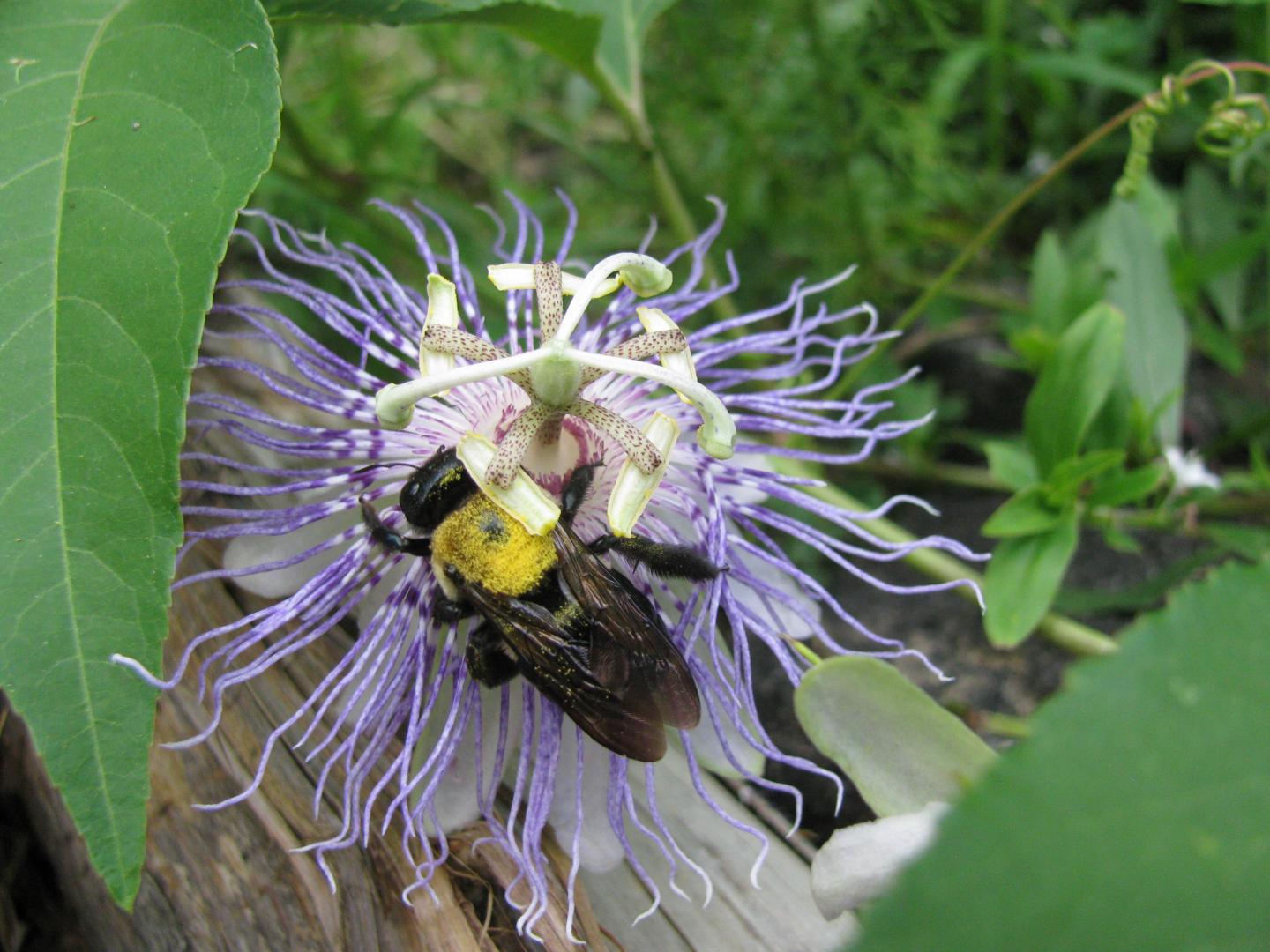
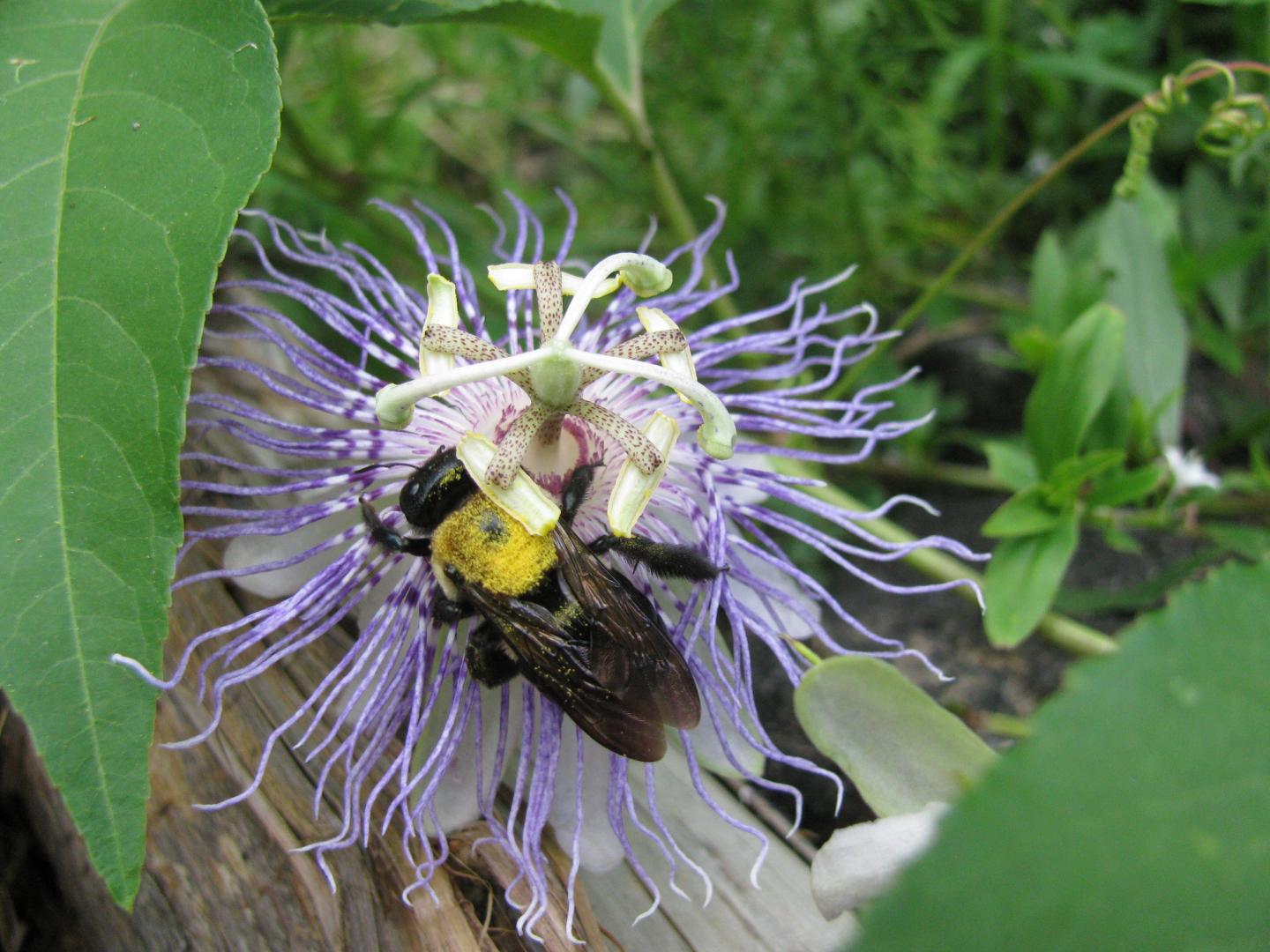
IMAGE

Credit: Elsa Youngsteadt

A new study from North Carolina State University finds that common wild bee species decline as urban temperatures increase.

"We looked at 15 of the most common bee species in southeastern cities and – through fieldwork and labwork – found that increasing temperatures in urban heat islands will have a negative effect on almost all of them," says Steve Frank, an associate professor of entomology at NC State and co-author of a paper describing the work.

"What's exciting is that we were able to use a relatively easy lab test on individual bees to predict how whole populations will fare at higher temperatures in urban areas," says Elsa Youngsteadt, a research associate at NC State and co-lead author of the paper. "This is a tool we can use for additional bee species in the future, giving us insights into how urban warming affects ecosystems."

In the laboratory portion of the study, researchers established the critical thermal maximum (CTmax) for all 15 bee species. This involved placing the bees in tubes and gradually increasing the temperature until each bee became incapacitated. The most heat-tolerant species included the carpenter bees Xylocopa virginica and Ceratina strenua, with CTmax values of 50 to 51°C (122 to 124°F). Some of the least heat-tolerant species included a green sweat bee (Agapostemon virescens) and a bumble bee (Bombus bimaculatus), each with a CTmax below 45°C (113°F). It's worth noting that the CTmax is the temperature at which an insect is incapacitated, but the insect is adversely affected at lower temperatures and may leave a habitat or reproduce less.

"After measuring the CTmax values, we still didn't know whether the way individual bees responded to temperature in the lab would correspond to how bee populations respond to higher temperatures in messy, real-world habitats," Youngsteadt says.

To address this question, the researchers sampled bee populations 11 times over two years at 18 urban sites in Wake County, North Carolina.

The researchers found that the response of the 15 bee species studied in the lab corresponded to each species' abundance in urban yards. In other words, the lower a species' CTmax, the more its numbers declined with urban warming.

"This is certainly relevant for urban heat islands, but it may also help us understand potential effects of global climate change on bee species," Youngsteadt says. "If species that have a lower CTmax are most sensitive to urban warming, they may also be most sensitive to warming in other environments."

The paper, "Physiological thermal limits predict differential responses of bees to urban heat-island effects," is published in the Royal Society journal Biology Letters. April Hamblin, a former graduate student at NC State, is co-lead author. Margarita López-Uribe, a postdoctoral researcher at NC State, is a co-author. The work was done with support from USDA's National Institute of Food and Agriculture, under grant number 2013-02476; and from the U.S. Geological Survey under cooperative agreements G11AC20471 and G13AC00405.

###

Media Contact

Matt Shipman
[email protected]
919-515-6386
@NCStateNews

Why Not Us?

Original Source

https://news.ncsu.edu/2017/06/hot-city-bees-2017/ http://dx.doi.org/10.1098/rsbl.2017.0125

############

Story Source: Materials provided by Scienmag

Share12Tweet8Share2ShareShareShare2

Related Posts

New Study Uncovers Mechanism Behind Burn Pit Particulate Matter–Induced Lung Inflammation

New Study Uncovers Mechanism Behind Burn Pit Particulate Matter–Induced Lung Inflammation

February 6, 2026

DeepBlastoid: Advancing Automated and Efficient Evaluation of Human Blastoids with Deep Learning

February 6, 2026

Navigating the Gut: The Role of Formic Acid in the Microbiome

February 6, 2026

AI-Enhanced Optical Coherence Photoacoustic Microscopy Revolutionizes 3D Cancer Model Imaging

February 6, 2026
Please login to join discussion

POPULAR NEWS

  • Robotic Ureteral Reconstruction: A Novel Approach

    Robotic Ureteral Reconstruction: A Novel Approach

    82 shares
    Share 33 Tweet 21
  • Digital Privacy: Health Data Control in Incarceration

    63 shares
    Share 25 Tweet 16
  • Study Reveals Lipid Accumulation in ME/CFS Cells

    57 shares
    Share 23 Tweet 14
  • Breakthrough in RNA Research Accelerates Medical Innovations Timeline

    53 shares
    Share 21 Tweet 13

About

We bring you the latest biotechnology news from best research centers and universities around the world. Check our website.

Follow us

Recent News

Palmitoylation of Tfr1 Drives Platelet Ferroptosis and Exacerbates Liver Damage in Heat Stroke

Oxygen-Enhanced Dual-Section Microneedle Patch Improves Drug Delivery and Boosts Photodynamic and Anti-Inflammatory Treatment for Psoriasis

Scientists Identify SARS-CoV-2 PLpro and RIPK1 Inhibitors Showing Potent Synergistic Antiviral Effects in Mouse COVID-19 Model

Subscribe to Blog via Email

Enter your email address to subscribe to this blog and receive notifications of new posts by email.

Join 73 other subscribers
  • Contact Us

Bioengineer.org © Copyright 2023 All Rights Reserved.

Welcome Back!

Login to your account below

Forgotten Password?

Retrieve your password

Please enter your username or email address to reset your password.

Log In
No Result
View All Result
  • Homepages
    • Home Page 1
    • Home Page 2
  • News
  • National
  • Business
  • Health
  • Lifestyle
  • Science

Bioengineer.org © Copyright 2023 All Rights Reserved.