


A molecular survey of horses in central and western Inner Mongolia has uncovered two species of the diarrheal parasite Cryptosporidium circulating in local herds, including a subtype never before reported in the region. The study, published in Frontiers in Veterinary Science, also documented the intestinal microsporidian Enterocytozoon bieneusi in the same animals, with every positive sample belonging to a single genotype that has been linked to broad host ranges and potential zoonotic significance. The findings offer the most detailed picture yet of these two enteric pathogens in horses across this major horse-breeding region of China.
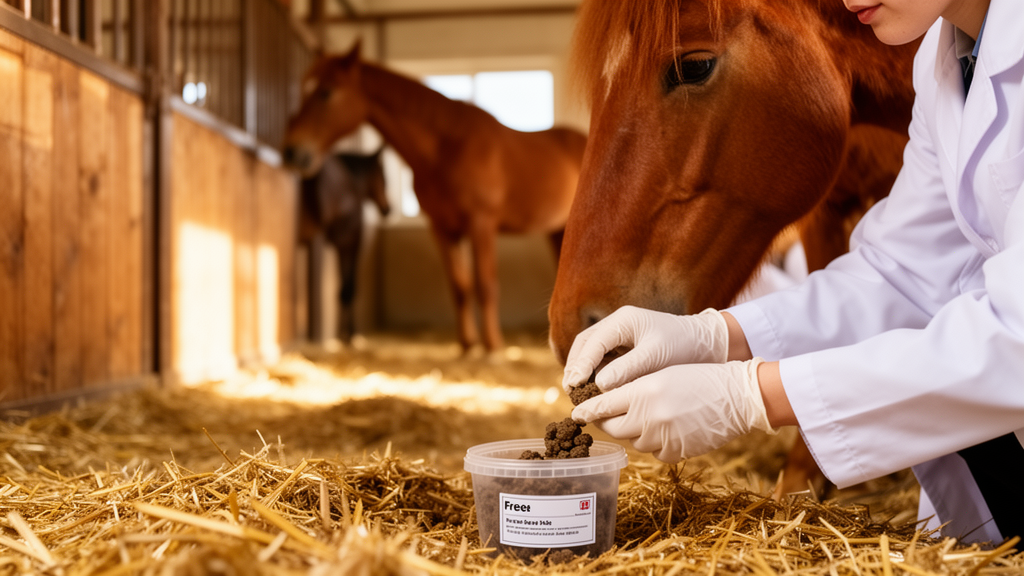
Researchers collected 325 horse fecal samples between May and September 2025 from three sites: Otog Banner in Ordos City, and Zhenglan Banner and Abaga Banner in Xilingol League. Each sample of roughly 20 grams was preserved in 2.5% potassium dichromate and stored at 4°C until analysis. The team used nested polymerase chain reaction assays targeting the small subunit ribosomal RNA gene to detect Cryptosporidium species and a partial fragment of the internal transcribed spacer region to identify E. bieneusi. Positive C. hominis samples were further subtyped at the gp60 gene, and phylogenetic and haplotype network analyses were used to place the new sequences in context with previously reported equid-derived sequences from China and elsewhere.
The overall prevalence of Cryptosporidium spp. was 2.8%, with nine of 325 samples testing positive. E. bieneusi was detected in five samples, an overall prevalence of 1.5%. Geographic patterns were striking: all four Cryptosporidium-positive samples in Otog Banner were identified as C. parvum, giving that region the highest prevalence at 6.7%, while all five C. hominis infections and all five E. bieneusi detections occurred in Zhenglan Banner, where prevalence for both pathogens was 4.1%. No positive samples were found in Abaga Banner, despite it contributing the largest number of specimens at 144.
Sequence analysis of an approximately 580-base-pair fragment of the SSU rRNA gene confirmed two Cryptosporidium species among the nine positives: C. hominis accounted for 55.6% of detections and C. parvum for 44.4%. The gp60 gene was successfully amplified from all five C. hominis samples, revealing four isolates of subtype IkA18G1 and one of IkA19G1. The latter subtype has not previously been reported in Inner Mongolia, although it has been identified in Bactrian camels from Xinjiang. IkA18G1 has been found in Chinese racehorses. Ik subtype family members have also been documented in human infections, indicating that this subtype family occurs across multiple host species and may carry zoonotic potential.
Age and health status emerged as significant factors for Cryptosporidium infection. Foals aged one year or younger had a prevalence of 11.5%, compared with 1.1% in adult horses, an association with an odds ratio of 11.74 and a p-value of 0.0007. Diarrheic horses showed a prevalence of 16.1% versus 1.4% in non-diarrheic animals, with an odds ratio of 13.94 and a p-value of 0.0006. The authors note that Cryptosporidium infection can damage the intestinal epithelium and impair digestive and absorptive function, which may contribute to diarrhea in infected animals. No significant differences in E. bieneusi prevalence were observed across age or health-status groups.
Phylogenetic reconstruction of the C. hominis sequences showed two distinct branches. Three sequences clustered with a donkey-derived reference from Hohhot, China, with similarities ranging from 97.7 to 99.4%, while two others grouped with a horse-derived sequence from Anhui, China, at 98.1 and 96.9% similarity. Haplotype analysis identified eight haplotypes overall, with five present among the sequences from this study. The most common haplotype across all analyzed sequences, accounting for 33.3%, was not detected among the Inner Mongolian isolates, and the study haplotypes differed from it by 5 to 11 base pairs. This pattern suggests a degree of genetic diversity among C. hominis isolates from horses in the region, even though all belonged to the same gp60 subtype family.
For C. parvum, the four SSU rRNA sequences clustered with a donkey-derived sequence from Inner Mongolia, with similarities between 99.1 and 100%. Haplotype analysis identified five haplotypes, three of which were found in this study. The most common, Hap_1, accounted for 76.5% of all sequences analyzed. The other two differed from it by one and three nucleotide substitutions. The authors were unable to obtain gp60 subtype information for C. parvum because amplification was unsuccessful for all four positive samples, a limitation they acknowledge alongside the restricted geographic coverage, modest sample size, absence of longitudinal surveillance, and lack of adjustment for potential clustering effects associated with sampling from different farms and regions.
All five E. bieneusi sequences were identified as genotype horse1, a genotype previously detected in horses from Xinjiang, southwestern China, Chinese racehorse populations, and also reported in horses from Colombia, Algeria, and the Czech Republic. Phylogenetic analysis placed all horse1 sequences within Group 1, a clade that previous studies have considered to have high zoonotic potential because it contains numerous genotypes with broad host ranges. Haplotype network analysis showed that all sequences from this study belonged to Hap_1, the most common haplotype across all analyzed sequences at 93.8%, which differed from Hap_2 at eight nucleotide positions. The authors interpret this as evidence of a relatively conserved genetic structure for the horse1 genotype and suggest that Hap_1 may represent its predominant and widely distributed haplotype.
The study’s authors frame these results as baseline data for future molecular surveillance and for assessing potential public health risks at the human–animal interface. Horses and donkeys in the region are used for agricultural production, transportation, food production, and sporting and recreational activities, resulting in frequent close contact with humans. Both pathogens are transmitted primarily via the fecal–oral route and can cause diarrhea and malabsorption, with particularly severe consequences in children and immunocompromised individuals. In livestock, infection can lead to weight loss and impaired growth, and severe cases may result in mortality, particularly in young animals.
Inner Mongolia is one of China’s major horse-breeding regions, with a horse population that reached 848,000 in 2018, ranking first nationally. Previous surveys in Hohhot and Hailar had detected both pathogens in local horses but were limited by small sample sizes and restricted geographic coverage. By extending sampling to Otog, Zhenglan, and Abaga Banners, the new study provides a broader regional picture and identifies foals and diarrheic horses as priority groups for targeted surveillance and control programs. The authors emphasize that the identification of C. hominis and C. parvum, along with the horse1 genotype within Group 1, indicates potential zoonotic significance and underscores the need for continued monitoring of these enteric pathogens in horse populations across the region.
Subject of Research: Prevalence and genetic diversity of Cryptosporidium species and Enterocytozoon bieneusi in horses in Inner Mongolia, China
Article Title: Prevalence and genetic characterization of Cryptosporidium spp. and Enterocytozoon bieneusi in horses in central and western Inner Mongolia, China
Article References: Li, Y., Quan, J., Li, J., Luo, X., Mo, Z., Zhang, Q., Li, F., Zhao, Y., Chen, X., Du, X., & Gong, G. (2026). Prevalence and genetic characterization of Cryptosporidium spp. and Enterocytozoon bieneusi in horses in central and western Inner Mongolia, China. Frontiers in Veterinary Science, 13, Article 1988226. https://doi.org/10.3389/fvets.2026.1988226
Image Credits: AI Generated
DOI: 10.3389/fvets.2026.1988226
Keywords: Cryptosporidium, Enterocytozoon bieneusi, horses, Inner Mongolia, zoonotic pathogens, nested PCR, gp60 subtyping, C. hominis, C. parvum, horse1 genotype, haplotype analysis, diarrhea
News Source: William Thompson. (October 30, 2026). Horse Parasites in Inner Mongolia Reveal Zoonotic Cryptosporidium Strains. Scienmag.



