• HOME
  • NEWS
  • EXPLORE
    • CAREER
      • Companies
      • Jobs
    • EVENTS
    • iGEM
      • News
      • Team
    • PHOTOS
    • VIDEO
    • WIKI
  • BLOG
  • COMMUNITY
    • FACEBOOK
    • INSTAGRAM
    • TWITTER
Saturday, August 1, 2026
BIOENGINEER.ORG
No Result
View All Result
  • Login
  • HOME
  • NEWS
  • EXPLORE
    • CAREER
      • Companies
      • Jobs
        • Lecturer
        • PhD Studentship
        • Postdoc
        • Research Assistant
    • EVENTS
    • iGEM
      • News
      • Team
    • PHOTOS
    • VIDEO
    • WIKI
  • BLOG
  • COMMUNITY
    • FACEBOOK
    • INSTAGRAM
    • TWITTER
  • HOME
  • NEWS
  • EXPLORE
    • CAREER
      • Companies
      • Jobs
        • Lecturer
        • PhD Studentship
        • Postdoc
        • Research Assistant
    • EVENTS
    • iGEM
      • News
      • Team
    • PHOTOS
    • VIDEO
    • WIKI
  • BLOG
  • COMMUNITY
    • FACEBOOK
    • INSTAGRAM
    • TWITTER
No Result
View All Result
Bioengineer.org
No Result
View All Result
Home NEWS Science News Biology

Hormesis and paradoxical effects in plants upon exposure to formaldehyde are common phenomena

Bioengineer by Bioengineer
May 29, 2018
in Biology
Reading Time: 2 mins read
0
Share on FacebookShare on TwitterShare on LinkedinShare on RedditShare on Telegram
IMAGE

Credit: Lobachevsky University

For the first time, hormesis and paradoxical effects have been shown to occur commonly in plants upon exposure to formaldehyde, which is a widespread pollutant.

To assess the level of chemical pollution of the environment, different indicators of plant status are widely used as bioindicators, since plants have an attached lifestyle and are unable to avoid exposure to unfavorable factors.

Until recently, it was believed that in most cases, an increase in the level of pollution causes deterioration in the state of plants, so the values of the indicators of plant status reflect the quality of the environment.

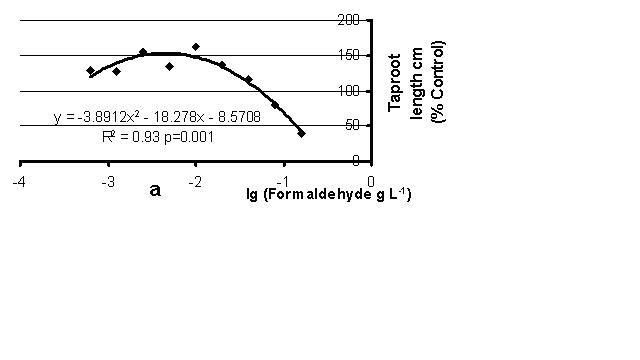
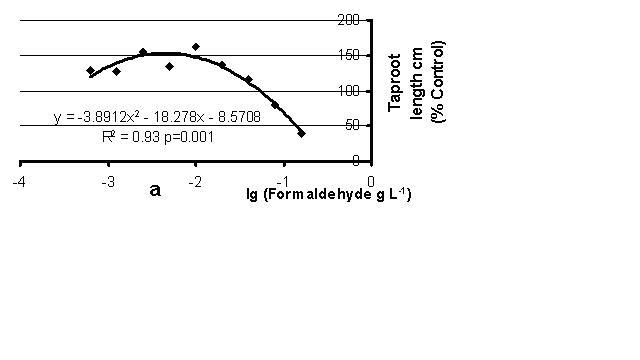
However, in recent years there has been growing recognition that the nonmonotonic responses of living organisms, when the direction of the organism's reaction changes with increasing strength of the acting factor, can occur quite often. These include hormesis and paradoxical effects. In case of hormesis, low doses of pollutants have a positive effect on the state of the living organism, while high doses cause a negative effect. Paradoxical effects include complex dose-effect relationships, when an increased dose of a toxicant results in a decrease in its damaging effect and, conversely, the damaging effect increases with a decrease in the toxicant dose.

Nonmonotonic changes in plant indicators used to determine the quality of the environment can result in an incorrect assessment of the pollution level. Therefore, it is important to know how often hormesis and paradoxical effects occur when plants are exposed to various pollutants.

Lobachevsky University biologists headed by Associate Professor of the Department of Ecology Elena Erofeeva have for the first time conducted a study of this problem for formaldehyde, one of most common environmental pollutants, which is released into the atmosphere as part of vehicle emissions and is often found in indoor air after evaporating from synthetic materials. According to researcher, a wide range of concentrations of this pollutant was investigated, from values close to lethal levels to those several orders of magnitude smaller.

&laquoFor all the plant parameters studied, nonmonotonic dose-effect relationships were established. Hormesis was revealed for growth parameters, while various variants of paradoxical effects were found for biochemical indicators», Elena Erofeeva notes.

The results of the study can contribute to improving bioindicative methods for environmental assessment based on the plant organism parameters. These results also shed new light on the patterns of plant adaptation to stressful environmental conditions. In the future, this can be used to develop methods for managing plant resistance and thus agricultural plant productivity.

###

Media Contact

Nikita Avralev
[email protected]

http://www.unn.ru/eng/

Related Journal Article

http://dx.doi.org/10.1007/s10646-018-1928-2

Share13Tweet8Share2ShareShareShare2

Related Posts

How Co-Transcriptional Splicing Is Detected, Regulated, and Harnessed for Therapy

How Co-Transcriptional Splicing Is Detected, Regulated, and Harnessed for Therapy

August 1, 2026
Roadkill may push shrinking hedgehog populations toward collapse, study warns

Roadkill may push shrinking hedgehog populations toward collapse, study warns

August 1, 2026

Cooperation May Hold the Key to Reproductive Success

August 1, 2026

New informatics tools transform biodiversity data into actionable policy insights

August 1, 2026
Please login to join discussion

POPULAR NEWS

  • Scientists Discover Path to Ultra-Low-Energy Data Storage

    29 shares
    Share 12 Tweet 7
  • QUANTUM Alliance Trial Investigates Bispecific Immunotherapy for Rare Leukemia

    29 shares
    Share 12 Tweet 7
  • Oxford chemists unlock Appel fluorination using potassium fluoride

    29 shares
    Share 12 Tweet 7
  • Nicotine E-Cigarettes Help Smokers Quit Traditional Cigarettes

    29 shares
    Share 12 Tweet 7

About

We bring you the latest biotechnology news from best research centers and universities around the world. Check our website.

Follow us

Recent News

Scientists Discover Path to Ultra-Low-Energy Data Storage

QUANTUM Alliance Trial Investigates Bispecific Immunotherapy for Rare Leukemia

Oxford chemists unlock Appel fluorination using potassium fluoride

Subscribe to Blog via Email

Enter your email address to subscribe to this blog and receive notifications of new posts by email.

Join 85 other subscribers
  • Contact Us

Bioengineer.org © Copyright 2023 All Rights Reserved.

Welcome Back!

Login to your account below

Forgotten Password?

Retrieve your password

Please enter your username or email address to reset your password.

Log In
No Result
View All Result
  • Homepages
    • Home Page 1
    • Home Page 2
  • News
  • National
  • Business
  • Health
  • Lifestyle
  • Science

Bioengineer.org © Copyright 2023 All Rights Reserved.