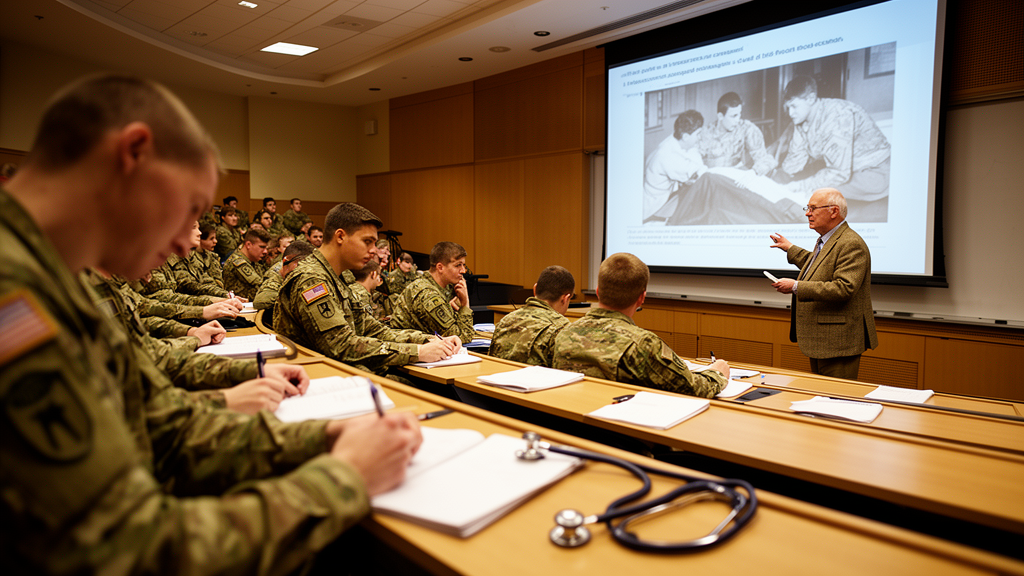
Medical students at a military medical school who took part in a seminar on medicine’s role in the Holocaust reported gains in their professional ethical development, according to a mixed methods study published in BMC Medical Education. The research, authored by Hedy S. Wald and Julie A. Kruse, evaluated an educational intervention delivered within a military medical school’s bioethics course and focused on how learning about physicians’ complicity in atrocities under Nazism and the Holocaust might shape the moral reasoning of future military physicians.
The seminar, entitled “The Role of Medicine in the Holocaust and its Contemporary Relevance: Sustaining Our Moral Compass, Countering Antisemitism in Medicine,” was implemented for all second-year students within a longitudinal 18-month pre-clerkship Medical Ethics course. In total, 173 medical students attended the session. The study used pre- and post-seminar surveys that combined quantitative items with short answer narrative reflections to assess the students’ reported professional ethical development.
Participation in the survey component varied. Of the 173 students who attended the seminar, 123 completed the pre-seminar survey, while 86 completed the post-seminar survey, corresponding to a post-seminar response rate of 69.9 percent.
The analyses were significant for students reporting that they had become knowledgeable about physicians’ role during the Nazi and Holocaust era and about those who demonstrated moral courage during that period.
Qualitative themes drawn from the students’ narrative reflections acknowledged the importance of understanding this history for preventing recurrent atrocities. Students also reflected on medicine’s legitimization of antisemitism during the era and on the moral responsibilities of physicians in future medical practice, with particular emphasis on the demands of military medicine.
The study’s background section situates the work within broader pressures on modern medicine. The authors note that ethical complexities in contemporary medicine are increasingly challenging amid technological advances and sociopolitical and economic pressures, and that dual loyalties in military medicine raise additional quandaries. They argue that curriculum fostering humanism, ethical vigilance, and moral reasoning should accompany clinical competencies in support of morally resilient professional identity formation.
Health humanities, including history taught within medical education, is described in the paper as a means of cultivating self-awareness, professionalism, and critical reflection that promotes moral development.
Based on their results, the authors conclude that learning about and reflecting on the personal relevance of medicine’s complicity in atrocities during Nazism and the Holocaust can serve as a moral anchor and a vehicle for reflection when addressing contemporary challenges and dilemmas of medicine, military-specific medicine, and global citizenship. They add that the results support calls for this history to be required in all health professions education to promote morally responsible healthcare, research, public policy, and global citizenship, including eliminating antisemitism and all forms of discrimination in healthcare and health professions education.
The findings rest on self-reported survey data from a single seminar at one military medical school, with a post-seminar response rate below seventy percent, so they describe reported impact rather than measured long-term behavioral change. The article was published as an open access research paper on 20 October 2026 and is being shared early as a peer-reviewed, accepted version subject to further edits before the final version of record appears.
Subject of Research: The impact of a Holocaust medicine seminar on the professional ethical development of military medical students
Article Title: Exploring impact of learning about medicine’s role in the Holocaust and its current implications for military medical education: History-informed ethics and countering antisemitism in medicine
Article References: Wald, H. S., & Kruse, J. A. (2026). Exploring impact of learning about medicine’s role in the Holocaust and its current implications for military medical education: History-informed ethics and countering antisemitism in medicine. BMC Medical Education. https://doi.org/10.1186/s12909-026-10659-z
Image Credits: AI Generated
DOI: 10.1186/s12909-026-10659-z
Keywords: medical education, Holocaust, military medicine, bioethics, antisemitism, professional identity formation, health humanities, moral courage, mixed methods, survey research, BMC Medical Education, Exploring
News Source: Courtney Benton. (October 28, 2026). Holocaust Medicine Seminar Associated With Reported Ethical Gains Among Military Medical Students. Scienmag.