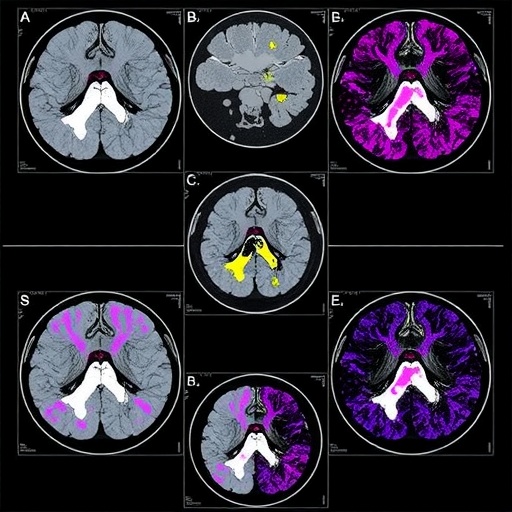
A groundbreaking development in the realm of medical diagnosis has emerged from the laboratories of The Hong Kong University of Science and Technology (HKUST). Spearheaded by Assistant Professor LI Xiaomeng of the Department of Electronic and Computer Engineering and Associate Director of the Center for Medical Imaging and Analysis, the research team has unveiled an innovative artificial intelligence (AI) pathology analysis system known as PRET—Pan-cancer Recognition without Example Training. This novel system radically transforms the landscape of AI-assisted cancer diagnosis by enabling accurate recognition across multiple cancer types using only a handful of sample slides and without the need for any additional training.
The significance of this innovation cannot be overstated. Pathological examination remains the cornerstone of clinical cancer diagnosis and therapeutic planning globally, with approximately 20 million new cases diagnosed annually. Yet, the worldwide shortage of pathologists has placed immense strain on healthcare systems, particularly in regions with limited medical resources. Traditional AI approaches, while promising, face barriers in scalability and flexibility due to their dependency on large datasets and extensive retraining for each distinct cancer subtype or diagnostic task.
PRET’s core advancement lies in its departure from conventional AI methodologies. Whereas most existing models require tens of thousands of annotated pathology images and labor-intensive training routines, PRET introduces the concept of in-context learning—borrowed from natural language processing—to pathology image analysis. This approach allows the model to dynamically adapt to new diagnostic tasks on the fly by referencing only one to eight annotated tumor slides during inference, bypassing the need for explicit model fine-tuning or retraining sessions. This capability establishes PRET as a versatile, plug-and-play diagnostic tool capable of cancer screening, precise tumor subtyping, and meticulous tumor segmentation.
The research team’s collaboration with prestigious institutions including Guangdong Provincial People’s Hospital and Harvard Medical School ensured extensive validation of PRET’s clinical efficacy. The system was rigorously tested across 23 international benchmark datasets representing 18 distinct cancer types from facilities spanning the Chinese Mainland, the United States, and the Netherlands. This comprehensive evaluation demonstrated PRET’s superiority over existing diagnostic algorithms in 20 clinical tasks, with exceptional Area Under the Curve (AUC) performance metrics exceeding 97% in 15 separate challenges. PRET notably achieved a perfect AUC score of 100% in colorectal cancer screening and near-perfect 99.54% accuracy in esophageal squamous cell carcinoma tumor segmentation.
Arguably the most outstanding demonstration of PRET’s capabilities was observed in the detection of lymph node metastases—a highly complex and laborious diagnostic task. Utilizing merely eight slide samples, PRET attained an AUC of approximately 98.71%, distinctly surpassing the average performance of a panel of 11 pathologists whose AUC hovered around 81%. This dramatic performance leap underscores the system’s tremendous potential to alleviate human diagnostic burdens and enhance accuracy in areas traditionally plagued by variability and high error rates.
One of PRET’s decisive breakthroughs is its remarkable robustness and generalizability across diverse populations and healthcare ecosystems. Unlike many AI models that falter when confronted with variations in slide preparation, imaging protocols, or tumor heterogeneity, PRET maintains consistent diagnostic accuracy even amid stark contrasts in regional medical infrastructure and patient demographics. This positions it as a prime candidate for deployment in underserved and resource-scarce settings, where the scarcity of pathological expertise poses a critical healthcare bottleneck.
Prof. LI Xiaomeng articulates the profound implications of this system: “PRET’s ability to circumvent the traditional reliance on massive datasets and repeated retraining signifies a paradigm shift. It introduces a scalable, cost-efficient, and flexible AI pathology tool capable of real-world clinical integration.” The “plug-and-play” nature of PRET empowers clinicians to access precise, AI-powered diagnostic support promptly, potentially revolutionizing cancer diagnosis accessibility globally and mitigating disparities rooted in geographic and economic constraints.
The incorporation of in-context learning in pathology imaging redefines how AI models interact with data. Instead of static training followed by application, PRET leverages minimal reference examples to contextualize each diagnostic task dynamically. This mirrors recent advances in large language models and represents a convergence of AI subfields, embodying a synthesis that enhances pathology diagnostics without incurring prohibitive data collection and computational demands.
Future trajectories for this pioneering technology are equally exciting. The research team intends to refine PRET’s diagnostic precision and broaden its utility to encompass complementary clinical functions such as genetic mutation prediction and prognostic modeling. These enhancements promise to dovetail pathology with precision medicine, enabling personalized cancer treatment planning and improved patient outcome forecasting.
Moreover, PRET’s underlying architecture holds considerable promise beyond oncology. Adaptation to other medical imaging domains such as radiology or dermatology could catalyze widespread transformations in how AI assists clinical diagnostics—marking the dawn of a new era where adaptive, few-shot learning systems become the norm rather than the exception.
In sum, PRET propels AI pathology forward, breaking through longstanding limitations of data dependency and task-specific training. Its launch signifies a watershed moment, offering a scalable, adaptive, and robust solution to globally pressing diagnostic challenges. As this technology matures and gains clinical adoption, the fusion of AI and pathology will reshape cancer diagnostics, enhance healthcare equity, and enable clinicians worldwide to harness AI’s full power with agility and precision.
The research findings detailing PRET’s architecture, validation, and clinical implications were published in the esteemed international journal Nature Cancer, offering a comprehensive account of this leap in AI pathology. This milestone publication anchors PRET’s scientific credibility and underscores its transformative potential within the medical and AI research communities.
For further information and media inquiries, contact Janice Tsang at the Hong Kong University of Science and Technology via [email protected].
Subject of Research: Not applicable
Article Title: PRET is a few-shot system for pan-cancer recognition without example training
News Publication Date: 3-Apr-2026
Web References: https://www.nature.com/articles/s43018-026-01141-2
References:
Li Xiaomeng et al., “PRET is a few-shot system for pan-cancer recognition without example training,” Nature Cancer, 2026.
Image Credits: HKUST
Keywords
Diagnostic imaging, Artificial intelligence, AI pathology, Cancer diagnosis, In-context learning, Few-shot learning, Tumor segmentation, Cancer screening, Lymph node metastasis detection, Clinical imaging, Medical AI innovation, Pathology analysis system
Tags: AI for limited medical resourcesAI in medical imagingAI pathology analysis systemAI-assisted clinical diagnosiscancer diagnosis without retrainingHKUST AI cancer researchmachine learning in pathologymulti-cancer diagnosis AInovel AI diagnostic toolspan-cancer recognition technologyPRET AI modelscalable AI pathology solutions