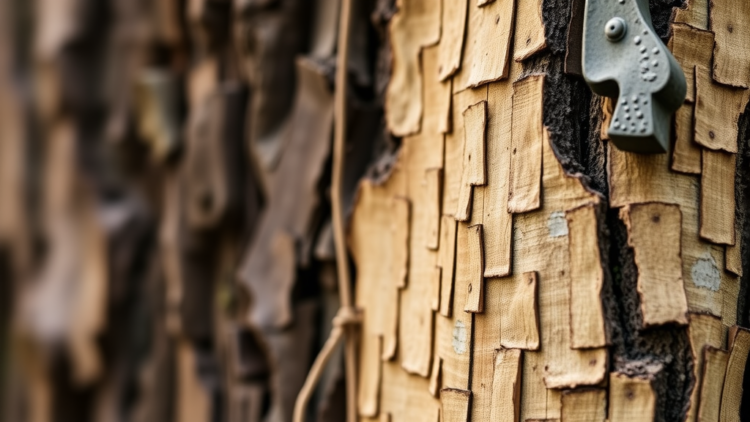
A little-known tree from the mountain forests of Pakistan and Afghanistan is emerging as one of the most intriguing botanical candidates in the search for new bioactive compounds. Parrotiopsis jacquemontiana, a member of the witch-hazel family Hamamelidaceae, has long been used in traditional medicine across the Hindu Kush and Himalayan ranges, yet its chemistry has remained only partially explored. A new study published in Plant Biosystems has now subjected the stem bark of this species to a rigorous battery of phytochemical and pharmacological tests, and the results suggest that the plant deserves far more attention from drug-discovery researchers than it has received to date.
The research team, led by Amna Sultan of Abdul Wali Khan University Mardan in Pakistan together with collaborators in Egypt and Saudi Arabia, prepared three different extracts from the stem bark using methanol, ethanol, and water as solvents. This choice was deliberate. The solvent used in extraction profoundly influences which molecules are pulled out of plant tissue: polar solvents such as methanol tend to dissolve phenolic compounds and flavonoids, moderately polar ethanol captures a broad intermediate range, and water extracts mainly water-soluble constituents. By comparing all three in parallel, the investigators could map how extraction chemistry shapes biological activity.
The quantitative results confirmed that the solvent choice mattered enormously. The methanolic extract consistently delivered the richest harvest of secondary metabolites, recording a total phenolic content of 186.42 milligrams of gallic acid equivalents per gram, a total flavonoid content of 94.36 milligrams of quercetin equivalents per gram, and a tannin content of 72.84 milligrams of tannic acid equivalents per gram. Concentrations of alkaloids, saponins, terpenoids, steroids, and glycosides followed the same hierarchy, all significantly higher in the methanolic fraction than in the ethanolic or aqueous preparations, with differences reaching statistical significance at the five percent level.
These chemical profiles translated directly into antimicrobial performance, and here the findings become genuinely striking. In agar-based inhibition assays, the methanolic extract produced zones of inhibition measuring 21.0 millimeters against Staphylococcus aureus and 19.4 millimeters against Bacillus subtilis, both Gram-positive pathogens of major clinical concern. Remarkably, both figures exceeded the performance of the reference antibiotic ampicillin, which produced a 17.6 millimeter zone under identical conditions. For a crude plant extract to surpass a frontline antibiotic against these organisms is a result that demands attention from microbiologists and natural product chemists alike.
The picture against Gram-negative bacteria was somewhat different but still encouraging. The ethanolic extract proved most effective against Escherichia coli, achieving a 19.2 millimeter inhibition zone, while Klebsiella pneumoniae displayed moderate susceptibility with activity comparable to the antibiotic erythromycin. Gram-negative organisms are notoriously difficult targets for plant antimicrobials because their outer membrane acts as a permeability barrier against many large hydrophobic molecules. The fact that extracts could match or approach standard antibiotic performance against E. coli and K. pneumoniae suggests that P. jacquemontiana contains compounds capable of penetrating or disrupting this defensive architecture.
Not every pathogen proved vulnerable. All three extracts were inactive against the yeast Candida albicans and the filamentous fungus Fusarium oxysporum, indicating that the antifungal spectrum of the bark is, at least under these test conditions, negligible. This kind of negative result is scientifically valuable: it narrows the field of likely applications, points researchers toward antibacterial rather than antifungal development, and hints that the active principles may target cellular features specific to bacteria rather than shared eukaryotic pathways.
Antioxidant testing added a third dimension to the plant’s profile. Using free-radical scavenging assays at graded concentrations, the team found that the ethanolic extract was the strongest performer, neutralizing 31.15 percent of radicals at 0.05 milligrams per milliliter and 57.40 percent at 0.1 milligrams per milliliter. Free-radical scavenging is a proxy for the ability to counter oxidative stress, a process implicated in aging, cardiovascular disease, cancer, and chronic inflammation. The high phenolic and flavonoid content measured in the extracts is consistent with this activity, since polyphenols are well-known hydrogen or electron donors that quench reactive oxygen species.
Perhaps most compelling are the in vivo experiments, conducted in animal models under an approved institutional ethics protocol. When tested for pain relief, the methanolic extract inhibited nociceptive responses by 51.85 percent at a dose of 100 milligrams per kilogram of body weight, a substantial effect even though the reference drug aspirin achieved 66.66 percent. For inflammation, the rankings reversed: the ethanolic extract suppressed inflammatory responses by 65 percent at the same dose, approaching the 73 percent achieved by indomethacin, a potent nonsteroidal anti-inflammatory drug. That crude, unfractionated plant extracts could come within striking distance of established pharmaceuticals at a modest dose underscores how much pharmacologically active material the bark contains.
The correlation between chemistry and activity across the study is internally coherent in ways that strengthen confidence in the findings. The methanolic extract, richest in phenolics, flavonoids, and tannins, performed best in the antibacterial and analgesic assays, consistent with the documented ability of tannins and related polyphenols to bind bacterial proteins and modulate pain signaling. The ethanolic extract led in antioxidant and anti-inflammatory tests, matching evidence that moderately polar solvent systems capture an optimal balance of flavonoids such as those known to inhibit nuclear factor-kappa B, a master regulator of inflammatory gene expression. Such solvent-activity relationships help narrow down which compound classes are most likely responsible for each therapeutic effect.
The study also arrives at a moment of ecological concern. Previous surveys have documented that P. jacquemontiana faces conservation pressure across its native range in the Hindu Kush mountains, with environmental determinants shaping its restricted distribution. The authors and their colleagues emphasize that the species’ documented hepatoprotective, anticancer, and now antibacterial and anti-inflammatory properties raise both opportunity and responsibility: a plant with demonstrated pharmaceutical potential must not be driven toward scarcity by unregulated harvesting. Sustainable cultivation and phytochemical standardization will be essential if the therapeutic promise identified here is ever to reach the clinic. For now, the work stands as a vivid reminder that some of the most medically valuable chemistry on Earth may still be hiding in the bark of trees growing on remote mountain slopes, waiting for a methodical combination of solvent extraction, analytical chemistry, and pharmacological testing to bring it into the light.
Subject of Research: Phytochemical characterization and antibacterial, antioxidant, analgesic, and anti-inflammatory activity of Parrotiopsis jacquemontiana stem bark extracts
Article Title: Phytochemical screening and multi-analytical characterization of Parrotiopsis jacquemontiana (Hamamelidaceae) stem bark and its pharmacological activity
Article References: Sultan, A., Khan, W., Ullah, Z., Siraj, S., Mohamed, H. I., Elkatry, H. O., Osman, M. F., Amin, A. K., Ramadan, K. M. A., & Ahmed, A. R. (2026). Phytochemical screening and multi-analytical characterization of Parrotiopsis jacquemontiana (Hamamelidaceae) stem bark and its pharmacological activity. Plant Biosystems, 160(5), Article 243. https://doi.org/10.1007/s44473-026-00250-1
Image Credits: AI Generated
DOI: 10.1007/s44473-026-00250-1
Keywords: Parrotiopsis jacquemontiana, phytochemistry, stem bark extracts, antibacterial activity, antioxidant, anti-inflammatory, analgesic, phenolic content, flavonoids, natural products, Hamamelidaceae, drug discovery
Cite Scienmag News
APA MLA Chicago
Alan Morgan. (September 24, 2026). Himalayan Tree Bark Yields Extracts That Outperform Antibiotics in Lab Tests. Scienmag. https://scienmag.com/himalayan-tree-bark-yields-extracts-that-outperform-antibiotics-in-lab-tests/
Alan Morgan. “Himalayan Tree Bark Yields Extracts That Outperform Antibiotics in Lab Tests.” Scienmag, 24 September 2026, https://scienmag.com/himalayan-tree-bark-yields-extracts-that-outperform-antibiotics-in-lab-tests/. Accessed 24 September 2026.
Alan Morgan. “Himalayan Tree Bark Yields Extracts That Outperform Antibiotics in Lab Tests.” Scienmag. September 24, 2026. https://scienmag.com/himalayan-tree-bark-yields-extracts-that-outperform-antibiotics-in-lab-tests/
Copy citation Download RIS
Tags: analgesicanti-inflammatoryantibacterial activityantioxidantdrug discoverydrug discovery from mountain floraethnobotanical research in Hindu KushflavonoidsHamamelidaceaeHimalayan forest biodiversity and medicinal plantsHimalayan tree bark extractnatural productsnovel bioactive compounds from Pakistan and AfghanistanParrotiopsis jacquemontianaParrotiopsis jacquemontiana bioactive compoundsphenolic contentphytochemical analysis of Himalayan treesphytochemistryplant extracts with antimicrobial propertiesplant-based antibiotic alternativespotential pharmaceutical applications of Himalayan botanicalssolvent effects on phytochemical extractionstem bark extractstraditional Himalayan medicine